

Ukraine Reconstruction Accountability and Transparency Act This bill requires the Department of the Treasury to instruct the United States Executive Directors at each international financial institution to use their voice, vote, and influence to prevent such institutions from entering into contracts for reconstruction in Ukraine with companies in countries supporting the Russian invasion of Ukraine. The international financial institutions include the International Monetary Fund, the International Bank for Reconstruction and Development, and the International Finance Corporation. Specifically, the bill requires such instructions to prevent the institutions from contracting with firms, including subcontractors, that are located or have operations in designated countries or in countries whose government has provided material or diplomatic support for the Russian invasion of Ukraine. The bill also authorizes Treasury to waive such instructions for countries specified by the bill if the government of that country (1) publicly opposes the Russian invasion of Ukraine, or (2) provides material support to Ukraine to evict Russian forces from its territory.
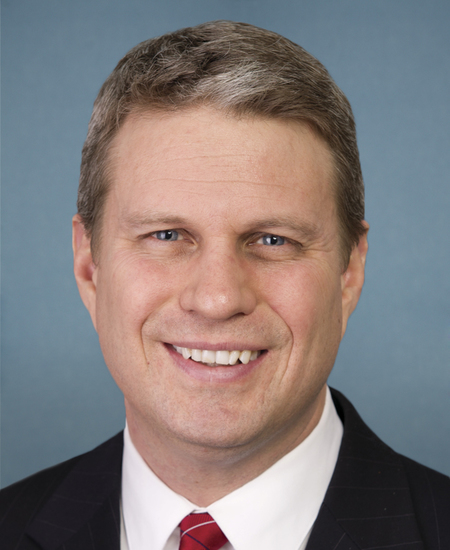
Rep. Bill Huizenga
Sponsored bills
Maddy summaryHJRES 44 is a congressional resolution seeking to block a 2021 rule by the Bureau of Alcohol, Tobacco, Firearms, and Explosives (ATF). The rule classified firearms with stabilizing braces as "short-barreled rifles," which would have required additional licensing and regulation. This resolution uses a specific legal process (under Title 5, U.S. Code) to formally disapprove the ATF rule, meaning the rule would no longer be in effect. It directly affects firearm owners, manufacturers, and dealers who would have been subject to the rule’s requirements.
Maddy summaryHR 4237, the Ensuring Sound Guidance Act, requires investment advisors and retirement plan fiduciaries to prioritize financial factors (like investment returns and costs) when making decisions for clients or plan participants. It mandates that non-financial factors (such as environmental or social goals) can only be considered if the client provides written consent, and advisors must then disclose the expected and actual financial impact over a three-year period. The bill amends the Investment Advisers Act and ERISA to enforce this standard, with changes taking effect 12 months after enactment. Additional provisions direct studies on state pension plans, climate disclosures in municipal bonds, and rules preventing payments to officials for government business.
Maddy summaryHR 277 would require Congress to approve major federal regulations before they take effect. Major rules are defined as those with significant economic impact ($100 million+ annually), major cost increases for consumers or industries, or significant adverse effects on competition, employment, or innovation. Agencies must submit detailed information about these rules to Congress, including cost-benefit analyses, before they can take effect. Congress would have 70 session days to approve the rule with a joint resolution; if they don't act within that timeframe, the rule would not take effect. This would increase congressional oversight of federal regulations and require more detailed information about proposed rules before they become law.
Maddy summaryHR 4168, the Mandatory Materiality Requirement Act of 2023, requires the Securities and Exchange Commission (SEC) to specify in new disclosure rules that public companies (issuers) must only disclose information they determine is "material" to investment decisions. It defines "material" as information a reasonable investor would consider significant to their decision-making. The bill applies to SEC rulemaking on disclosure obligations for public companies under both the Securities Act of 1933 and the Securities Exchange Act of 1934. Exceptions allow the SEC to bypass this rule if it determines a change won't increase overall disclosure burdens on companies.
Maddy summaryHRES 272 is a non-binding resolution passed by the U.S. House of Representatives calling on Russia to immediately release Paul Whelan, a U.S. citizen and Michigan resident imprisoned since 2018 on espionage charges without evidence. It demands Russia provide Whelan with consular access, ensure due process rights, and release him from his 16-year labor camp sentence. The resolution also thanks Canada, Ireland, and the U.K. for their efforts to secure his freedom and expresses sympathy to his family. As a formal statement of congressional position, it does not compel action but underscores the House's stance on Whelan's case.
Maddy summaryThis bill raises the threshold for businesses to report payments to independent contractors and vendors from $600 to $5,000 annually. It directly affects small businesses and self-employed individuals who receive payments below the new $5,000 level, reducing their reporting burden. The bill also adds an inflation adjustment mechanism to keep the threshold updated annually, rounding increases to the nearest $100. These changes apply to payments made after December 31, 2023, under tax code sections governing Form 1099 reporting and backup withholding.
Maddy summaryThis resolution (HRES 475) expresses congressional support for designating the first Tuesday in June as "National Cancer Survivor Beauty and Support Day." It recognizes an existing volunteer-driven event where beauty industry professionals provide free services to cancer survivors, with no fundraising involved. The resolution notes this observance has operated nationwide since 2003, involving thousands of salons across all 50 states. It does not create new laws or funding but formally acknowledges the day's role in supporting cancer survivors' well-being.
Maddy summaryThis bill updates the definition of an "accredited investor" under securities law to include specific professional certifications, designations, or credentials that demonstrate financial expertise. It requires the Securities and Exchange Commission (SEC) to periodically review and adjust the list of accepted credentials - starting within 18 months of enactment and every 5 years thereafter - to ensure they measure financial sophistication effectively. The SEC must add credentials substantially similar to those already recognized and adjust the list as needed for investor protection. This directly affects individuals seeking accredited investor status for private securities investments and the SEC, which gains a formalized process to maintain the credential list.
Maddy summaryHR 3812, the Financial Stability Oversight Council Improvement Act of 2023, amends the process for the Financial Stability Oversight Council (FSOC) to regulate large nonbank financial companies. It requires the FSOC to first determine that alternative actions - such as new regulatory standards, company plans, or agency measures - are impractical or insufficient before voting on regulatory actions against these companies. This change directly affects the FSOC’s decision-making and U.S. nonbank financial firms potentially subject to oversight. The key provision mandates consultation with the company and its primary regulator before the Council proceeds with a formal determination. The bill focuses on procedural clarity in financial stability oversight without creating new regulatory requirements.