

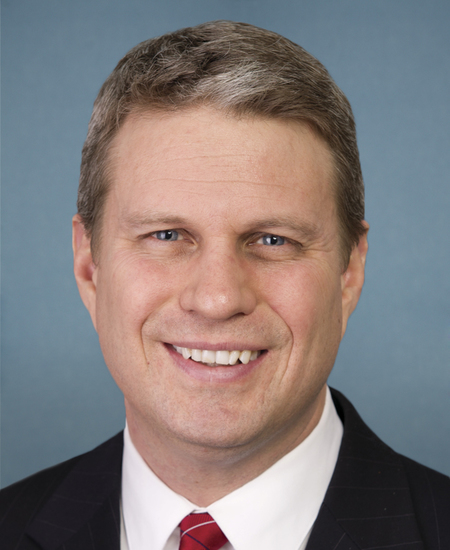
Photo of Bill Huizenga
R United States House · District 4 · Michigan On the 2026 ballot

Rep. Bill Huizenga

Compare
Total votes
2,837
all sessions
Attendance
99%
40 missed
Near the chamber average
With party
96%
of cast votes
Near the chamber average
Bipartisan score
2%
crosses aisle rarely
Near the chamber average
Sponsored
725
bills & resolutions
Near the chamber average
Committees
6
assignments
725 bills and resolutions

Sponsored bills

Total
725
Primary
80
Co-sponsor
645
This page
725
matching current filters
Co-sponsor HR 1492
In committee · Indiana House · Co-sponsor
To amend title XI of the Social Security Act to equalize the negotiation period between small-molecule and biologic candidates under the Drug Price Negotiation Program.

Maddy summaryHR 1492 amends the Social Security Act to extend the negotiation period for standard drug manufacturers under the federal drug pricing program. Specifically, it changes the timeframe from 7 years to 11 years for small-molecule drugs (like traditional pills) to negotiate prices with the government, aligning it with the existing 12-year period for complex biologic drugs (like insulin or monoclonal antibodies). This adjustment directly affects pharmaceutical companies that produce small-molecule drugs, giving them a longer window to negotiate pricing terms. The bill makes this change effective as if it had been part of the 2022 law that established the program.

In committee Feb 21, 2025 1 co-sponsor
Co-sponsor HCONRES 12
In committee · Indiana House · Co-sponsor
Supporting the Local Radio Freedom Act.

This concurrent resolution declares that Congress should not impose any new performance fee, tax, royalty, or other charge relating to the public performance of sound recordings on a local radio station for broadcasting sound recordings over the air, or on any business for such public performance of sound recordings.

In committee Feb 13, 2025 1 co-sponsor
Co-sponsor HR 1357
In committee · Indiana House · Co-sponsor
Susan Muffley Act of 2025

Maddy summaryThis bill requires the Pension Benefit Guaranty Corporation (PBGC) to recalculate monthly pension benefits for retirees in six specific Delphi-related pension plans to reflect the full vested amount they would have received without prior benefit limits. It mandates lump-sum payments for past underpayments, including 6% annual interest, to eligible retirees and beneficiaries who received lower benefits than guaranteed under ERISA. The PBGC must fund these payments through a new Delphi Full Vested Plan Benefit Trust Fund established in the Treasury. This directly affects retirees in the Delphi Hourly-Rate, Delphi Retirement Program for Salaried Employees, PHI Non-Bargaining, ASEC Manufacturing, PHI Bargaining, and Delphi Mechatronic Systems pension plans. The law does not alter existing PBGC rules for other plans or change how the agency administers benefits generally.

In committee Feb 13, 2025 1 co-sponsor
Co-sponsor HR 1285
In committee · Indiana House · Co-sponsor
Water Infrastructure Subcontractor and Taxpayer Protection Act of 2025

Maddy summaryThis bill requires federal agencies administering water infrastructure funding (like the WIFIA program) to ensure projects have construction payment and performance security. It directly affects contractors working on federally assisted water projects and state/local governments with construction requirements. The key provision mandates that projects must have security covering at least 50% of the construction contract value - either through state/local rules or federal bonds meeting specific standards under 40 U.S.C. §3131(b). This aims to protect taxpayers by reducing the risk of unpaid subcontractors or project failures. The bill modifies existing federal requirements without creating new funding or altering project eligibility.

In committee Feb 13, 2025 1 co-sponsor
Co-sponsor HR 1189
In committee · Indiana House · Co-sponsor
National Plan for Epilepsy Act

Maddy summaryHR 1189, the National Plan for Epilepsy Act, creates a coordinated federal strategy to address epilepsy through a National Plan for Epilepsy. The plan requires the Secretary of Health and Human Services to establish an annual assessment, maintain a diverse Advisory Council (including people with epilepsy, caregivers, and experts), and coordinate research and care across federal agencies. Key provisions include annual progress reports to Congress, data sharing between agencies, and recommendations to improve diagnosis, treatment access, and reduce epilepsy-related disparities. The plan expires December 31, 2035, and directly affects the estimated 3.4 million people in the U.S. living with epilepsy and their caregivers.

In committee Feb 11, 2025 1 co-sponsor
Co-sponsor HR 975
Passed · Indiana House · Co-sponsor
Credit Union Board Modernization Act

Credit Union Board Modernization Act This bill reduces the required frequency of meetings held by the board of directors of certain credit unions. Under the bill, new credit unions and credit unions with a low soundness rating must meet monthly, as required under current law. All other credit unions must hold at least six meetings annually, with at least one meeting held during each fiscal quarter.

Passed Feb 11, 2025 1 co-sponsor
Co-sponsor HR 736
Passed · Indiana House · Co-sponsor
Protect Small Businesses from Excessive Paperwork Act of 2025

Maddy summaryThis bill extends the deadline for small businesses to file certain financial reports from a variable timeline tied to regulatory dates to a fixed date of January 1, 2026. It modifies Section 5336(b)(1)(B) of Title 31, U.S. Code, directly affecting small businesses already required to submit specific financial disclosures under existing law. The key change simplifies compliance by replacing flexible regulatory deadlines with a single, clear cutoff date. This adjustment provides additional time for affected businesses without altering the underlying reporting requirements.

Passed Feb 11, 2025 1 co-sponsor
Co-sponsor HR 1138
In committee · Indiana House · Co-sponsor
Payment Choice Act of 2025

Maddy summaryHR 1138, the Payment Choice Act of 2025, requires most retail businesses to accept cash for in-person purchases up to $500 per transaction and prohibits charging higher prices for cash payments compared to other methods. Businesses may temporarily refuse cash only due to system failures, insufficient change, or if they offer a prepaid card conversion device meeting strict conditions (no fees, no minimum deposit, no expiration). The bill allows businesses a 5-year period to phase in accepting $50 bills or larger, after which the Treasury Secretary must mandate acceptance of $1-$20 bills. Consumers can send a 45-day notice to businesses for violations before pursuing legal action, with potential damages of at least $250 per violation. The law does not override stricter state cash acceptance protections.

In committee Feb 7, 2025 1 co-sponsor
Co-sponsor HR 1065
In committee · Indiana House · Co-sponsor
Protect Our Letter Carriers Act of 2025

Protect Our Letter Carriers Act of 2025 This bill requires or authorizes certain actions related to the U.S. Postal Service (USPS). The bill requires the Department of Justice to appoint an assistant U.S. attorney in each judicial district to coordinate and supervise the investigation and prosecution of various crimes related to postal services (for example, assault on a postal service employee, breaking into a post office, or obstruction of mails). The bill also requires the U.S. Sentencing Commission to amend sentencing guidelines to provide that the assault or robbery of a postal employee shall be treated the same as the assault of a law enforcement officer. Additionally, the bill authorizes appropriations for the USPS to install high security collection boxes and replace older versions of the universal mailbox key with electronic versions.

In committee Feb 6, 2025 1 co-sponsor
Co-sponsor HR 1046
In committee · Indiana House · Co-sponsor
Marc Fischer Memorial Act

Maddy summaryHR 1046, the Marc Fischer Memorial Act, requires the Bureau of Prisons to implement digital mail scanning technology at all federal prisons to detect fentanyl and other synthetic drugs in inmate mail. It mandates a strategy within 90 days of an evaluation, including 100% scanning of all mail, digital copies of mail to inmates within 24 hours, and physical mail delivery within 30 days for non-contaminated items. The bill directly affects federal prison staff, inmates, and the Bureau of Prisons by aiming to reduce drug-related overdoses and alleviate staff workload tied to mail processing. Implementation must be completed within three years, with annual reports tracking detected drugs and strategy efficiency. The legislation focuses on concrete technological and procedural changes to enhance safety, referencing a successful pilot program at two facilities.

In committee Feb 6, 2025 1 co-sponsor
Showing 221 to 230 of 725 bills
Previous 1 … 22 23 24 … 73 Next