

Maddy summaryHR 4140, the Burma GAP Act, requires the U.S. to prioritize accountability for genocide and crimes against humanity committed against Rohingya in Myanmar. It establishes a U.S. Special Representative for Burma to coordinate international sanctions, support Rohingya protection efforts, and advance transitional justice, with specific funding authorizations of $5 million annually for atrocity investigations and $4 million for evidence collection. The bill directs the State Department to support Rohingya refugees in Bangladesh through humanitarian aid, gender-based violence prevention, education, and legal assistance, while promoting durable solutions like safe repatriation and citizenship rights. It mandates annual reports to Congress on U.S. efforts to address atrocity risks, document crimes, and advance accountability, directly affecting Rohingya communities, the Burmese military junta, and U.S. foreign assistance programs.
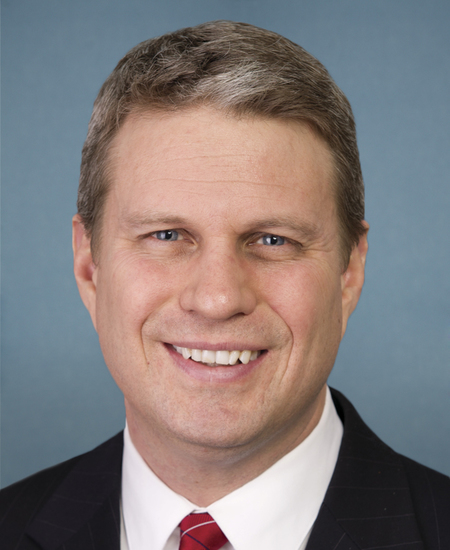
Rep. Bill Huizenga
Sponsored bills
Maddy summaryHR 3068 modifies U.S. arms export rules to streamline defense trade with key allies under the AUKUS partnership. It removes the automatic presumption of denial for certain missile technology exports (Category 1 or 2) to NATO allies, major non-NATO allies, and the Five Eyes intelligence alliance (Australia, Canada, New Zealand, UK, and the U.S.). The bill changes specific sections of the Arms Export Control Act to reflect this policy shift, requiring case-by-case reviews instead of automatic rejections for these exports. This directly affects defense contractors and government agencies handling exports to these partner nations. The change aims to facilitate faster, more predictable defense trade cooperation without altering broader export control frameworks.
Maddy summaryHR 4531, the BANNED in Latin America Act, requires the U.S. Secretary of State to create a strategy within 180 days to counter Iranian and Hezbollah influence operations in Latin America. The strategy must include specific actions like limiting Iranian cultural centers promoting Iranian ideology, restricting travel of Iranian agents through visa denials or sanctions, strengthening U.S. intelligence monitoring of these networks, disrupting Iranian media platforms (HispanTV) and Hezbollah media (Al Mayadeen Espanol), and addressing Al Mustafa International University's radicalization role. The bill directly affects Iranian and Hezbollah entities operating in Latin America through diplomatic, financial, and travel restrictions. It mandates this strategy be submitted to Congress, with specific provisions targeting their propaganda, cultural, and media activities. The bill focuses on concrete policy mechanisms to counter these groups' influence, not on direct sanctions or military action.
Maddy summaryHR 1919, the "Anti-CBDC Surveillance State Act," prohibits the Federal Reserve from developing, testing, or issuing any central bank digital currency (CBDC) or similar digital assets. It specifically bans the Fed from offering direct financial products to individuals, maintaining individual accounts, or issuing CBDCs directly or indirectly through intermediaries like banks. The bill also blocks the Fed from using any digital asset for monetary policy and clarifies that physical currency's privacy protections remain intact. This policy directly affects the Federal Reserve System's ability to create or manage digital monetary tools.
Maddy summaryHR 4382 authorizes the U.S. Mint to produce commemorative coins for the 2028 Los Angeles Olympics/Paralympics and 2034 Salt Lake City Winter Olympics/Paralympics. It specifies gold, silver, and half-dollar coin designs with defined mintage limits (e.g., up to 100,000 $5 gold coins for each event), all bearing inscriptions like "2028" or "2034" and standard coin features. A surcharge ($5-$50 per coin) is added to sales, with all funds directed to the respective Olympic committees to support event hosting and legacy programs like youth sports. The bill ensures no net cost to the government by requiring surcharge revenues to cover all design, production, and marketing expenses before funds are disbursed.
Maddy summaryHRES 575 is a symbolic resolution designating July 10th as "Journeyman Lineworkers Recognition Day." It honors lineworkers who face significant risks daily - working at heights near live wires and responding to disasters like hurricanes and wildfires. The resolution specifically references Henry Miller, an early leader of the International Brotherhood of Electrical Workers, who died on July 10, 1896, while troubleshooting an outage. It encourages the public to recognize these workers' contributions but does not create new laws or allocate funding.
Maddy summaryThe Head Start for Our Future Act amends Section 441(c)(1) of the Higher Education Act of 1965 to replace "literacy training" with "child development and early learning (including Head Start programs and Early Head Start programs carried out under the Head Start Act), literacy training." This technical change formally integrates Head Start and Early Head Start programs into the federal definition of early learning initiatives under the Higher Education Act, while maintaining a separate reference to literacy training. The bill directly affects how federal grants for early childhood education are categorized and administered under the Higher Education Act. It does not alter funding levels, program requirements, or operations but updates administrative terminology to explicitly include Head Start services.
Maddy summaryThe African Union Diplomatic Parity Act (HR 4196) would amend U.S. law to grant the African Union's Permanent Observer Mission at the United Nations in New York the same diplomatic privileges and immunities as those provided to missions from individual UN member states. This change applies directly to the mission's staff and their official activities in the United States, ensuring consistent legal treatment. The bill updates the International Organizations Immunities Act to explicitly include the African Union mission under existing provisions for UN member state missions. This procedural adjustment aligns U.S. law with the African Union's status as a permanent observer at the UN, without altering substantive foreign policy.
Maddy summaryThe LEDGER Act (HR 4091) requires the Treasury Department to create a system tracking every government payment within 180 days of enactment. It mandates that all federal departments, agencies, and branches (executive, legislative, judicial) must report disbursements from every funding source, including how long funds remain available for spending. This system will detail each payment's origin, recipient, and timing across all government accounts. The bill directly affects all federal spending entities by standardizing expenditure tracking previously handled inconsistently.
Maddy summaryHR 2225, the Access to Small Business Investor Capital Act, modifies how investment companies report fees related to business development companies (BDCs). It allows registered investment companies to exclude fees paid indirectly to BDCs (which primarily invest in small businesses) from their "Acquired Fund Fees and Expenses" calculation on SEC registration statements. This change simplifies reporting for investment companies holding BDC shares by removing those specific fees from expense calculations. The bill directly affects investment companies filing SEC forms (N-1A, N-2, N-3) that hold BDC investments, potentially reducing their reported expense ratios. It does not create new funding for small businesses but aims to streamline investment in BDCs by easing reporting burdens.