

Maddy summaryThe China AI Power Report Act requires the Secretary of Commerce to produce annual reports to Congress assessing China's artificial intelligence capabilities. These reports would cover detailed technical assessments of Chinese semiconductor manufacturing, AI models, research funding, computational capacity, and other key areas related to China's AI development. The legislation mandates specific evaluations of China's chip production, fabrication facilities, semiconductor equipment, AI models, and how these capabilities are being used domestically and internationally. The reports aim to inform U.S. export control policies and maintain U.S. strategic advantage in AI technology, with unclassified summaries to be made publicly available.
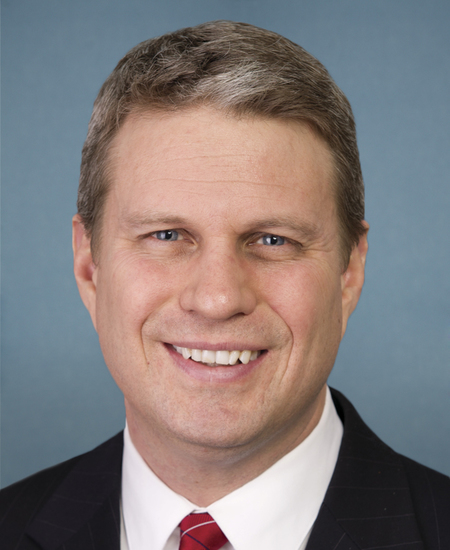
Rep. Bill Huizenga
Sponsored bills
Maddy summaryThis bill amends the Farm Credit Act to expand rural home loan eligibility. It adds "accessory dwelling units" (like guest houses or converted garages) to the definition of qualifying property features and increases the maximum property size for loans from 2,500 to 10,000 square feet. These changes directly affect rural homebuyers and lenders by allowing more property types and larger homes to qualify for Farm Credit loans. The policy change specifically modifies existing loan criteria without altering funding levels or creating new programs.
Maddy summaryHR 2683, the Remote Access Security Act, amends the Export Control Reform Act of 2018 to regulate how foreign entities remotely access U.S.-controlled technology. It defines "remote access" as foreign persons accessing U.S. items (like sensitive technology) via internet or cloud services from outside the item's physical location. The bill updates existing export control rules to include remote access as a regulated activity, requiring oversight similar to physical exports or in-country transfers. This primarily affects foreign companies, cloud providers, and technology firms handling U.S.-jurisdiction items.
Maddy summaryHR 909, the Crime Victims Fund Stabilization Act of 2025, modifies how funds from the False Claims Act are deposited into the Crime Victims Fund. It specifies that from 2025 through 2029, certain False Claims Act proceeds (specifically those for qui tam plaintiff payments and government damage reimbursements) cannot be deposited into the fund. This change directly affects the composition of the Crime Victims Fund by excluding these specific revenue streams during the specified period. The bill does not create new benefits or alter victim services; it only adjusts fund allocation rules for existing False Claims Act revenues.
Maddy summaryThis bill establishes two educational exchange programs to address workforce shortages in the U.S. mining industry. The Critical Mineral Mining Fellowship Program sends U.S. students to study mining at foreign universities with mining programs, while the Visiting Mining Scholars Program brings international mining professionals to U.S. institutions to help develop mining education programs. Both programs, administered by the Department of State's Bureau of Education and Cultural Affairs, target students and professionals in mining-related fields, with priority given to institutions in countries with established mining expertise. The bill authorizes $10 million annually from 2026 to 2035 to fund these initiatives. These programs directly affect U.S. educational institutions, mining industry workers, and international partners in the critical mineral supply chain.
Maddy summaryHR 7014 designates Burma for temporary protected status (TPS) under U.S. immigration law, providing eligible Burmese nationals temporary legal status in the U.S. The bill establishes an 18-month TPS period beginning November 25, 2025, for Burmese nationals who have continuously resided in the U.S. since the bill's enactment, are admissible as immigrants (with limited exceptions), and register with Homeland Security. It also requires the Secretary of Homeland Security to grant prior consent for travel abroad for those with emergency circumstances and ensures returning travelers retain their TPS status. This policy change directly affects Burmese nationals meeting these specific criteria, offering temporary protection from deportation.
This resolution expresses the sense of the House of Representatives that (1) Congress should adopt a fiscal target to reduce the federal budget deficit to 3% of gross domestic product or less as soon as possible and no later than the end of FY2030; and (2) after the target is achieved, Congress should continue to pursue further deficit reduction with the goal of achieving a balanced federal budget.
Essential Caregivers Act of 2025 This bill prohibits certain health care facilities from limiting the access of essential caregivers to residents of those facilities, including during designated emergency periods. Specifically, the bill generally prohibits Medicare skilled nursing facilities, Medicaid nursing facilities, Medicaid intermediate care facilities, and associated inpatient rehabilitation facilities from restricting the access of essential caregivers to residents of the facilities, including during emergency periods in which visitation rights are otherwise restricted. During emergency periods, facilities may restrict access for an initial period of up to seven days and for one additional maximum seven-day period (if the additional period is approved by the state health department). Facilities may restrict access for a total of 7 days (or 14 days with the approval of the state health department) during an emergency period. Essential caregivers must agree to comply with any safety protocols set by the facility, which may be no more stringent for caregivers compared to those for staff. Caregivers who fail to comply with these requirements may be denied access, subject to an appeals process.
Maddy summaryThis bill allows groups of small businesses or self-employed individuals to form a single health plan that treats all members as one employer for coverage purposes. It directly affects small business associations and self-employed people who can join such groups to access pooled health coverage, provided they meet specific requirements (e.g., 51+ total employees, 2+ years in existence, no health-based discrimination). Key mechanisms include permitting modified community rating for premiums (based on pooled claims) while prohibiting health status-related discrimination in enrollment, premiums, or pre-existing condition coverage. The plan remains subject to federal ERISA rules, and self-employed members must meet defined criteria to participate as both employers and employees.
Miracle on Ice Congressional Gold Medal Act This act provides for the award of Congressional Gold Medals to the members of the 1980 U.S. Olympic men's ice hockey team in recognition of the team's achievement at the 1980 Winter Olympic Games.