

Maddy summaryThis bill is a non-binding resolution that expresses the House of Representatives' sentiment to honor public servants for their dedication to the United States. It specifically acknowledges the work of federal, state, and local government employees, as well as uniformed service members, who deliver essential services and support the economy. The resolution calls on the American public to observe Public Service Recognition Week with ceremonies and activities that recognize these contributions. Because it is a symbolic expression of the House's feelings rather than a law with enforceable rules, it does not create new policies or mandate specific actions.
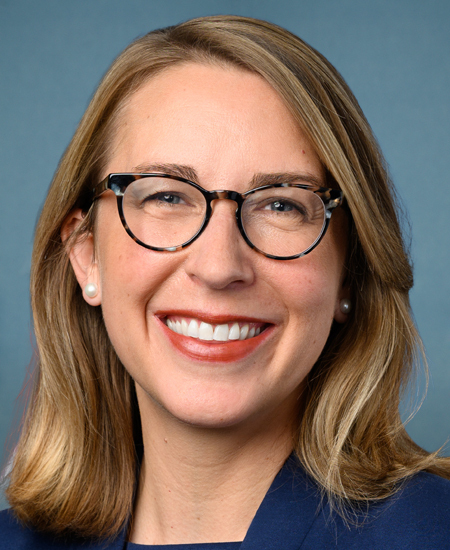
Rep. Hillary J. Scholten
Sponsored bills
Maddy summaryThis bill directs the Small Business Administration to create a plan for disclosing how it uses artificial intelligence in its operations and contracting. The agency must submit this implementation plan to Congress within 45 days of the law's enactment, outlining specific steps to define roles and document AI usage decisions. The requirements are based on a prior government report and existing federal guidelines aimed at increasing transparency in federal AI adoption. Ultimately, the legislation ensures the SBA formally reports its AI strategies and progress to legislative oversight committees.
Maddy summaryThis resolution expresses the sense of the House of Representatives that antisemitic rhetoric from specific online personalities, including Hasan Piker and Candace Owens, is dangerous and contributes to hatred. It urges social media platforms to enforce their policies against hate speech and calls on public officials to condemn such conduct without exception. The bill does not impose new laws or penalties but instead highlights specific instances of alleged hate speech to emphasize the need for responsibility among influencers and technology companies.
Maddy summaryThis bill, titled the Protecting Human Rights and Public Health in Foreign Assistance Act, aims to cancel specific regulations issued by the Department of State. It directly affects the federal government by prohibiting any department or agency from enforcing, implementing, or proposing rules related to protecting life, combating discriminatory equity ideology, and combating gender ideology in foreign aid programs. The legislation treats these cancelled rules as if they never existed, effectively nullifying their impact on future foreign assistance policies.
Maddy summaryThe Investing in the American Dream Act expands eligibility for Small Business Administration loans to include small businesses owned by certain non-citizens. Specifically, it allows businesses to qualify if they are at least 51 percent owned and controlled by individuals who are lawfully present in the United States and authorized to work, such as refugees, asylees, permanent residents, and specific nonimmigrant visa holders. The bill also permits businesses owned by individuals living outside the United States to apply for these loans. This change aims to broaden access to federal financial support for small enterprises by removing previous restrictions based on the citizenship or permanent residency status of the business owners.
Maddy summaryThis resolution celebrates the 75th anniversary of the International Hearing Society, an organization that promotes the interests of hearing aid specialists and their patients. It recognizes the society's contributions to advancing hearing healthcare and uniting professionals across the United States and internationally.
Maddy summaryThis House Resolution expresses support for the staff of public, school, academic, and special libraries across the United States and the essential services they provide to communities. It recognizes libraries as critical infrastructure and supports prioritizing full funding for their services at federal, state, and local levels. The resolution also reaffirms the public's right to access information, the right of library workers to organize and collectively bargain, and their civil rights to perform their duties without intimidation.
Maddy summaryThis resolution designates April as "Community College Month" to recognize the significance of community colleges across the United States. It celebrates over 1,000 institutions for their role in providing accessible higher education and workforce training, and for contributing to the nation's economic prosperity.
Maddy summaryThis bill directs the Postmaster General to conduct a feasibility study on a program that would send electronic notifications to customers about weather-related mail delays, post office closures, and safety instructions for clearing walkways. The study must evaluate how to expand customer enrollment in the existing informed delivery platform and determine the best methods for sending messages, including who receives them and what content they contain. After submitting the report to Congress, the Postal Service would be authorized to implement the program if deemed feasible. The legislation also allows the Postal Service to use customer contact information for this program without being restricted by the Privacy Act of 1974.
Promoting Access to Local Agriculture Act of 2026 This bill directs the Department of Agriculture (USDA) to establish a streamlined process for farmers and ranchers to provide benefits under certain federal nutrition programs. These programs include the Supplemental Nutrition Assistance Program (SNAP); the Senior Farmers Market Nutrition Program (SFMNP); the Special Supplemental Nutrition Program for Women, Infants, and Children (WIC); and the Gus Schumacher Nutrition Incentive Program (GusNIP). Specifically, USDA must establish a streamlined application process for farmers and ranchers to apply to be vendors under the nutrition programs, including by developing a single application for the programs or an information sharing system. USDA must also develop a streamlined process for these vendors to use standardized technology to process program benefits (such as a single piece of equipment or a mobile application). Further, USDA must ensure that the program benefit processing equipment and systems made available by a state agency are appropriate for the entity. For example, this includes ensuring wireless or mobile processing equipment and technology systems are appropriate for farmers markets and other direct-to-consumer markets.