

Love Lives On Act of 2025 This bill extends entitlement for various benefit programs and services for surviving spouses of deceased members of the Armed Forces or veterans. The bill provides that the remarriage of a surviving spouse must not bar the furnishing of dependency and indemnity compensation or special pension benefits to such spouse. Additionally, the Department of Defense may not terminate the payment of an annuity for a surviving spouse under the Survivor Benefit Plan solely because the surviving spouse remarries. The bill also expands the definition of a dependent under TRICARE to include a remarried widow or widower whose subsequent marriage has ended due to death, divorce, or annulment.
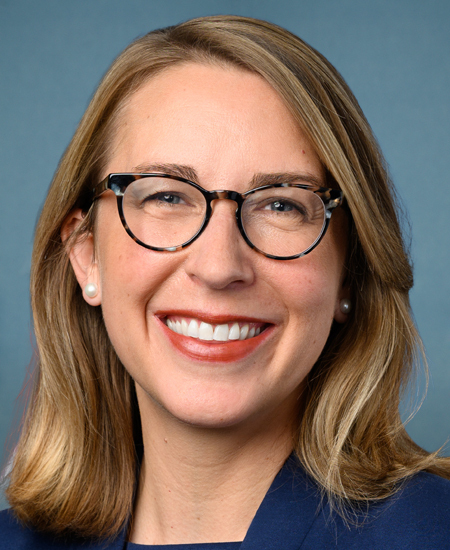
Rep. Hillary J. Scholten
Sponsored bills
Maddy summaryThis bill extends funding periods for several key water restoration programs through 2031, including the Great Lakes Restoration Initiative, Long Island Sound program, and Columbia River Basin restoration. It modifies the San Francisco Bay program to require 25% non-Federal cost-sharing for projects and updates coastal water quality monitoring rules to include new testing technologies. The bill also restricts federal funds for these programs from going to non-U.S. entities or those partnering with "foreign countries of concern." These changes directly affect state, local, and nonprofit entities managing federally funded water restoration projects across specific geographic regions.
Maddy summaryHR 6267, the Aviation Supply Chain Safety and Security Digitization Act of 2025, directs the Comptroller General to study challenges in adopting digital documentation across the aviation supply chain. The study will examine barriers for manufacturers, repair stations, airlines, and brokers in using digital tools like electronic FAA Form 8130-3, as well as the FAA’s transition from paper records and physical signatures to digital systems. It requires a report within one year of enactment, including recommendations to encourage digital adoption industry-wide and accelerate the FAA’s shift to digital documentation. The bill does not create new regulations but aims to identify pathways for modernizing supply chain verification to combat counterfeit parts. The Transportation Secretary must respond to recommendations within 120 days of the report’s submission.
Maddy summaryThe Military Financial Literacy Act of 2026 expands personalized financial and housing counseling services for members of the Armed Forces. It requires the Department of Defense to establish a one-on-one counseling program within one year that covers credit management, budgeting, anti-predatory lending, rental planning, VA home loans, and legal protections under the Servicemembers Civil Relief Act. The program must partner with HUD-approved, tax-exempt Veteran Service Organizations that have expertise in financial literacy and housing stability. The Secretary of Defense must submit a report to Congress within two years detailing the number of service members who received counseling, completion rates, and indicators of financial stress or housing instability among participants.
Extending WIC for New Moms Act This bill amends the Special Supplemental Nutrition Program for Women, Infants, and Children (WIC) to extend the eligibility periods for breastfeeding and postpartum women. Specifically, a state program may elect to certify a breastfeeding woman for up to 24 months (currently 1 year) postpartum. The bill also expands the eligibility period for postpartum women to up to 24 months after termination of pregnancy (currently 6 months). The Department of Agriculture must submit a report to Congress evaluating the effect of these changes to the program on (1) maternal and infant health outcomes, (2) breastfeeding rates, and (3) qualitative evaluations of family experiences under WIC.
Maddy summaryThe GUARDRAILS Act (HR 8031) repeals the December 11, 2025 Executive Order on Artificial Intelligence, which previously established a national policy framework for AI development. By removing this executive order, the bill prevents the federal government from using funds to implement, enforce, or administer the policies outlined in that directive. This change directly affects federal agencies and any organizations that were relying on the executive order's framework for AI regulation. The legislation does not create new AI rules but instead eliminates the existing executive mandate that had been in place.
Maddy summaryHR 7665, the Friends in the Field Act, adds "biological pest control" as a priority area for federal agricultural research funding. It directly affects researchers, extension services, and farmers by allowing grants to support projects using natural methods (like beneficial insects or microbes) to control pests instead of chemical pesticides. The key provision amends a 1990 law to explicitly include biological pest control in funding categories for research, education materials, and outreach programs. This aims to reduce crop damage and food-borne illnesses through sustainable pest management practices. The bill changes funding priorities but does not create new programs or impose new requirements.
Maddy summaryHR 7376, the Local Water Protection Act, amends an existing provision in the Federal Water Pollution Control Act to extend the funding period for state nonpoint source management programs from fiscal years 2023-2027 to 2027-2031. This change directly affects states and local agencies that administer these programs, which address pollution from diffuse sources like agricultural runoff. The bill makes a procedural adjustment to the program's timeline without altering its core requirements or creating new policy.
Maddy summaryThe Energy Bills Relief Act aims to lower household energy costs and accelerate the development of low-cost, clean energy by modifying federal tax credits, expanding weatherization programs, and streamlining permitting processes. Key provisions include restoring tax incentives for renewable energy projects, increasing funding for low-income heating assistance, and requiring federal agencies to treat wind, solar, and storage projects with the same procedural fairness as oil and gas projects. The bill also establishes new incentives for upgrading the electricity grid, such as tax credits for transmission lines and grants for wildfire prevention measures, while creating mechanisms to ensure utilities serve public interests and protect consumers from price volatility.
Maddy summaryThe Feeding Families Not Fear Act of 2026 reverses specific provisions from the One Big Beautiful Bill Act of 2025 by restoring funding and benefits that were previously cut. It directly affects low-income families and individuals who rely on the Supplemental Nutrition Assistance Program (SNAP) by reinstating benefits that were reduced under earlier legislation. The bill achieves this by repealing two sections that increased funding for immigration and customs enforcement and another section that modified SNAP benefits under the Food and Nutrition Act of 2008. By removing these changes, the legislation returns SNAP provisions to their previous state as if the 2025 law had not been enacted.