

Maddy summaryThe Working Dog Commemorative Coin Act (HR 807) directs the U.S. Treasury to mint three types of commemorative coins honoring working dogs' service: $5 gold coins, $1 silver coins, and half-dollar coins with specific weight and composition requirements. Each coin will carry a surcharge ($35 for $5 coins, $10 for $1 coins, $5 for half-dollars) that will be paid directly to America's VetDogs to support their programs providing service dogs for veterans, the disabled, and others. The coins will be issued in 2027 with designs reflecting working dogs' roles in military, detection, therapy, and assistance work. The legislation specifies that all surcharge revenue must fund America's VetDogs' operations without creating new government programs. This is a commemorative measure focused on honoring working dogs' contributions through coin sales, with all surcharge funds going to a specific nonprofit organization.
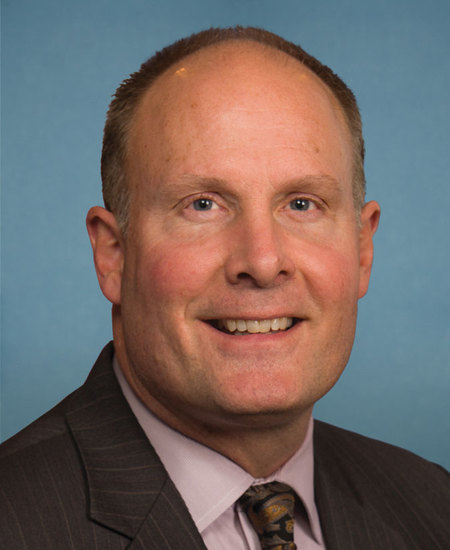
Rep. John R. Moolenaar
Sponsored bills
Maddy summaryThis bill establishes a Truth and Healing Commission to investigate the history and impacts of U.S. Indian Boarding School policies on Native American communities, including cultural, emotional, and physical effects on survivors, descendants, and tribal communities. The Commission will document these impacts through research, public meetings, and testimony, working with two advisory committees focused on Native American perspectives and Federal agency coordination. The Commission will operate for six years, with annual reports to Congress and a final report containing recommendations for Federal action. The bill also includes provisions for managing burial sites related to boarding schools and ensures the Native American Graves Protection and Repatriation Act applies to remains found on Federal lands related to these schools.
Maddy summaryHRES 1594 is a symbolic House resolution supporting the designation of "National Rural Health Day," observed annually on the third Thursday of November. It recognizes rural health care providers and the communities they serve, highlighting challenges like hospital closures, workforce shortages, and access barriers in rural areas. The resolution expresses the House's commitment to improving rural health care accessibility and affordability but does not create new laws or allocate funding. It is a non-binding gesture aligning with an existing observance since 2011, organized by the National Rural Health Association.
Maddy summaryHJRES 225 is a congressional resolution seeking to block an IRS rule that modified the Advanced Manufacturing Production Credit tax incentive. If approved, it would nullify the rule (published October 28, 2024, in the Federal Register), preventing it from taking effect. This directly affects manufacturers that rely on the tax credit for production investments, as they would continue operating under the existing credit rules instead of the proposed changes. The resolution uses a standard procedural mechanism under federal law to disapprove the agency rule.
Maddy summaryThis resolution (HRES 554) affirms U.S. policy support for religious and ethnic minority survivors of ISIS genocide in Iraq, including Yezidis, Assyrians, Chaldeans, and others. It calls for U.S. policy to prioritize the safe return of displaced communities to ancestral areas like Sinjar and the Nineveh Plain, restoration of destroyed religious sites and homes, and economic revitalization of these regions. The resolution urges the Iraqi government and international donors to allocate specific funding for these efforts and ensure minority representation in decision-making, referencing Iraq's Constitution on minority rights. As a non-binding resolution, it does not create new laws but formally states U.S. policy direction on this issue.
Maddy summaryHR 8706, the "Dismantle DEI Act of 2024," would prohibit federal agencies from maintaining diversity, equity, and inclusion (DEI) offices, programs, or training by requiring the closure of existing DEI offices within 90 days and banning federal funding for DEI-related activities. The bill defines "prohibited diversity, equity, and inclusion practices" as those that discriminate based on race, color, ethnicity, religion, biological sex, or national origin, or require training that asserts a particular group is inherently superior or inferior. It would rescind several executive orders related to racial equity and gender inclusion, and prohibit the use of federal funds for DEI-related activities across all federal agencies, contractors, and grant recipients. The bill contains limited exceptions for Equal Employment Opportunity offices and disability rights enforcement offices as historically organized and operated.
Maddy summaryHRES 1577 is a resolution expressing congressional support for National Adoption Day (November 23, 2024) and National Adoption Month (November 2024). It highlights that over 108,000 children in U.S. foster care are waiting for adoption and encourages Americans to consider adoption to help provide safety, permanency, and well-being for children. The resolution does not create new laws but formally recognizes the importance of adoption and urges the public to support efforts to place children in permanent families. It directly affects public awareness and encourages citizen engagement during these designated observances.
Maddy summary# Summary of Proposed Higher Education Act Amendments This document outlines significant proposed amendments to the Higher Education Act of 1965, primarily as part of the "College Cost Reduction Act." The key elements include: ## Accreditation Reform - Major overhaul of accreditation standards, requiring accrediting agencies to demonstrate independence from trade associations - New requirements for accrediting agencies to assess student achievement outcomes, including median value-added earnings relative to median total price charged - Introduction of an "Alternative Quality Assurance Experimental Site Initiative" to test non-accredited institutions - Protections for religious institutions, including a new process for appealing accreditation decisions related to religious mission - Removal of "litmus tests" that would require institutions to support specific political viewpoints ## Student Success Initiatives - Establishment of "Postsecondary Student Success Grants" to increase participation, retention, and completion rates for high-need students - Focus on evidence-based practices, with tiered requirements (tier 1, 2, and 3 reforms) - Mandatory inclusion of high-need student populations (low-income, first-generation, military-connected, etc.) - Requirements for institutions to report on completion rates, retention rates, and student demographics ## Regulatory Changes - Repeal of numerous existing regulations including: * Closed school discharges * Borrower defense to repayment * Pre-dispute arbitration * False certification requirements * Ability-to-benefit rules * Financial responsibility regulations - New restrictions on incentive compensation for recruiters - Changes to third-party servicer definitions and regulations ## Transfer and Credit Policies - New requirement that institutions cannot deny transfer credit based solely on the source of accreditation - Requirements for transparent transfer policies - Changes to reverse transfer policies ## Other Key Provisions - Modifications to the National Advisory Committee on Institutional Quality and Integrity (NACIQI) - New definitions for "total price" and "value-added earnings" - Changes to the process for institutions to change accrediting agencies - New requirements for institutions to report on student outcomes The overall focus of these proposed amendments is to reduce regulatory burden on institutions, promote transparency, improve student outcomes (particularly for high-need students), modernize accreditation processes, and protect religious institutions' rights in accreditation decisions.
Maddy summaryThe Federal Acquisition Security Council Improvement Act of 2024 updates the structure and procedures of the Federal Acquisition Security Council, which oversees security risks in federal procurement. It clarifies definitions of "covered source of concern" (foreign entities posing security risks) and establishes a new Council with members from key agencies including the National Cyber Director, Department of Defense, Homeland Security, and intelligence agencies. The bill creates a Program Office within the Office of the National Cyber Director to support the Council and sets specific timelines for issuing "recommended orders" (90 days) and "designated orders" (30 days) to exclude or remove covered sources of concern from federal contracts. It also establishes a process for waiving these orders with congressional notification and requires annual reporting to Congress on security risks related to covered articles.
Maddy summaryHRES 1566 is a symbolic House resolution honoring all U.S. veterans on Veterans Day 2024. It recognizes the service and sacrifice of the estimated 15.8 million veterans living in the U.S. as of 2023, including those who served in conflicts from World War II to post-9/11. The resolution calls on the American public to observe Veterans Day to acknowledge veterans' role in preserving national freedom. As a non-binding resolution, it has no direct policy impact but formally expresses congressional recognition of veterans' contributions.