

Maddy summaryThe Economic Security and Diplomacy Act of 2024 creates a new Deputy Secretary of State for Economic Security to centralize U.S. economic security efforts within the State Department, taking over responsibilities like sanctions policy, trade, supply chain security, and foreign assistance from existing offices. It reorganizes the department by establishing two new Assistant Secretaries (for Strategic Foreign Assistance and Technology and Innovation Security) and an Office of Economic Analysis and Targeting, which will maintain a Federal database tracking critical supply chains, trade flows, and economic activities of countries like China and Russia. The bill authorizes $10 million for the Deputy Secretary and $25 million annually for the new Office of Economic Analysis and Targeting, including funding for artificial intelligence tools to analyze economic security data. It also creates a program to deploy 20 Foreign Service officers to key diplomatic posts to advance economic security priorities under the new structure.
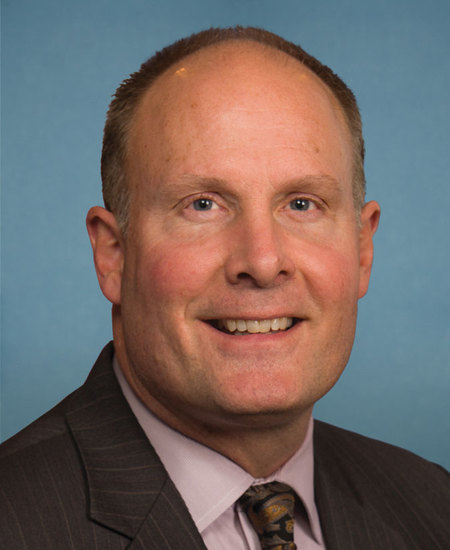
Rep. John R. Moolenaar
Sponsored bills
Maddy summaryThis bill provides one-time financial assistance to U.S. farmers growing specific crops (like corn, soybeans, wheat, cotton, and rice) during the 2024 crop year if their expected costs exceed expected returns. Payments equal 60% of the difference between the expected cost of production per acre (based on USDA cost forecasts) and the expected gross return per acre (based on projected farm prices and yields). Payments are calculated using actual planted acreage plus 50% of acreage prevented from planting due to natural disasters, with annual caps of $175,000 or $350,000 depending on the farm’s primary income source. The program uses existing USDA data sources and applies standard farm payment limits.
Maddy summaryThe Parity for Tribal Law Enforcement Act would allow tribal law enforcement officers working under federal contracts or compacts (via the Indian Self-Determination Act) to enforce federal law on tribal lands, provided they complete equivalent training, pass background checks, and receive Bureau of Indian Affairs certification. It designates these officers as federal law enforcement officers for legal protections under specific federal laws, such as the Federal Tort Claims Act. The bill requires the Secretary of the Interior to establish a credentialing process within 24 months and directs the Attorney General to coordinate federal public safety efforts in Indian communities through improved data collection and training. This policy change directly affects tribal officers and communities by expanding their enforcement authority and legal recognition.
Maddy summaryHRES 1537 is a non-binding House resolution condemning Hamas' October 7, 2023, attacks on Israel, which killed over 1,200 people and took 251 hostages, including 7 Americans still held captive. It calls on Hamas to immediately surrender, cease attacks, and release all hostages unconditionally, while reaffirming Israel's right to self-defense. The resolution also urges international organizations to condemn Hamas' actions and address the global surge in antisemitism following the attacks. As a symbolic statement, it does not create new laws or alter policy but expresses congressional position. The bill specifically references the ongoing captivity of seven U.S. citizens: Edan Alexander, Itay Chen, Sagui Dekel-Chen, Gadi Haggai, Judith Weinstein Haggai, Omer Neutra, and Keith Siegel.
Maddy summaryHR 9950, the "Miracle on Ice Congressional Gold Medal Act," authorizes three gold medals to be awarded to the members of the 1980 U.S. Olympic men's ice hockey team for their historic victory over the Soviet Union during the Winter Olympics. The medals, designed by the Treasury Secretary, will be presented by Congress to honor the team's achievement, which revitalized American morale during the Cold War. One medal will be displayed at the Lake Placid Olympic Center, one at the USA Hockey Hall of Fame in Eveleth, Minnesota, and one at the U.S. Olympic Museum in Colorado Springs. The bill also permits the sale of bronze duplicates to cover production costs. This is a ceremonial honor, not a policy change, directly recognizing the team members and their legacy.
Maddy summaryThis bill creates a federal tax credit for individuals who contribute to scholarship granting organizations (SGOs) that provide scholarships for elementary and secondary education. Taxpayers can claim a credit equal to up to 10% of their adjusted gross income or $5,000 (whichever is less) for contributions to SGOs that provide scholarships for students from households earning no more than 300% of the area median income. Scholarships can cover tuition, educational materials, tutoring, testing fees, and educational therapies, with SGOs required to verify income, undergo independent audits, and meet strict distribution rules. The program would operate with a $5 billion annual cap from 2025-2028, prohibit government control over SGOs or private/religious schools, and prevent discrimination based on religious affiliation.
Maddy summaryThis bill requires dam operators to meet federal safety standards and maintain dams in a way that ensures public safety, directly affecting all entities holding licenses for dams under the Federal Power Act. It mandates that new or renewed licenses can only be issued if dams comply with safety requirements or include a plan to fix deficiencies. The Federal Energy Regulatory Commission (FERC) must also assess applicants' financial ability to meet safety standards and establish procedures for sharing dam safety information with states after inspections or license revocations. These changes aim to strengthen oversight of dam safety through clearer standards, license conditions, and communication between FERC and state authorities.
Maddy summaryHR 9889 provides $14 billion in emergency funding to assist farmers and ranchers recovering from 2023 natural disasters like droughts, wildfires, floods, and hurricanes. It directly affects agricultural producers who suffered crop, livestock, or dairy losses, including $1.5 billion specifically for livestock-related expenses. The bill establishes payment limits (up to 90% of losses for insured producers, 70% for uninsured) and requires beneficiaries to purchase crop insurance or NAP coverage for the next two crop years. Payments cover revenue losses for crops, trees, vines, and livestock relocation costs, with administrative costs capped at 1% of the total appropriation.
Maddy summaryThe Patriotic Investment Act (HR 9843) changes how gains from selling certain investments linked to China are taxed. It requires that gains from "disqualified PRC securities" - such as stocks in Chinese government entities, the Communist Party, Chinese-owned companies, or individuals from mainland China (with exceptions for U.S. citizens and Taiwan residents) - be treated as ordinary income and taxed at the highest rate, rather than as capital gains. The bill also denies foreign tax credits for income derived from these sales. These changes apply to transactions occurring six months after the bill's enactment.
Maddy summaryHRES 1493 is a symbolic congressional resolution condemning Vice President Kamala Harris for her past support of climate policies as a senator. It specifically references her 2019 cosponsorship of the Green New Deal resolution and her 2020 climate plan proposals, which the resolution claims would increase national debt and harm energy independence. The resolution does not create new laws or affect any policies - it only expresses disapproval of these historical positions. It has no legal effect or direct impact on current legislation or constituents.