

Maddy summaryThis bill requires most health insurance plans to cover HIV prevention services - including PrEP and PEP drugs, related lab tests, counseling, and monitoring - without cost-sharing (like copays or deductibles) or prior approval. It applies to private insurance, Medicare, Medicaid/CHIP, and federal employee health plans, directly affecting people who use HIV prevention medications. Key provisions mandate 100% coverage for FDA-approved HIV prevention drugs, eliminate cost-sharing for these services, and prohibit insurers from requiring preauthorization for them. The bill defines covered services to include all necessary components of HIV prevention care as outlined in current public health guidelines.
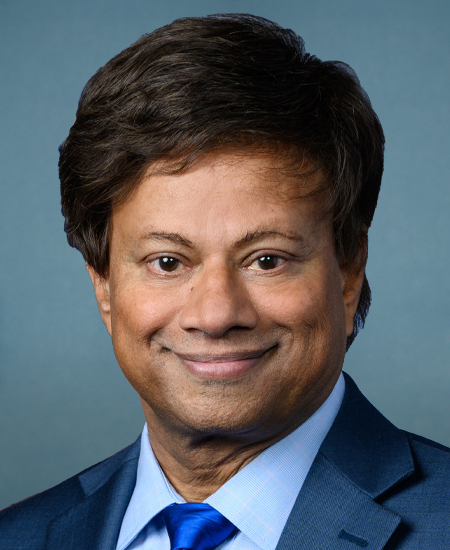
Rep. Shri Thanedar
Sponsored bills
Maddy summaryHR 5126, the HIV Prevention Now Act, appropriates $2.165 billion for the CDC's National Center for HIV, Viral Hepatitis, STD, and Tuberculosis Prevention for fiscal year 2026. This funding is in addition to existing CDC appropriations and must be used exclusively by that specific center for its programs, with no transfer to other entities. The bill directly affects the CDC's public health operations by providing dedicated resources for prevention and treatment programs targeting HIV, viral hepatitis, STDs, and tuberculosis. It does not create new policies or alter eligibility but ensures sustained funding for existing prevention efforts at the federal level.
Maddy summaryThis bill requires the Bureau of Prisons (BOP) to issue photo identification cards meeting REAL ID standards to U.S. citizen prisoners being released from federal custody within 180 days of enactment. The card is valid for 18 months and must be accepted by states for state ID purposes (through negotiated agreements) and by federal programs like Social Security, Medicare, Medicaid, food assistance, and housing programs. It directly affects federal prisoners upon release, states (through required negotiations), and federal agencies that provide services requiring ID. The law mandates annual reports to Congress on state agreement progress but does not change existing prerelease planning procedures.
Maddy summaryThe Quiet Communities Act of 2025 reestablishes the Environmental Protection Agency’s Office of Noise Abatement and Control, which was defunded in 1982. This office will provide grants to states for local noise control programs, conduct national research on noise health impacts, develop public education materials, and create regional technical assistance centers. The bill authorizes $25 million annually (2026-2030) to fund these activities, directly supporting communities affected by noise pollution - particularly the estimated 28 million U.S. residents with hearing impairments linked to noise exposure. It emphasizes state/local solutions, market incentives, and coordination with other agencies to address noise from aircraft, traffic, and other sources.
Maddy summaryHR 5115, the Protecting Older Americans Act of 2025, makes pre-dispute arbitration agreements unenforceable for age discrimination claims involving people aged 40 or older. The bill directly affects workers aged 40+ who face alleged age discrimination under federal, tribal, or state law, and their employers who might require arbitration. Key provisions require courts - not arbitrators - to decide if arbitration clauses apply in such cases, and prohibit enforcing these clauses for age discrimination disputes filed after the law’s enactment. This changes how age discrimination claims are resolved, ensuring affected individuals can pursue cases in court rather than mandatory arbitration.
Maddy summaryThis bill prohibits Members of Congress, their spouses, and dependent children from owning or trading certain investments, including stocks, commodities, and derivatives (referred to as "covered investments"). It requires affected individuals to divest these investments within 90-180 days, with specific exemptions for Treasury bonds, diversified mutual funds, small business interests, and family trusts meeting strict conditions. Violations incur penalties of 10% of the investment's value plus disgorgement of profits, paid directly to the U.S. Treasury. The law applies to all covered individuals during federal service, with exceptions for investments acquired through inheritance or occupational trading (e.g., a spouse’s finance job).
Maddy summaryThe Tipped Worker Protection Act eliminates the sub-minimum wage for tipped workers, requiring employers to pay the full minimum wage instead of the current $2.13/hour rate that relies on tips to make up the difference. During a transition period, tipped workers would receive a minimum cash wage of $3.60/hour in the first year, increasing by $1.50 annually until reaching the full minimum wage. The bill also prohibits employers from keeping tips or using them for anything other than distributing to employees, requires transparency about service charges, and establishes rules for voluntary tip pooling. This bill directly affects workers in restaurants, bars, and other service industries who traditionally receive tips as part of their compensation.
Maddy summaryHR 5073, the INFORM Act of 2025, requires immigration authorities to notify the immediate family of a detained individual within 24 hours if they are transferred to a different detention facility. This applies directly to immigrants held under U.S. immigration law and their immediate family members, defined as parents, children, spouses, and certain extended family like step-relatives or domestic partners. The law mandates that notifications include the reason for the transfer and full contact details (name, address, phone number, and point of contact) for the new facility. It establishes a specific timeline and content requirement for these notifications to improve transparency during detention transfers. The bill focuses on procedural changes for facility transfers, not on altering detention policies or immigration eligibility.
Maddy summaryHRES 671 is a non-binding House resolution expressing support for treating mental health with the same priority as physical health to combat suicide and overdose epidemics. It calls for enforcing existing mental health parity laws in insurance coverage, reducing cultural stigma around mental illness, and backing the 2024 National Suicide Prevention Strategy. The resolution directs the House to advocate for increased funding and resources to expand mental health workforce capacity, improve access to medication-assisted treatment, and implement evidence-based suicide prevention programs. It specifically emphasizes supporting school-based mental health services, culturally tailored care, and digital campaigns targeting youth. As a symbolic resolution, it does not create new laws or allocate funds but urges federal and state action on these priorities.
Maddy summaryHR 5088, the "Union Participation for All Act," repeals a provision in the 1959 Labor-Management Reporting and Disclosure Act (LMRDA) that barred individuals convicted of certain crimes (like bribery or fraud) from holding union leadership positions. This change directly affects union members with specific criminal convictions who previously could not serve in union offices. The bill removes Section 504 of the LMRDA, eliminating the ban on their eligibility for union leadership roles. It does not alter other union governance rules or create new requirements.