

Maddy summaryThis bill authorizes a Congressional Gold Medal to honor the Freedom House Ambulance Service, which pioneered the first paramedic-based emergency medical system in the U.S. in the 1960s. It recognizes the service's role in establishing professional pre-hospital care standards, training marginalized residents (including the first women paramedics), and influencing national EMS protocols despite being defunded in 1975. The medal will be presented to the National Museum of African American History and Culture for public display, as specified in the bill. The legislation is purely commemorative, with no new policy or funding changes, focusing on preserving the service's historical significance in medical innovation and civil rights.
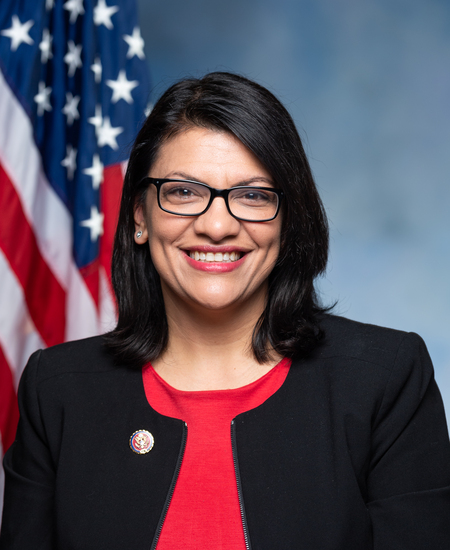
Rep. Rashida Tlaib
Sponsored bills
Maddy summaryHR 7608, the Southeast Asian Deportation Relief Act of 2026, prevents the deportation of eligible Cambodian, Laotian, and Vietnamese nationals who entered the U.S. before January 1, 2008, and have continuously resided here since. The bill halts removals for these individuals, grants them permanent work authorization with 5-year permits renewable indefinitely, and eliminates in-person check-ins for immigration supervision. It also requires immigration authorities to reopen past deportation cases for eligible individuals, allowing them to seek relief under the Act’s provisions without retroactive penalties. This directly affects approximately 15,000 long-term Southeast Asian residents, many of whom arrived as child refugees following conflicts the U.S. was involved in.
Maddy summaryHR 7599 creates a federal framework for extreme risk protection orders (ERPOs), allowing family members or law enforcement to petition courts to temporarily prohibit individuals from possessing firearms when they pose a risk of harm to themselves or others. The bill establishes a process for issuing ex parte orders (up to 14 days) followed by a hearing within 72 hours to determine if a longer-term order (up to 180 days) should be issued, requiring respondents to surrender firearms to U.S. Marshals or designated law enforcement. Courts must consider specific factors like recent threats, violence, substance abuse, or cruelty to animals before issuing orders, with no fees for petitioners. The law requires law enforcement training to address bias, includes annual reporting requirements, and ensures firearms are returned once the order expires and the individual is eligible to own firearms under federal law.
Maddy summary# Summary of the Workplace Discrimination and Harassment Bill This comprehensive legislation aims to strengthen protections against workplace discrimination and harassment, with several key provisions: ## Key Provisions ### 1. Expanded Protections for Workers - Extends protections to independent contractors, interns, and volunteers - Clarifies that domestic service workers in households are covered under interstate commerce - Prohibits nondisclosure and nondisparagement clauses that cover harassment or discrimination ### 2. Nondisclosure Agreement Restrictions - Makes it unlawful for employers to require nondisclosure or nondisparagement clauses covering harassment or discrimination - Establishes specific requirements for valid settlement agreements: - Requires mutual agreement - Limits scope to statements with knowledge of falsity - Requires written advice to consult an attorney - Provides 21-day consideration period and 7-day revocation period - Prohibits enforcement of such clauses against workers reporting discrimination ### 3. Federal Contractor Compliance - Requires federal contractors to disclose labor and civil rights violations from the past 3 years - Establishes Labor Compliance Advisors within executive agencies - Creates procedures for pre-award and post-award compliance monitoring - Mandates annual reporting on contractor compliance ### 4. Nationwide Grant Programs - **National Grants**: For preventing and addressing employment discrimination through education, outreach, and complaint assistance - **Legal Assistance Grants**: For low-income workers facing employment discrimination - **State Advocacy System**: Creates state-level systems to protect workers' rights, with: - Independent lead entities - Authority to investigate discrimination - Annual reporting requirements - Coordination with federal and state agencies ### 5. Enforcement Mechanisms - Empowers the Equal Employment Opportunity Commission to enforce the bill - Establishes clear procedures and remedies for violations - Requires employers to provide specific information about their compliance with labor laws The bill represents a comprehensive approach to workplace rights, focusing on prevention, reporting, and enforcement mechanisms while ensuring workers can seek redress without fear of retaliation or silencing through restrictive agreements.
Maddy summaryHR 7543, the Plastic Pellet Free Waters Act, prohibits plastic pellets and pre-production plastic materials from being discharged into waterways through wastewater, spills, or runoff from specific facilities. It directly affects plastic manufacturing, molding, packaging, and transportation facilities regulated under existing environmental rules. Within 60 days of enactment, the EPA must issue a rule banning these discharges and update all relevant wastewater, stormwater, and performance standards in permits. The law requires all permits and standards for these facilities to reflect the new ban, ensuring plastic pellets cannot enter water systems. This is a concrete regulatory change to prevent plastic pollution at its source.
Maddy summaryHRES 1061 is a symbolic resolution recognizing the cultural and historical significance of Lunar New Year in 2026. It does not create new laws or policies, but formally acknowledges Lunar New Year's origins (over 4,000 years in China), its celebration as Seollal in Korea and Tết in Vietnam, and its observance by millions of Asian Americans and others in the U.S. The resolution expresses respect for Asian Americans and extends holiday wishes for a "happy and prosperous new year" during the Year of the Horse. As a non-binding resolution, it has no legal effect or direct impact on any individuals or groups.
Maddy summaryThis House Resolution denounces statements made by former President Donald J. Trump proposing a federal takeover or nationalization of elections. It asserts that the U.S. Constitution assigns primary authority over federal election administration to state legislatures and Congress, not the President. The resolution rejects any suggestion that the President may lawfully assume direct control over elections, deeming such actions unconstitutional and unlawful. Furthermore, it expresses grave concern that such advocacy undermines federalism and warns that attempts to implement such measures could be grounds for impeachment.
Maddy summaryThis bill requires the Department of Defense to obtain a clean audit opinion for its financial statements or face automatic spending reductions. If the Pentagon fails to achieve this by fiscal year 2026, non-exempt programs would lose 0.5% of funding in the first year of failure and 1% annually thereafter, with cuts applied across all programs within the affected department. Military personnel, reserve, National Guard, and Defense Health Program accounts are exempt from these reductions. Any funds saved through these cuts would be deposited into the General Fund for deficit reduction, not redirected to military operations.
Maddy summaryThis bill requires most employers to provide workers with earned paid sick leave. Employees would earn 1 hour of paid sick time for every 30 hours worked, up to 56 hours per year, which can be used for their own illness, medical care, caring for family members (including children, parents, spouses, domestic partners, or other family-like relationships), or addressing domestic violence, sexual assault, or stalking situations. The bill prohibits employers from retaliating against workers who use this leave and requires employers to inform employees about their rights. It ensures that workers who leave and return to the same employer within a year can reinstate their unused sick leave. This law would not override more generous state or local paid leave policies.
Maddy summaryThis bill would remove longstanding U.S. trade restrictions on Cuba by repealing key laws including the Cuban Democracy Act of 1992 and the LIBERTAD Act of 1996. It would allow U.S. businesses to trade with Cuba without restrictions, enable telecommunications services between the U.S. and Cuba, and eliminate limits on U.S. citizens sending remittances to Cuba. The bill also extends normal trade relations to Cuban goods, meaning Cuban products would enter the U.S. market without special tariffs. This would directly affect U.S. businesses, travelers, and Cuban citizens who receive remittances. The changes would take effect 60 days after enactment, with some provisions applying to goods entering the U.S. market 15 days after enactment.