

Maddy summaryThis resolution (HRES 1088) is a non-binding House of Representatives measure recognizing the importance of Black history museums and cultural institutions. It formally acknowledges their role in preserving Black American history and contributions, particularly in relation to the 2026 100th anniversary of Black History Month and the U.S. 250th anniversary. The resolution urges the House to affirm that Black history is foundational to American history and calls for federal agencies to support these institutions through funding and partnerships. It also encourages the public to visit these museums, support them financially, and engage with their educational resources. The resolution does not create new laws or allocate funding, but serves as a symbolic endorsement of these institutions' cultural and historical significance.
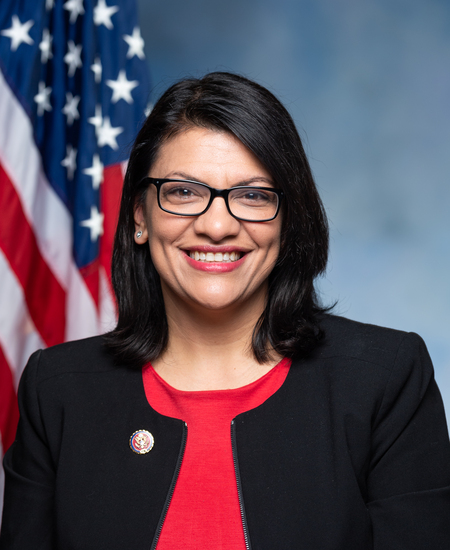
Rep. Rashida Tlaib
Sponsored bills
Maddy summaryHR 7728, the Connect the Grid Act, requires Texas' ERCOT grid to connect with neighboring power systems by repealing its special exemptions from federal grid regulations. It mandates minimum power flow capacity between ERCOT and other grids (SPP, MISO, and the Western Interconnection) ranging from 2.5 to 12.6 gigawatts, with specific deadlines for new transmission projects by 2037. The bill directs grid operators to prioritize using existing infrastructure, degraded land sites, renewable energy access, and community engagement - including environmental justice and Tribal communities - in planning new transmission. It also increases federal funding for transmission projects and requires a study on benefits of connecting with Mexico’s grid.
Maddy summaryHR 7740, the African American History Act of 2026, authorizes $4 million annually for the National Museum of African American History and Culture to develop educational resources and support teaching about African American history. The bill directs the museum to create digital and print materials, provide teacher training, and expand access to curriculum resources for K-12 and college classrooms. It requires annual reports to Congress on fund usage and expires in 2030. This program directly affects educators and students by enhancing classroom materials and professional development on African American history.
Maddy summaryThis bill requires the Bureau of Prisons to employ at least one full-time, board-certified OB-GYN at every federal prison housing female inmates. It mandates specific services including menstrual care, contraception, prenatal care, cancer screenings, and postpartum support, along with patient protections like informed consent and the right to refuse non-emergency care. The bill also requires initial OB-GYN visits within 14 days of incarceration and establishes a process for referrals to other specialists without delays. Annual reports to Congress will track facility compliance, staffing vacancies, and health outcomes like prenatal visits, childbirths, and pregnancy-related deaths.
Maddy summaryThis bill prohibits the Department of Homeland Security from using federal funds to buy or use full-body restraints, which are devices that immobilize individuals. It directly affects DHS personnel and operations by banning the acquisition and utilization of four-point and five-point restraints. The law includes penalties for violations, such as removal from federal service for officers who break the rules or deceive leadership about them. DHS must also submit quarterly reports to Congress detailing compliance status and any instances where restraints were used, including specific information about the individuals restrained and the circumstances involved. Existing contracts for these restraints made before the bill's enactment are exempt from the ban.
Maddy summaryHRES 1084 designates February 28 as "HIV is Not a Crime Awareness Day" to address the criminalization of people living with HIV. The resolution calls for ending state laws that impose harsh penalties or criminalize consensual acts based solely on HIV status - regardless of transmission risk, intent, or disclosure - and notes these laws disproportionately impact Black and brown communities, Black women, and transgender women. It urges education for law enforcement and communities, removal of outdated HIV criminalization laws, and increased support for HIV prevention, testing, treatment, and care programs. The resolution does not create new laws but advocates for policy changes to align with current medical understanding and reduce stigma.
Maddy summaryHRES 1080 is a symbolic resolution recognizing and celebrating Black History Month 2026, focusing on its theme "A Century of Black History Commemorations." It highlights historical figures and events central to Black history, including Carter G. Woodson’s founding of Negro History Week (the precursor to Black History Month), Juneteenth, and key moments like the 1865 Charleston commemoration. The resolution emphasizes how Black history commemorations counter historical erasure and affirm Black contributions to U.S. history, referencing figures like Mary McLeod Bethune and W.E.B. Du Bois. As a ceremonial resolution, it has no binding effect but aims to raise awareness of Black achievements through official recognition.
Maddy summaryHR 7706, the Federal Retirement Safety Act, modifies federal retirement rules to protect victims of domestic violence. It allows federal employees to bypass spousal consent requirements for lump-sum retirement payments if they self-certify that their spouse or former spouse committed a domestic violence crime (as defined in federal law) against them within the past year. The bill requires the Office of Personnel Management to create safety-focused procedures for obtaining consent or waiving it without consent when domestic violence poses a safety risk. This directly affects federal employees in domestic violence situations who need to access retirement benefits without risking further harm. The law takes effect one year after enactment, with regulations required within one year of passage.
Maddy summaryHRES 1070 is a non-binding House resolution congratulating Michigan athletes who competed in the 2026 Milano Cortina Olympics and Paralympics. It formally honors 232 U.S. athletes (including 88 Michigan-affiliated competitors) who represented Team USA, highlighting their collegiate backgrounds and achievements. The resolution specifically recognizes Michigan Olympians and Paralympians like Dylan Larkin and Emilea Zingas through symbolic language. It has no policy impact or legal effect, serving solely as a ceremonial expression of support for athletes.
Maddy summaryThe Head Start for America's Children Act amends the Head Start Act to enhance early childhood education services for low-income children, with specific provisions to improve culturally responsive programming for Native American and Native Hawaiian communities. It increases funding for Head Start programs, including $91.575 million for transportation, $37.5 million for workforce development, and $863 million for extended operations to provide full calendar year services. The bill updates definitions throughout the law to use more inclusive language, replacing "limited English proficient" with "children who are developing English proficiency," and establishes new requirements for staff compensation and benefits to improve recruitment and retention. Native American Head Start programs and migrant/seasonal programs are exempt from certain requirements, such as the full calendar year service requirement.