

Maddy summaryThe Fisheries Data Modernization and Accuracy Act of 2025 reforms how recreational fishing data is collected and used by the National Marine Fisheries Service. It establishes a standing committee with the National Academies to advise on data collection methods, sets a 30% threshold for data reliability (percent standard error), and requires consultation when data falls below this level. States can develop their own data collection programs that may replace federal MRIP data when they meet specific standards, and the bill creates a grant program to help states improve their systems. The bill requires annual reports on implementation and data quality improvements, affecting recreational fishing management across all coastal states and federal fisheries agencies.
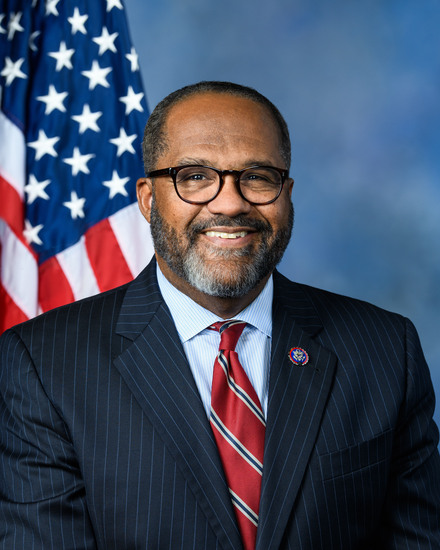
Rep. Troy A. Carter
Sponsored bills
Maddy summaryHR 1514 establishes the Mississippi River Basin Fishery Commission within the Department of the Interior to coordinate management of interjurisdictional fisheries across 31 U.S. states, two Canadian provinces, federal agencies, and tribal nations. The Commission oversees six sub-basin management plans, develops strategies to control invasive carp (like bighead and silver carp), and administers grant programs for conservation projects. It provides $30 million annually (2027-2029) and $50 million annually (2030-2032) to fund collaborative efforts, with grants prioritizing projects aligned with the existing MICRA Joint Strategic Plan. The Commission’s authority is nonbinding, requiring consensus among member entities but not overriding state or federal management laws.
Maddy summaryHRES 891 is a ceremonial House resolution supporting the designation of National Rural Health Day, observed annually on the third Thursday of November (November 20, 2025, this year). It recognizes rural health care providers and the challenges rural communities face in accessing care, citing issues like hospital closures and workforce shortages. The resolution does not create new policies, funding, or requirements; it solely expresses the House's support for the day's goals and commitment to improving rural health accessibility. This is a non-binding acknowledgment, not a legislative action with concrete policy changes.
Maddy summaryHR 1608 requires the Department of Homeland Security (DHS) to submit a detailed report to Congress within 180 days of enactment, assessing vehicular terrorism threats and countermeasures. The report must analyze emerging risks - including threats using autonomous vehicles, ride-sharing apps, and connected car technologies - and identify high-risk locations like airports, mass gatherings, and critical infrastructure. It also mandates DHS to detail current prevention efforts, coordination with state/local governments and private companies (e.g., ride-sharing platforms), and recommendations for new technologies like vehicle immobilization systems. An unclassified summary of the report will be published publicly, with annual briefings to Congress on findings.
Maddy summaryHRES 885 is a symbolic resolution designating November 15, 2025, as "America Recycles Day" to raise public awareness about recycling and promote national discussion on advancing a circular economy. It does not create new laws or funding but formally expresses congressional support for recycling efforts and acknowledges the sector's economic impact (contributing $168 billion and supporting 500,000 jobs). The resolution encourages Americans to "reduce, reuse, and recycle" while highlighting recycling's benefits for environmental sustainability, job creation, and supply chain resilience. It directly affects the public, recycling stakeholders (including communities, businesses, and governments), and the broader recycling industry by elevating public engagement with existing practices.
Maddy summaryHR 6056, the International Human Rights Defense Act of 2025, establishes a permanent Special Envoy at the State Department to lead U.S. foreign policy efforts addressing discrimination and violence against LGBTQI+ people globally. The bill requires the U.S. government to develop and update a biannual global strategy to prevent criminalization and violence against LGBTQI+ individuals, mandate detailed reporting on such abuses in annual country reports, and ensure all U.S. foreign assistance programs include inclusive nondiscrimination policies. This legislation directly affects U.S. foreign policy implementation, federal agencies receiving funding, and LGBTQI+ communities facing persecution worldwide. The bill aims to coordinate U.S. government efforts across departments and with international partners to advance LGBTQI+ rights globally through concrete policy mechanisms.
Maddy summaryHR 6032, the Headstones for Honor Act, expands eligibility for Department of Veterans Affairs (VA) headstones, markers, or medallions to two specific groups: enslaved individuals who accompanied military personnel during service, and people who performed military functions despite legal bans based on race, gender, or ethnicity. The bill requires VA regulations to define "military function" and accept evidence like pay records, diaries, or family bibles to verify eligibility. For those who served with the Confederate States, headstones must include language noting they were "forced to support their own enslavement." Requests for headstones must be made by direct descendants or authorized representatives, with VA regulations due within one year of enactment.
Maddy summaryThis bill expands veterans' benefits for Filipino veterans who served in the Philippine forces or Philippine Scouts during World War II. It updates eligibility rules to allow the VA to accept alternative documentation (beyond standard records) when verifying service, addressing historical barriers to claiming benefits. The law also requires the VA to annually report to Congress on the number of applications received and approvals granted under this provision. These changes directly affect Filipino veterans and their families seeking recognition and benefits for their military service. The bill takes effect 270 days after enactment, with no retroactive benefits.
Maddy summaryThis bill creates the Historic Naval Ship Preservation Grant Program under the Department of the Interior to fund the physical preservation of decommissioned military vessels displayed at public sites like museums and memorials. It authorizes $5 million annually for competitive grants to state/local governments or nonprofits managing these "covered sites," covering vessel repairs, environmental protection, and education programs related to shipbuilding and submarine careers. The program directly supports organizations that maintain historic military vessels, ensuring public access to these educational resources. It does not alter existing vessel ownership or military operations but provides dedicated funding for their upkeep and educational use.
Maddy summaryHR 5965, the Student Veteran Work Study Modernization Act, expands work-study eligibility for veterans pursuing education or rehabilitation programs at least half-time (instead of the current three-quarter-time requirement). The bill creates a 5-year pilot program allowing veterans to receive a work-study allowance from the VA while studying part-time, directly affecting veterans enrolled in qualifying programs. It requires the VA to submit annual reports tracking participation rates, four-year degree attainment, and full-time VA employment outcomes for participants. The law modernizes existing VA work-study rules without altering benefit amounts or creating new funding streams.