

Maddy summaryHR 5267, the American Franchise Act, clarifies when franchisors can be considered joint employers of franchisee employees under federal labor laws. It defines "substantial direct and immediate control" over essential employment terms like wages, benefits, hours, hiring, and discipline - requiring franchisors to actively set these terms to be deemed joint employers. The bill explicitly excludes routine brand standards, training, or minimal safety requirements from constituting such control. This directly affects franchisors and franchisees by limiting joint employer liability to cases where franchisors exert significant, ongoing influence over core employment decisions. The law applies prospectively to new cases after enactment, not past disputes.
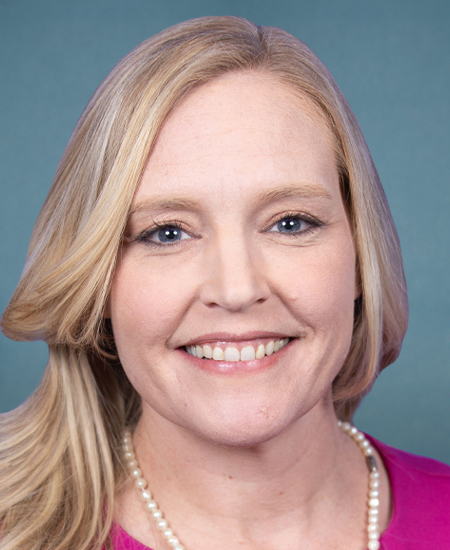
Rep. Erin Houchin
Sponsored bills
Maddy summaryThis House resolution marks the 25th anniversary of the September 11, 2001 terrorist attacks by formally honoring the memory of the nearly 3,000 victims and recognizing the sacrifices made by first responders, military personnel, and the passengers of United Airlines Flight 93. The bill acknowledges the ongoing health challenges faced by survivors and responders, highlighting the role of the World Trade Center Health Program in providing long-term medical support. It also credits charitable organizations and community groups that have continued to assist victims' families and veterans over the past two decades. Finally, the resolution urges the American public to observe the anniversary with ceremonies and reaffirms Congress's commitment to remembering the events and lessons of that day.
Maddy summaryThe GUARDIAN Act requires social media platforms to obtain verifiable parental consent before collecting or processing the personal data of users under the age of 16. It defines "covered platforms" as internet services that use design features like infinite scrolling, push notifications, and personalized recommendation algorithms to promote user engagement. The bill mandates that these platforms delete a minor's data when they turn 16 unless a parent explicitly requests retention, and it grants parents the right to withdraw consent at any time, which forces the platform to terminate the account within ten days. Enforcement is handled by the Federal Trade Commission, with state attorneys general also permitted to bring civil actions for violations, while the law preempts conflicting state regulations but allows states to enact stricter protections for minors.
Maddy summaryThe RESET Act prohibits social media platforms from allowing users under 16 to create or maintain accounts. Platforms must identify existing minor accounts within 60 days of enactment, notify users within 180 days, and terminate accounts within 30 days of notification. Upon termination, platforms must delete all personal data collected from minors and provide a readable, portable copy of that data for 90 days after termination. Enforcement is handled by the Federal Trade Commission and allows states to pursue legal action for violations.
Maddy summaryHR 2555, the Freedom of Association in Higher Education Act of 2025, protects students who join or form single-sex social organizations (like fraternities or sororities) at colleges. It prohibits colleges receiving federal funds from taking negative actions against these students or organizations solely because they limit membership to one sex - such as denying housing, financial aid, leadership roles, or recognition. The bill ensures students can join such groups without coercion and stops colleges from imposing unfair recruitment rules on single-sex organizations compared to others. It does not require colleges to recognize single-sex groups, allow organizations to set their own membership rules, or override Title IX protections.
Maddy summaryThe New IDEA Act amends the Individuals with Disabilities Education Act to expand the legal definitions of specific learning disabilities, explicitly including conditions such as dyslexia, dyscalculia, and dysgraphia. It also updates terminology for language impairments by adding developmental language disorder and clarifies that autism is part of a broader category of spectrum disorders. The bill establishes clear criteria for what constitutes a specific learning disability while excluding issues caused by factors like visual or hearing impairments, intellectual disabilities, or a lack of appropriate instruction. Additionally, it requires local educational agencies to ensure equal access to accommodations and services for eligible children from low-income households and those with limited English proficiency.
Maddy summaryHR 7008, the Stop Insider Trading Act, restricts Members of Congress, their spouses, and dependent children from purchasing certain investments like stocks in publicly traded companies. It requires 7-14 days' advance public notice before selling any such investment, including the sale date, description, and number of shares. Exceptions apply for work-related transactions (e.g., employer compensation) and reinvesting dividends. Violations trigger a fee of $2,000 or 10% of the investment’s value (whichever is greater), plus any net gain, paid from personal funds - not congressional allowances or campaign donations. The bill aims to prevent conflicts of interest by increasing transparency around congressional financial dealings.
Maddy summaryThe READ Act amends the Elementary and Secondary Education Act to improve reading instruction by defining specific terms like "science of reading" and "high-impact tutoring" and requiring states to exclude certain teaching models that rely on context clues. The bill directs federal literacy grants to states, with mandatory funding for low-performing states, to implement evidence-based strategies such as universal early literacy screenings, professional development for teachers, and the adoption of high-quality instructional materials. It also mandates that states report data on student progress and teacher training while prohibiting the Department of Education from issuing regulations that dictate specific instructional content or curricula. Additionally, the legislation expands research initiatives to study reading development and requires the federal government to provide states with detailed reports on academic outcomes and achievement gaps.
Maddy summaryThe Higher Education Access and Success for Homeless and Foster Youth Act of 2026 expands federal protections and support services for homeless and foster care students in higher education. It requires colleges to designate trained staff liaisons to assist these students with accessing resources like housing, food, and financial aid, while also mandating that institutions provide priority access to on-campus housing for this population. The bill further updates various federal student aid programs to explicitly include homeless and foster youth, ensuring they are treated as independent students for financial aid purposes and are actively recruited and retained through targeted outreach. Additionally, the legislation establishes new reporting requirements for colleges to track the number of these students served and mandates that states offer in-state tuition rates to homeless and foster youth attending public institutions.
Maddy summaryThe FRONTIER Act establishes a regulatory framework for the largest artificial intelligence developers to manage and disclose risks associated with their most powerful models, known as "frontier models." It requires companies meeting specific revenue and spending thresholds to create public safety frameworks, undergo independent third-party audits, and report incidents or potential harms to the Department of Commerce. The bill also creates a system where the Secretary of Commerce can issue emergency orders to suspend or restrict model development if an imminent catastrophic risk is identified. Additionally, the legislation preempts state laws that impose new obligations on AI developers regarding risk transparency, auditing, and incident reporting to ensure a uniform national approach.