

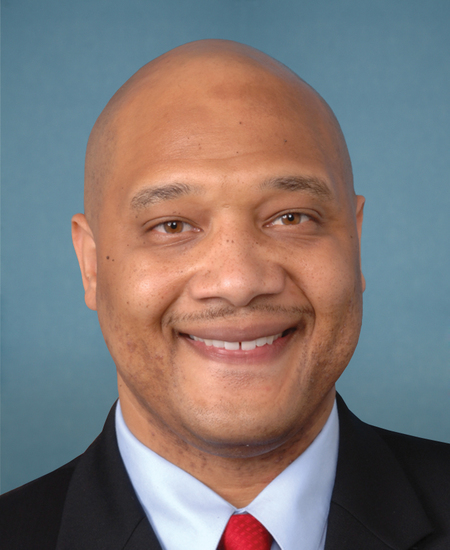
Photo of André Carson
D United States House · District 7 · Indiana On the 2026 ballot

Rep. André Carson

Compare
Total votes
2,837
all sessions
Attendance
99%
40 missed
Near the chamber average
With party
98%
of cast votes
Near the chamber average
Bipartisan score
1%
crosses aisle rarely
Near the chamber average
Sponsored
2,956
bills & resolutions
Higher than 98% of chamber peers
Committees
4
assignments
2,956 bills and resolutions

Sponsored bills

Total
2,956
Primary
62
Co-sponsor
2,894
This page
2,956
matching current filters
Co-sponsor HR 6394
Passed · Indiana House · Co-sponsor
Semiquincentennial Congressional Time Capsule Act

Maddy summaryThis bill directs the Architect of the Capitol to create a time capsule for the U.S. Semiquincentennial (250th anniversary of independence). Congressional leadership will determine its contents, including representative materials about the Semiquincentennial, copies of key legislative milestones, and a message to future Congress. The capsule will be sealed on the Capitol's West Lawn by July 4, 2026, and remain unopened until July 4, 2276, when it will be presented to the 244th Congress for their consideration. The bill is procedural and does not affect citizens or change existing laws.

Passed Dec 17, 2024 1 co-sponsor
Co-sponsor HR 6021
In committee · Indiana House · Co-sponsor
Ejiao Act of 2023

Maddy summaryThe Ejiao Act of 2023 prohibits the import, export, transportation, sale, or purchase of donkeys, donkey hides, and products containing ejiao (a gelatin made from donkey skin) within U.S. borders. It directly affects U.S. businesses and consumers involved in trading these items, aiming to reduce global demand driving the slaughter of millions of donkeys - particularly harming communities in Africa and Latin America that rely on donkeys for farming, transportation, and livelihoods. Key mechanisms include civil penalties of up to $10,000 per violation, criminal penalties for severe breaches (including fines and imprisonment), and mandatory forfeiture of violative goods. The bill is grounded in congressional findings that the donkey skin trade has caused population collapses (e.g., 76% decline in China since 1992) and devastating social impacts on impoverished families.

In committee Dec 17, 2024 1 co-sponsor
Co-sponsor HR 5744
In committee · Indiana House · Co-sponsor
Energy Innovation and Carbon Dividend Act of 2023

Maddy summaryHR 5744, the Energy Innovation and Carbon Dividend Act of 2023, would impose a carbon fee on fossil fuels (crude oil, coal, and natural gas) based on their greenhouse gas emissions, starting at $15 per metric ton of CO2 equivalent in 2023 and increasing by $10 annually. The revenue from this fee would be distributed directly to American citizens as monthly "carbon dividends" through a new trust fund, with adults receiving full payments and children under 19 receiving half payments. The bill also establishes a border fee adjustment on imported carbon-intensive products to prevent companies from moving operations to countries with weaker environmental regulations. It sets specific emissions reduction targets: 8% annual reductions from 2025-2030 and 2.5% annual reductions from 2031-2050 relative to 2005 levels. The carbon fee would be phased out once emissions drop to 10% of 2005 levels and monthly dividends fall below $20 for three consecutive years.

In committee Dec 17, 2024 1 co-sponsor
Co-sponsor HR 5760
In committee · Indiana House · Co-sponsor
Climate Resilience Workforce Act

Maddy summaryThe Climate Resilience Workforce Act establishes a coordinated federal system to build a workforce for climate resilience, directly affecting workers in climate-related sectors and prioritizing frontline communities (low-income, communities of color, Tribal communities) and populations facing employment barriers (undocumented individuals, formerly incarcerated people). Key mechanisms include grant programs for state and local climate resilience planning, job creation grants requiring 40% of jobs to go to frontline communities and populations facing barriers, and minimum labor standards including $15/hour wages (increasing annually), employer-paid health insurance, and protections against discrimination. The bill creates an Office of Climate Resilience, a Climate Resilience Equity Advisory Board, and a Center for the Climate Resilience Workforce to define climate resilience sectors and ensure equitable hiring practices. It also removes employment barriers through immigration status protections, criminal record reforms, and drug testing policy changes for climate resilience workers.

In committee Dec 17, 2024 1 co-sponsor
Co-sponsor HR 5644
In committee · Indiana House · Co-sponsor
End Diaper Need Act of 2023

Maddy summaryThe End Diaper Need Act of 2023 creates a federal program that will provide free diapers and incontinence supplies to low-income families with infants, toddlers, medically complex children (3+ years old with chronic health conditions), and low-income adults with disabilities. It allocates $200 million annually from 2024-2027 to fund this assistance through states and community organizations, making medically necessary diapers eligible for reimbursement through health savings accounts and other health benefit programs. The legislation requires integration with existing services like Medicaid, WIC, and TANF, and includes annual reporting requirements and an evaluation of the program's effectiveness within two years.

In committee Dec 17, 2024 1 co-sponsor
Co-sponsor HR 5555
In committee · Indiana House · Co-sponsor
DRA of 2023

Maddy summaryThe DRA of 2023 adjusts Medicare payment rates for specific durable medical equipment (DME) items that were part of the 2021 competitive bidding program but for which no supplier contracts were finalized. It directly affects DME suppliers and Medicare beneficiaries by establishing a new 2024 payment formula: 90% of the adjusted payment amount plus 10% of the unadjusted fee schedule for eligible items. The bill also extends a temporary transition rule for non-rural areas through December 31, 2024, while delaying a regulatory change until 2025. These provisions aim to stabilize payments for DME items that did not transition to standard pricing under prior rules.

In committee Dec 17, 2024 1 co-sponsor
Co-sponsor HR 5568
In committee · Indiana House · Co-sponsor
CARE for Moms Act

Maddy summaryThe CARE for Moms Act aims to reduce maternal mortality in the United States by improving healthcare access and quality for pregnant and postpartum women, with specific attention to racial disparities. Key provisions include requiring 12-month continuous Medicaid coverage for postpartum individuals (up from 60 days), expanding oral health coverage during pregnancy, and funding State-Based Perinatal Quality Collaboratives through $35 million annual grants. The bill specifically targets the higher maternal mortality rates faced by Black women, who are about 3 times more likely to die from pregnancy-related causes than White women. It also includes provisions for doula services, rural mobile health units, and improved data collection on maternal health outcomes.

In committee Dec 17, 2024 1 co-sponsor
Co-sponsor HR 5143
In committee · Indiana House · Co-sponsor
Vaccine Access Improvement Act of 2023

Maddy summaryThis bill modifies tax rules for vaccines by adding new vaccines to the list of taxable vaccines under federal law. Specifically, it includes any vaccine placed on the Vaccine Injury Table under the Public Health Service Act, which determines eligibility for compensation for vaccine-related injuries. Manufacturers and distributors will need to account for these vaccines under the tax code once HHS adds them to the injury compensation list. The change affects tax reporting for these specific vaccines but does not alter vaccine access, costs, or the injury compensation program itself.

In committee Dec 17, 2024 1 co-sponsor
Co-sponsor HR 5008
In committee · Indiana House · Co-sponsor
HEAL for Immigrant Families Act of 2023

Maddy summaryHR 5008, the HEAL for Immigrant Families Act of 2023, would remove immigration status as a barrier to health insurance coverage for immigrants in the United States. The bill would make all lawfully present immigrants, including those with Deferred Action for Childhood Arrivals (DACA) status, eligible for Medicaid, CHIP, and Affordable Care Act health insurance subsidies. It would eliminate state-level restrictions on Medicaid eligibility for immigrants and allow individuals with federally authorized presence to access premium tax credits and cost-sharing reductions. This legislation aims to address health coverage disparities that disproportionately affect immigrant communities, particularly Black, Indigenous, Latinx, and other communities of color.

In committee Dec 17, 2024 1 co-sponsor
Co-sponsor HR 4583
In committee · Indiana House · Co-sponsor
Social Security 2100 Act

Maddy summaryThe Social Security 2100 Act would significantly enhance Social Security benefits for millions of Americans by increasing monthly payments for retirees, disabled workers, widows/widowers, and children. Key provisions include raising the minimum benefit for long-term low earners, improving cost-of-living adjustments using a more accurate index, eliminating the 5-month waiting period for disability benefits, and extending child benefits to age 26. The bill also changes how Social Security taxes are calculated by applying them to income above $400,000 and establishes a unified Social Security Trust Fund to manage program finances. Most provisions would apply to benefits payable from 2025 through 2034, affecting all current and future Social Security beneficiaries.

In committee Dec 17, 2024 1 co-sponsor
Showing 951 to 960 of 2,956 bills
Previous 1 … 95 96 97 … 296 Next