

Maddy summaryThis bill (HR 10237) requires U.S. Customs and Border Protection (CBP) to create new guidelines within 180 days for handling personal belongings of individuals arrested, restrained, or confined by CBP. The guidelines must ensure detainees can keep as much property as operationally feasible, return all stored items upon release, and specify essential categories like medical devices, IDs, phones, and legal documents that must remain with or be returned to the individual. CBP must also provide written receipts for stored items, detail circumstances for discarding property, and track compliance through annual reports to Congress. The bill mandates consultation with advocacy groups and includes oversight by the Comptroller General to review implementation and effects on CBP operations.
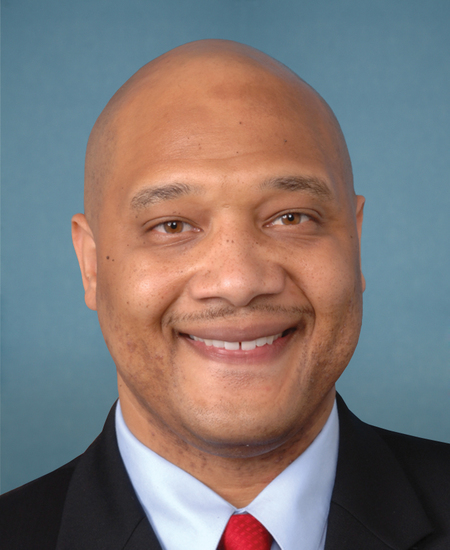
Rep. André Carson
Sponsored bills
Maddy summaryThis bill extends Medicare payment adjustments for physicians and other practitioners through 2025 instead of ending in 2024. It specifically adds a 4.73% payment increase for services provided between January 1, 2025, and January 1, 2026. The legislation modifies existing Medicare payment rules to stabilize practice revenues during transition periods. It directly affects doctors and healthcare providers who bill Medicare for patient services. The key change is the extended timeframe and the defined 4.73% rate for the 2025-2026 period.
Maddy summaryThe SAFE for Survivors Act of 2024 provides comprehensive workplace protections for survivors of domestic violence, dating violence, sexual assault, and stalking. It establishes a new entitlement to 40 work days of safe leave per year (with 10 days paid) for employees to address qualifying acts of violence, including time for counseling, safety planning, legal assistance, and medical care. The bill prohibits employers from discriminating against or retaliating against employees who take this leave, requires reasonable accommodations for survivors, and ensures unemployment compensation eligibility for those who separate from work due to violence. It also includes insurance protections preventing insurers from denying coverage or charging higher premiums based on a person's status as a survivor. This legislation directly affects employees, employers, and insurance providers across the United States.
Maddy summaryThis bill creates a $10,000 annual tax credit for individuals who make non-directed living kidney donations (where donors don’t know the recipient’s identity) for five years (the donation year plus four subsequent years). It directly affects living kidney donors who qualify under these specific conditions, covering costs related to the donation process. The credit applies to kidneys removed after December 31, 2024, and expires December 31, 2034. The bill does not alter organ transplant recipient eligibility or medical procedures, focusing solely on financial incentives for donors.
Maddy summaryHR 8796, the "Stop Comstock Act," removes outdated restrictions from federal law that previously banned the distribution of materials related to contraception and abortion as "obscene" or "indecent." The bill amends Title 18 and the Tariff Act by deleting references to "indecent," "immoral," "unlawful abortion," and "procuring abortion" from provisions governing obscene materials. It clarifies that the law only prohibits "obscene materials" in commerce, eliminating broad restrictions on reproductive health information. This directly affects internet platforms, healthcare providers, and individuals sharing reproductive health resources by removing legal barriers to their distribution.
Maddy summaryThis bill requires Medicare Advantage plans to implement electronic prior authorization systems by 2027 and publish detailed data on their approval and denial rates for medical services by 2026. It directly affects Medicare Advantage plans (private insurers offering Medicare coverage) and their enrollees (seniors 65+), mandating transparency about prior authorization decisions, processing times, and appeal outcomes. Key provisions include requiring plans to report annual statistics on request approvals/denials, average processing times, and use of technology, with this data published publicly by the Centers for Medicare & Medicaid Services. The bill also sets timelines for plan responses to prior authorization requests and mandates reports to Congress on implementation and impacts.
Maddy summaryThe End Polluter Welfare Act of 2024 eliminates numerous subsidies and tax benefits for fossil fuel companies by repealing provisions that provide royalty relief, reducing royalty rates, and ending tax incentives for oil, natural gas, and coal production. The bill prohibits federal funding for fossil fuel projects by restricting international financial institutions, the Export-Import Bank, and the Department of Transportation from supporting fossil fuel infrastructure. It also repeals recent legislation that provided fossil fuel subsidies, including parts of the Fiscal Responsibility Act and Inflation Reduction Act. This comprehensive approach directly affects oil, gas, and coal producers by removing financial benefits that have historically supported the fossil fuel industry, while directing studies to identify and eliminate additional fossil fuel subsidies.
Maddy summaryThe Invest in Child Safety Act of 2024 establishes a new Office within the Department of Justice to coordinate federal efforts against child sexual exploitation, headed by a Director appointed by the Attorney General. It creates a $5 billion fund for fiscal year 2024 (available through 2033) to support specific programs, including $100 million for U.S. attorneys prosecuting child sexual exploitation cases, $20 million for the International Center for Missing and Exploited Children, and $15 million for the National Center for Missing and Exploited Children. The bill requires annual reporting on activities and statistics related to child sexual exploitation, including investigations, arrests, and prosecutions, and modernizes the CyberTipline reporting system to better identify and locate victims. This legislation directly affects federal agencies, including the Department of Justice, FBI, and Department of Health and Human Services, as well as international law enforcement partners.
Maddy summaryThe Healthy MOM Act (HR 6716) would require health insurance plans to provide a special enrollment period for pregnant individuals beginning when pregnancy is reported to the insurer. It would mandate that group health plans cover maternity care for all dependents, including young women who might otherwise lack coverage due to plan exclusions. The bill would extend Medicaid coverage for pregnant individuals and infants to a full 12 months postpartum, rather than the current 60-day period. These provisions aim to improve access to comprehensive maternity care, which the bill states could prevent 3 in 5 pregnancy-related deaths by addressing coverage gaps that disproportionately affect women of color.
Maddy summaryHR 6417 amends the existing "Ending Importation of Russian Oil Act" to ban imports of energy products (classified under Harmonized Tariff Schedule chapter 27) produced at any refinery using crude oil originating in Russia. This directly affects U.S. importers and companies bringing in such refined petroleum products. The key provision prohibits these imports regardless of where the refinery is located, targeting oil that has been "laundered" through foreign processing. The bill updates the existing law by adding this origin-based import ban as a new section.