

Maddy summaryThis bill strengthens the U.S. law preventing imports made with forced labor from Xinjiang by expanding definitions of forced labor programs to include specific Chinese government initiatives like "surplus labor transfer," "Xinjiang Aid," and "re-education programs." It requires the U.S. government to update its strategy to align with U.S. Customs determinations about goods from Xinjiang and mandates detailed public lists of entities recruiting, transporting, or receiving forced labor outside Xinjiang. The law directly affects U.S. importers who must verify supply chains and Chinese entities operating labor programs in Xinjiang. Key provisions include broadening the scope of "forced labor" to cover state-imposed programs targeting Uyghurs and other minorities, and requiring transparency about entities linked to these programs.
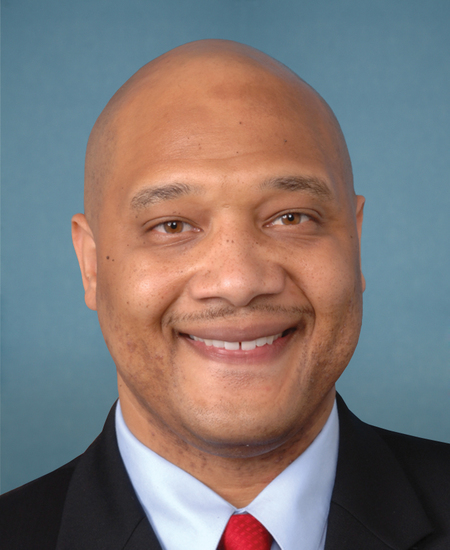
Rep. André Carson
Sponsored bills
Maddy summaryThe PrEP Access and Coverage Act of 2023 requires private health insurance plans, Medicare, Medicaid, and other public health programs to cover pre-exposure prophylaxis (PrEP) for HIV prevention without cost-sharing, including the medication, related lab tests, and follow-up care. The bill also prohibits life, disability, and long-term care insurance companies from denying coverage or charging higher premiums to people taking PrEP. It establishes public education campaigns to increase awareness of PrEP and PEP (post-exposure prophylaxis) and creates funding for state and community programs to expand access to HIV prevention services, particularly for populations disproportionately affected by HIV including Black, Hispanic/Latinx, and transgender individuals. The legislation specifically addresses current disparities in PrEP access, as data shows only 11% of Black/African American and 21% of Hispanic/Latinx individuals eligible for PrEP received prescriptions in 2022 compared to 82% of White individuals. Coverage requirements for most plans will take effect on January 1, 2025.
Maddy summaryThe Comprehensive Cancer Survivorship Act (HR 4363) establishes new Medicare and Medicaid coverage for cancer care planning and coordination services, requiring personalized survivorship care plans for cancer survivors from diagnosis through the end of life. The bill creates a demonstration program to test different models of survivorship care, including navigation services to help survivors transition from cancer treatment to ongoing care, and mandates Medicaid coverage for cancer fertility services. It also establishes a comprehensive cancer survivorship program with resource centers for survivors and health care providers, and includes provisions to help cancer survivors overcome employment barriers and improve their quality of life through physical activity and mental health support. The legislation specifically addresses disparities in care for racial/ethnic minorities, lower socioeconomic groups, and rural populations who face unique challenges as cancer survivors.
Maddy summaryHR 4282, the Equality for Families with Disabilities Act, requires states to develop customized support plans for parents, caregivers, foster parents, and adoptive parents with disabilities who interact with child welfare systems. It mandates individualized parenting assessments (based on personal strengths and evidence, not stereotypes) and disability-informed training for child welfare agencies and courts. The bill directly affects individuals with disabilities in these caregiving roles, ensuring they receive equal access to services and fair treatment during child welfare proceedings. Key mechanisms include revised state plans, mandatory staff training on disability rights, and new reporting requirements to Congress on implementation outcomes. These changes aim to replace generalized assumptions with concrete, evidence-based support within existing federal child welfare frameworks.
Maddy summaryThe ARC Act of 2023 establishes a national program to address peripheral artery disease (PAD), which disproportionately affects minority populations and leads to avoidable amputations. The bill requires Medicare and Medicaid to cover PAD screening tests (such as ankle-brachial index testing) for at-risk beneficiaries without cost-sharing, including people 65+ or those with diabetes, smoking history, or other risk factors. It authorizes $6 million annually for a CDC-led education program to inform healthcare providers and the public about PAD prevention and treatment. The bill also creates quality measures to encourage alternative treatments to amputation and establishes a pilot program to test amputation prevention services at healthcare facilities. These provisions aim to reduce amputation rates and improve outcomes for millions of Americans with PAD.
Maddy summaryThis bill, the Public Servants Protection and Fairness Act of 2023, amends Social Security to better protect public servants who work in jobs not covered by Social Security (such as certain government positions). It creates a new formula for calculating retirement benefits that combines both covered and noncovered earnings, ensuring public servants receive the higher of two benefit calculations. The bill also provides an additional $150 monthly payment for certain public servants whose benefits were previously reduced by the windfall elimination provision. It improves Social Security account statements to clearly show noncovered earnings and requires a study of how state retirement plans handle these benefits. These changes will apply to benefits starting in 2025.
Maddy summaryThe CONNECT for Health Act of 2023 aims to expand access to telehealth services under Medicare by removing barriers that previously limited who could provide these services and where they could be delivered. The bill eliminates geographic restrictions on telehealth coverage, allows telehealth services to be provided from the patient's home and other clinically appropriate locations, and expands the types of healthcare providers who can offer telehealth services. It also improves the process for adding new telehealth services to Medicare coverage and includes provisions to ensure quality measurement includes telehealth services. This legislation directly affects Medicare beneficiaries seeking remote care and healthcare providers delivering telehealth services, with key provisions taking effect between 2024 and 2025.
Maddy summaryThe LIFT the BAR Act removes barriers preventing lawfully present noncitizens from accessing federal benefits like food assistance, Medicaid, and school meals. It repeals specific 1996 welfare law provisions that excluded noncitizens and updates terminology to replace "alien" with "noncitizen" throughout federal law. The bill expands eligibility to include noncitizens in categories such as Deferred Action for Childhood Arrivals (DACA) recipients, individuals with special immigrant juvenile status, and those with pending U-visa applications. This change ensures more noncitizens lawfully present in the U.S. can access essential services without being denied based on immigration status.
Maddy summaryThe Public Health Emergency Response Act (HR 4009) creates new paid leave requirements for employees during public health emergencies. It requires employers to provide up to 12 weeks of paid leave (capped at $511 per day) for employees needing to care for family members due to disruptions in childcare or school, or for employees who are ill with a covered infectious disease. The bill provides tax credits to employers who pay for this leave, covering 100% of qualifying wages for businesses with fewer than 500 employees. Self-employed individuals are also eligible for tax credits to cover equivalent leave costs. The law applies to public health emergencies declared by the Secretary of Health and Human Services on or after January 1, 2022.
Maddy summaryThe Leveling the Playing Field 2.0 Act (HR 3882) updates U.S. trade law to better address international trade practices that disadvantage American businesses. It establishes special rules for handling multiple investigations of the same merchandise (called "successive investigations"), requiring the Commerce Department to consider previous injury determinations when making new findings. The bill also creates mechanisms to address market distortions from foreign government subsidies, including currency undervaluation, and strengthens procedures to prevent duty evasion through certification requirements for importers. These changes primarily affect foreign exporters of goods subject to U.S. antidumping and countervailing duty investigations, as well as U.S. importers of those goods.