

Maddy summaryHR 9229, the MAIL Act, requires the U.S. Postal Service to provide free post office boxes to unhoused or housing unstable individuals without fees. Eligibility is based on proof of income below the poverty line or participation in specific federal assistance programs, including housing vouchers (like Section 8), Medicaid, or the Supplemental Nutrition Assistance Program (SNAP). The bill defines "unhoused or housing unstable" using existing federal standards for homelessness or risk of homelessness. It mandates the Postal Service to issue regulations within one year of enactment and report on implementation to Congress. This policy change directly affects low-income individuals facing housing insecurity by removing a financial barrier to secure mail access.
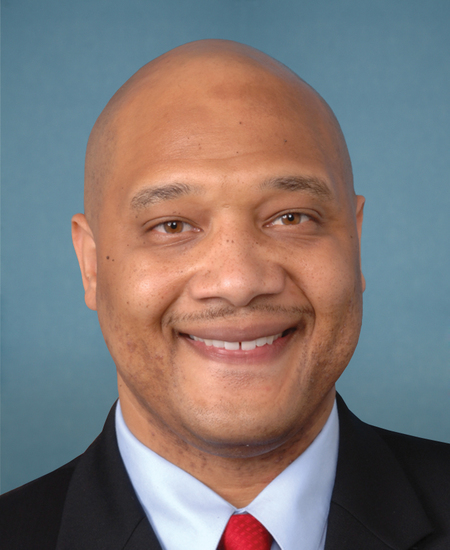
Rep. André Carson
Sponsored bills
Maddy summaryThis bill establishes the Destination Reception Services Program to provide medium-term support to certain immigrants in the U.S., including those granted parole, placed in removal proceedings, or with pending asylum applications. It authorizes $3 billion annually (2025-2028) to fund services like housing assistance, healthcare, job training, legal aid for work authorization/asylum, childcare, and transportation through local government and nonprofit organizations. The program is managed by a federal Board and local community boards that identify high-need areas and allocate funds based on criteria like immigrant population density and service gaps. It explicitly states the program is not an "alternatives to detention" initiative and prioritizes services to help new arrivals achieve self-sufficiency.
Maddy summaryThe STAR Act of 2024 creates a new 25% tax credit for semiconductor companies in the United States, specifically for qualified semiconductor design expenditures. This credit applies to both in-house design costs (like employee wages for design work and supplies used in design) and contracted design work paid to external firms, all conducted within the U.S. The bill directly affects U.S.-based semiconductor manufacturers and design firms by reducing their tax liability for eligible design expenses. The credit is added to the existing advanced manufacturing investment credit, with specific exclusions for non-qualifying activities like cosmetic design or duplicating existing products.
Feed the Community Act This bill allows a tax exemption for charitable donations of food transportation vehicles and food storage equipment to tax-exempt charitable organizations for providing food to individuals and communities in need.
Maddy summaryThis bill reauthorizes the Debbie Smith DNA Backlog Grant Program, which provides federal funding to state and local law enforcement agencies to reduce backlogs in processing DNA evidence from crime scenes. It extends the program's funding period from fiscal years 2024 through 2029 (previously ending in 2024). The bill also updates audit requirements to ensure grant funds are used properly through 2029. This directly affects law enforcement agencies that receive these grants to accelerate DNA analysis for criminal investigations.
Maddy summaryThe Improving Mentorship in STEM Higher Education Act creates a National Science Foundation program to fund projects enhancing mentorship for STEM faculty, graduate students, and postdoctoral researchers at colleges and universities. Eligible entities - including minority-serving institutions, historically Black colleges, Tribal Colleges, rural-serving universities, and emerging research institutions - can apply for competitive grants to develop mentoring skills, promote evidence-based practices, and provide cultural competency training. The program is funded with $5 million annually (2025-2029) and requires a five-year report assessing effectiveness and proposing permanent implementation if successful.
Maddy summaryH.J. Res. 193 proposes a constitutional amendment to eliminate legal immunity for federal officials, including the President, from criminal prosecution for actions taken while performing official duties. It also prohibits the President from granting a pardon to themselves. The amendment would apply to all federal officers (such as the President, Vice President, and members of Congress) except for Congress members acting in their legislative role as defined in the Constitution. If ratified by 38 states, this change would become part of the U.S. Constitution, requiring no further congressional action.
Maddy summaryHRES 1381 is a symbolic resolution that commemorates the United States Olympic and Paralympic Teams' historical achievements, including over 5,300 total medals across past Games. It expresses congressional support for U.S. athletes competing in the 2024 Summer Olympics and Paralympics in Paris, France, and commends the Government of France for hosting the events. The resolution also commits to ensuring a safe environment for the 2028 Los Angeles Olympic and Paralympic Games. As a non-binding expression of support, it does not create new laws or allocate funds.
Maddy summaryHR 9118 would cancel all federal oil and gas leases held by companies found by the Federal Trade Commission (FTC) to have coordinated with OPEC or OPEC+ countries to manipulate oil or gas prices in violation of federal antitrust laws. If the FTC issues a final order confirming such violations, the Secretary of the Interior must automatically cancel those leases and prohibit the company from bidding on new federal leases. The bill directly affects oil and gas companies that violate antitrust laws through market manipulation with OPEC nations. It creates a direct mechanism for lease cancellation based on FTC findings, without requiring new legislation for each case.
Maddy summaryHR 6362, the Protecting Benefits for Disabled Veterans Act of 2023, allows the VA to assign a total disability rating to veterans with service-connected disabilities who cannot work due to those conditions. It specifies that veterans qualify if they have one disability rated at least 60% or multiple disabilities totaling 70% (with at least one at 40%), and the VA must consider certain disability combinations as a single condition. The bill prohibits the VA from considering a veteran’s age or Social Security benefits when making this determination, and clarifies that veterans maintaining marginal employment (below the poverty threshold) may still qualify for total disability. This change directly affects disabled veterans seeking full benefits by providing clearer pathways to qualify for total disability ratings based on employment impact.