

Maddy summaryHR 9038, the FAIR Fleets Act, requires the U.S. Postal Service to conduct ongoing assessments of its vehicle distribution and develop a strategic plan to increase fleet availability in underserved areas using fuel-efficient, modern vehicles. The bill mandates an annual report to Congress by December 31 each year, detailing fleet distribution by state, steps taken to improve service in underserved areas, and recommendations for further action. Underserved areas are specifically defined to include rural regions, postal regions with aging vehicles, counties with significant delivery delays, high-poverty urban neighborhoods, and tribal lands. The law aims to improve fleet modernization and equitable distribution across all U.S. regions.
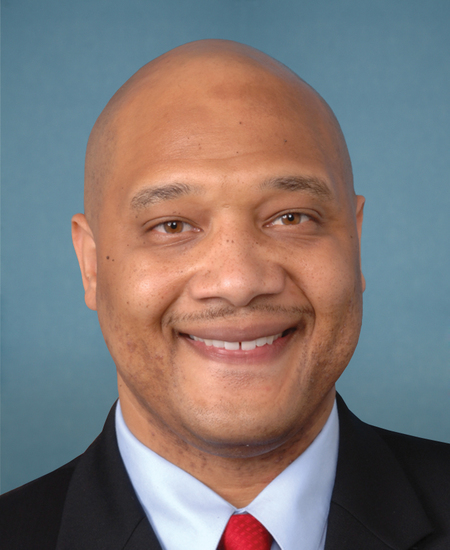
Rep. André Carson
Sponsored bills
Maddy summaryHRES 1355 is a non-binding resolution supporting the designation of July 10 as Journeyman Lineworkers Recognition Day. It honors lineworkers who maintain electrical infrastructure under hazardous conditions, including during disasters, and commemorates Henry Miller, the first president of the International Brotherhood of Electrical Workers, who died on July 10, 1896, while troubleshooting an electrical outage. The resolution encourages public recognition of these workers' contributions but does not create new laws or policies.
Maddy summaryHR 8988, the "Get Foreign Money Out of U.S. Elections Act," expands federal law to prohibit foreign-controlled businesses from influencing U.S. elections. It bans contributions or spending by any for-profit business entity where foreign nationals own 50% or more of voting shares, or where foreign entities collectively own 5% or more (or exert control over election activities). Businesses must certify compliance before making election-related spending, including contributions to political committees, and recipients cannot reuse uncertified funds for further election activities. This bill directly affects foreign-owned corporations, partnerships, and similar entities seeking to participate in U.S. elections.
Maddy summaryThe SHIELD Act (HR 8980) establishes a federal grant program to improve access to legal representation for people facing deportation. It authorizes $100 million annually for fiscal years 2025-2026 to fund workforce development and legal services infrastructure through competitive grants to states, local governments, and community organizations. The program will support recruitment, training, and retention of legal professionals to provide high-quality, culturally competent representation to immigrants in deportation proceedings. Grantees must report on services provided, outcomes achieved, and unmet needs to ensure accountability and measure the program's impact on addressing the current shortage of legal representation in immigration court.
Maddy summaryHCONRES 118 is a symbolic congressional resolution recognizing the wage disparity faced by Black women in the U.S. It specifically highlights that Black women earn 69 cents for every dollar earned by White, non-Hispanic men, as noted in Census Bureau data. The resolution marks July 9, 2024, as Black Women’s Equal Pay Day to symbolize how long into 2024 Black women must work to earn what White men earned in 2023. It does not create new laws or policies but formally acknowledges this disparity and reaffirms congressional support for equal pay for equal work.
Maddy summaryThis bill designates the U.S. Postal Service facility at 521 Thorn Street in Sewickley, Pennsylvania, as the "Mary Elizabeth 'Bettie' Cole Post Office Building." It updates all official references in federal documents, maps, and records to use this new name, with no changes to postal services or operations. The bill is purely procedural and honors Mary Elizabeth "Bettie" Cole through a naming convention.
Maddy summaryThis bill changes the Higher Education Act to allow participants in specific Fulbright programs to count their service toward federal student loan forgiveness for public service workers. It directly affects borrowers with federal student loans who have completed the Fulbright Teacher Exchange Program or Fulbright English Teaching Assistant Program. The key provision adds these Fulbright roles to the list of qualifying "public service jobs" under the existing Public Service Loan Forgiveness program. This means Fulbright participants can now have their service counted toward the required 10 years of public service needed to qualify for loan forgiveness. The change applies to current and future Fulbright participants who are enrolled in the loan forgiveness program.
Maddy summaryHRES 1339 is a symbolic resolution honoring Father Stan, a human rights activist who died in Indian custody on July 5, 2021, and urging the Indian government to conduct an independent investigation into his arrest, incarceration, and death. The resolution also expresses concern about the misuse of antiterror laws against activists and affirms freedom of expression as a fundamental human right under the Universal Declaration of Human Rights. It does not impose legal requirements but serves as a formal statement of U.S. congressional support for human rights accountability.
Maddy summaryThis bill amends the Federal Employees' Compensation Act to include physician assistants and nurse practitioners as eligible providers for injured federal workers. It defines "other eligible provider" as a nurse practitioner or physician assistant within their state-authorized scope of practice. The law updates key sections to replace "physician" with "physician or other eligible provider" for treatment, certification, and claim processes. The Secretary must finalize implementing regulations within six months of enactment.
Maddy summaryHRES 1331 is a non-binding House resolution supporting Immigrant Heritage Month by recognizing immigrants' economic, cultural, and military contributions to the United States. It cites data showing immigrants contributed $1.9 trillion to the economy in 2021, made up 20% of entrepreneurs, and serve in critical roles like healthcare and agriculture. The resolution calls on elected officials, educators, and the executive branch to counter anti-immigrant rhetoric, educate the public about immigrant contributions, and protect immigrant communities. It does not create new legal obligations but aims to raise awareness and promote inclusion.