

Love Lives On Act of 2025 This bill extends entitlement for various benefit programs and services for surviving spouses of deceased members of the Armed Forces or veterans. The bill provides that the remarriage of a surviving spouse must not bar the furnishing of dependency and indemnity compensation or special pension benefits to such spouse. Additionally, the Department of Defense may not terminate the payment of an annuity for a surviving spouse under the Survivor Benefit Plan solely because the surviving spouse remarries. The bill also expands the definition of a dependent under TRICARE to include a remarried widow or widower whose subsequent marriage has ended due to death, divorce, or annulment.
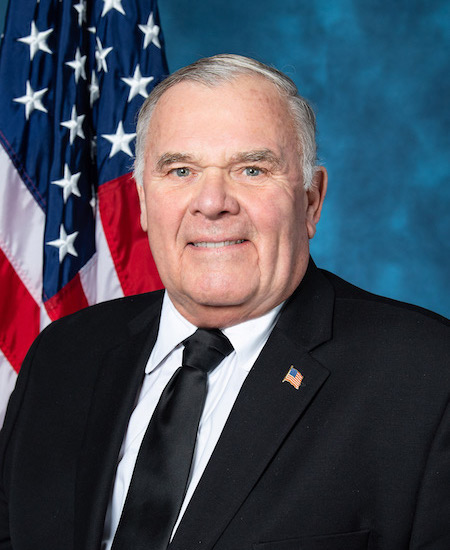
Rep. James R. Baird
Sponsored bills
Maddy summaryThe PREDICT Act prohibits federal government officials, including Members of Congress, their spouses and dependents, high-ranking executive branch employees, and political appointees from trading on prediction markets tied to political events. This restriction applies to any agreement or transaction where payment depends on whether a specific political event occurs, does not occur, or happens to a certain degree. If a covered individual violates this rule, they must pay a 10% fee and forfeit any profits from the transaction, with penalties paid from personal funds rather than government salaries or allowances. The Office of Government Ethics will issue guidance on undefined terms and publish details of any fines on a public website.
Deporting Fraudsters Act of 2026 This bill makes certain acts related to public benefits fraud grounds for (1) barring a non-U.S. national ( alien under federal law) from admission into the United States, or (2) deporting the individual. The bill also makes such an individual ineligible for immigration enforcement relief, including relief for an individual in danger of subjection to torture. Specifically, this bill applies to individuals who have been convicted of, admit to having committed, or admit to acts which constitute certain offenses. Offenses covered by this bill include (1) fraud involving Supplemental Nutrition Assistance Program (SNAP) benefits, (2) fraud involving Social Security benefits, (3) fraud involving programs that receive federal funds, and (4) the production of fraudulent identification documents.
Maddy summaryThis resolution honors the life and legacy of former college football coach Louis Leo "Lou" Holtz, recognizing his contributions to the sport and his work as a mentor and teacher. The bill formally acknowledges his coaching achievements at six different universities, his induction into the College Football Hall of Fame, and his receipt of the Presidential Medal of Freedom. It also highlights his personal values, including his emphasis on character, teamwork, and faith, as well as his family life and charitable work. The House of Representatives expresses gratitude for his service to college football and commits to remembering his enduring impact on student-athletes and the broader community.
Maddy summaryHR 5688, the Non-Domiciled CDL Integrity Act, changes rules for issuing commercial driver's licenses (CDLs) to people who don't live in the state where the license is issued. It allows states to issue CDLs to foreign nationals with lawful U.S. immigration status and work-related visas (valid for up to one year or until their stay ends), requiring states to verify status before issuing and keep records for two years. For residents of U.S. territories like Puerto Rico, it requires proof of U.S. citizenship or permanent residency before issuing CDLs, with similar verification and record-keeping rules. The bill directly affects commercial drivers from foreign countries and U.S. territories seeking CDLs in states where they are not residents.
Maddy summaryThis bill authorizes $150 million annually for fiscal years 2026 through 2031 to fund fundamental plant biology research at the National Science Foundation. The funds will be distributed through competitive grants to universities, nonprofit groups, private companies, and government agencies for research on plant and microbial biology relevant to agriculture, food, and biotechnology. The legislation also updates the legal definition of a nonprofit organization within the NSF's governing statute to align with current tax code requirements.
Maddy summaryThis bill establishes a federal program to create at least two bioindustrial technology maturation facilities by 2030, which will serve as shared research and testing centers for developing biotechnology products that enhance energy security. These facilities will provide precommercial-scale testing, pilot production, and workforce training for companies and researchers working with biological systems to manufacture materials and products, with locations chosen to support diverse regional needs and supply chains. The legislation defines key terms related to biomanufacturing and waste streams, mandates collaboration with industry and academic partners, and authorizes $225.5 million in funding from 2026 through 2030 to support these efforts.
Protection of Women in Olympic and Amateur Sports Act This bill requires certified national governing bodies (NGBs) of amateur sports (e.g., USA Gymnastics) to prohibit a person whose sex is male from participating in an amateur athletic competition that is designated for females, women, or girls. Under the bill, male means an individual who has, had, will have—or would have, but for a developmental or genetic anomaly or historical accident—the reproductive system that at some point produces, transports, and utilizes sperm for fertilization.
Maddy summaryThis bill amends the tax code to allow first-time homebuyers to use funds from 529 college savings plans for home purchases without tax penalties, under specific conditions. It permits tax-free withdrawals of the original contributions (plus earnings) if the account was maintained for 15 years, the funds are used within 60 days for a first home purchase, and the total lifetime withdrawals do not exceed $35,000. If the home is sold within 5 years, a recapture tax may apply based on the time held. It directly affects first-time homebuyers who have maintained 529 plans for 15 years and use the funds for qualifying home purchases.
Maddy summaryThe PART Act requires new vehicles to have catalytic converters marked with a unique identification number that links directly to the vehicle's identification number, stored in a law enforcement-accessible database. It establishes a $7 million grant program to help repair shops, dealers, law enforcement, and fleet owners purchase equipment for marking converters with visible, durable identifiers (using die or pin stamping and high-visibility paint). The bill also mandates that businesses buying catalytic converters keep detailed seller records (including vehicle information) for two years and use traceable payments, banning cash or cryptocurrency transactions. Additionally, it creates new federal criminal penalties for stealing or trafficking in catalytic converters, with potential sentences of up to five years in prison.