

Maddy summaryThis bill amends Title VII of the Civil Rights Act of 1964 to clarify that protections against sex discrimination do not extend to gender identity. It directly affects employers, employees, and individuals involved in workplace discrimination claims by explicitly excluding gender identity from the definition of sex-based discrimination. The key provision is a rule of construction that interprets existing federal law in a specific way, rather than creating new protections or restrictions. This change would limit the scope of federal sex discrimination claims to biological sex rather than including gender identity as a protected category.
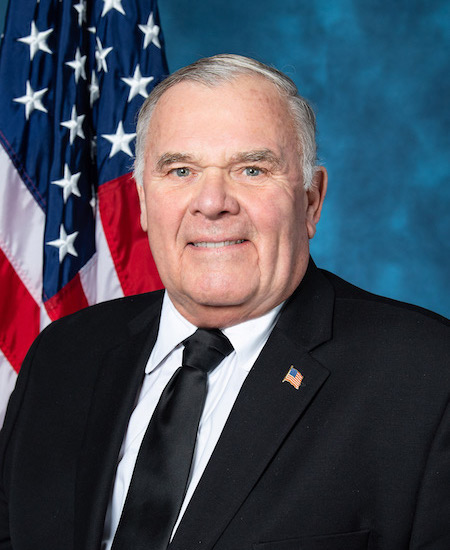
Rep. James R. Baird
Sponsored bills
Maddy summaryThe Tech Diplomacy Training Act requires all U.S. Foreign Service officers to complete mandatory training on science, technology, engineering, and mathematics topics, including artificial intelligence and emerging communications technologies. This training will be administered through the George P. Shultz National Foreign Affairs Training Center and must cover how these technologies impact diplomacy, how adversaries use them, and how the United States can leverage them as diplomatic tools. New officers must complete the full curriculum during their initial training, while existing officers have 18 months to finish the comprehensive program or 270 days to complete a condensed version. The requirement applies to all Foreign Service officers and operates alongside existing training requirements without replacing them.
Maddy summaryThis bill creates two new tax incentives to encourage the production and investment in renewable materials derived from biomass. The first provision offers a production credit of 10 cents per pound for qualified renewable materials sold or used in business, while the second provides an investment credit equal to 30 percent of qualified property costs used in renewable material facilities. Both credits are limited to facilities located in the United States or its possessions and exclude products intended for fuel, heat, electricity, food, or feed. The bill also allows these tax credits to be transferred to other taxpayers and requires the Treasury Department to issue implementing regulations within 180 days of enactment.
Maddy summaryThis bill creates a publicly accessible database to track private vendors that supply, support, or maintain components of election systems used in federal elections. It requires states and local election officials to submit information about these vendors within 30 days after each federal election, including vendor identity, contract terms, and ownership details such as parent companies and foreign interests. The legislation prohibits federal funding for election administration in any state that fails to comply with these reporting requirements. The database aims to increase transparency by making vendor information available to the public, with provisions to withhold certain details for security reasons. These changes would take effect for federal elections held in 2026 and subsequent years.
Maddy summaryHR 7675, the Securing Partner Supply Chains Act, establishes a 3-year U.S. initiative to help allied and partner countries strengthen their screening of foreign investments for national security risks. The initiative, led by the Secretary of State, will provide technical assistance, training, and advisory services to partner countries - defined as those with U.S. trade or defense agreements - to improve their ability to assess risks to critical infrastructure, sensitive technology, and supply chains. It requires annual reports to Congress detailing the assistance provided, partner countries' progress, and emerging security risks. The bill does not directly affect U.S. citizens or businesses but focuses on building international capacity to address shared security concerns through cooperation.
Maddy summaryHR 7649, the Humanitarian Theft Enforcement Act, holds foreign individuals or entities liable for unauthorized diversion or destruction of U.S. humanitarian aid, including aid provided through international organizations. The Secretary of State determines responsibility and can recover the aid's value from the responsible party, with recovered funds credited to the State Department or transferred to other agencies if the aid was originally funded by them. The Secretary may also waive liability if deemed in the national interest. This bill creates a direct mechanism for the U.S. government to seek reimbursement for diverted humanitarian assistance.
Maddy summaryHR 7653, the Biodefense Diplomacy Enhancement Act, requires the U.S. Secretary of State to develop two new strategies to strengthen international cooperation on biodefense, biosecurity, and biotechnology. The bill mandates a NATO Biodefense Strategy to improve alliance coordination on biological threat response and a broader International Cooperation Strategy to enhance partnerships with U.S. allies and major non-NATO partners on export controls for dual-use biotech items and adherence to safety standards. These strategies must identify gaps in current efforts, recommend improvements, and assess coordination with U.S. agencies, with reports due to Congress within 270 days of enactment. The bill directly affects U.S. diplomatic engagement with NATO and allied nations on biological threat preparedness, focusing on policy development, capabilities, and enforcement of the Biological Weapons Convention.
Maddy summaryHR 7633, the American Assistance Visibility Act, requires the U.S. flag to be distinctly displayed as the sole branding element on all U.S. foreign assistance provided after enactment, including physical items like buildings and equipment, aid supplies, and digital content such as social media posts. The bill directly affects U.S. foreign aid programs and their implementation by requiring the flag to be prominently shown, with limited exceptions for international agreements requiring co-branding or safety concerns. Key provisions mandate the Secretary of State to issue regulations on flag size, color, and placement, while allowing case-by-case waivers for safety or security in high-risk areas. The law defines "foreign assistance" broadly to cover all tangible and digital materials distributed under U.S. foreign aid programs.
Maddy summaryThe SHADOW Act creates a new State Department Coordinator to lead U.S. efforts against hybrid warfare threats from China and Russia, particularly in Europe. The Coordinator will assess threats like cyberattacks and disinformation campaigns, coordinate with NATO allies and partners (including Japan and Australia), and help protect critical infrastructure sectors. The bill requires the Coordinator to submit a strategy within 60 days and annual reports for three years detailing threat assessments and coordination progress. It also mandates a specific report within 180 days identifying Chinese entities supporting Russia’s defense industry.
Maddy summaryThis bill requests the President to award Kareem N. Dockery the Medal of Honor for his 2012 combat actions in Afghanistan, where he repeatedly risked his life to protect fellow soldiers during an ambush. It specifically authorizes the upgrade from his previously awarded Silver Star, citing his actions that saved a wounded soldier and killed multiple enemy fighters. The bill does not create new policy but applies existing military award procedures to honor one soldier's service. It directly affects only Kareem N. Dockery, who received a Silver Star for these actions in 2012.