

Maddy summaryHR 6813 blocks the Environmental Protection Agency (EPA) from finalizing, implementing, or enforcing a specific proposed rule about air emissions reporting. The bill directly targets the EPA Administrator, preventing action on the "Revisions to the Air Emissions Reporting Requirements" rule published in the Federal Register on August 9, 2023. This bill does not change current reporting rules but stops the EPA from moving forward with this particular revision. The key mechanism is a direct prohibition on the EPA's regulatory actions regarding this specific rule.
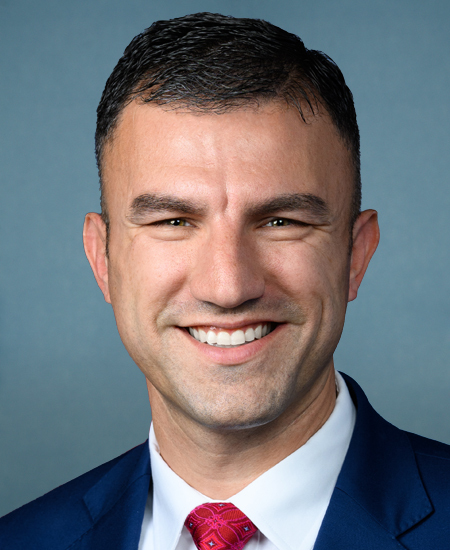
Rep. Rudy Yakym III
Sponsored bills
Maddy summaryThe 988 Lifeline Location Improvement Act of 2023 establishes a federal advisory committee to study how location information is transmitted for 988 calls. The committee, composed of representatives from telecom providers, mental health organizations, crisis centers, and government agencies, will examine privacy concerns, technical standards, and funding needs for improving location data accuracy during 988 Suicide and Crisis Lifeline calls. It must submit a report within one year to Congress and the FCC with recommendations for potential policy changes. This bill does not enact new requirements but directs a study to address challenges in connecting callers to local crisis services. The committee will terminate 30 days after submitting its report.
Maddy summaryHR 6760 prohibits U.S. federal agencies from using tax dollars to fund contributions to three specific United Nations climate programs: the Intergovernmental Panel on Climate Change (IPCC), the United Nations Framework Convention on Climate Change (UNFCCC), and the Green Climate Fund. The bill directly affects all federal departments and agencies that manage U.S. contributions to international climate initiatives. Its key mechanism is a strict ban on using any appropriated funds - whether for mandatory or voluntary payments - to support these organizations. This policy change would prevent the U.S. government from providing financial support to these entities through federal budgets.
Maddy summaryHR 6734 prohibits the use of federal funds to finalize, implement, or enforce the Bureau of Alcohol, Tobacco, Firearms, and Explosives' (ATF) proposed rule (2022R-17) defining "engaged in the business as a dealer in firearms." This bill directly affects the ATF by blocking funding for this specific regulatory rule, which was proposed in August 2023. The legislation does not create new requirements but prevents federal resources from being used to advance this particular ATF regulation.
Maddy summaryHJRES 88 is a resolution seeking to block a Department of Education rule that would have improved income-driven repayment options for federal student loan borrowers. The rule, published in the Federal Register on July 10, 2023, targeted the William D. Ford Direct Loan Program and the Federal Family Education Loan (FFEL) Program. This resolution uses the Congressional Review Act process to disapprove the rule, preventing it from taking effect and preserving the current repayment structure. If enacted, it would stop the proposed changes to repayment terms without altering existing loan policies.
Maddy summaryHR 6600, "Tyler’s Law," requires the Secretary of Health and Human Services to study how often hospital emergency departments test for fentanyl during overdose cases, along with the costs, benefits, risks, and patient privacy impacts. The study must be completed within one year of the bill’s enactment, followed by guidance issued within six months on whether fentanyl testing should become routine. This guidance will address how hospitals can inform clinicians about testing protocols and how fentanyl testing might affect future overdose risks and patient health outcomes. The bill directly affects hospitals and emergency departments treating overdose patients, focusing on improving data-driven practices for fentanyl detection.
Maddy summaryHR 6578 establishes a 9-member bipartisan commission to study antisemitism in the United States. The commission will investigate current manifestations of antisemitism, evaluate government efforts to combat it, and report findings and recommendations to Congress within one year. It directly affects Jewish communities by examining incidents like the 300% surge in antisemitic activity reported by the Anti-Defamation League, and impacts federal, state, and local governments through its evaluation of existing policies. The commission terminates 120 days after submitting its report, with no predetermined conclusions or interference in ongoing law enforcement.
Maddy summaryHJRES 104 proposes a constitutional amendment setting a federal debt limit at 130% of GDP for the first year after ratification, decreasing by 1% annually until reaching a permanent 120% GDP cap. It requires a three-fifths vote in both congressional chambers to exceed this limit for specific reasons, mandates annual presidential budget submissions adhering to the cap, and allows temporary waivers only for declared wars or national security threats with specific congressional approval. The amendment would directly affect federal budgeting processes, requiring Congress to manage debt within these constitutional constraints. It defines GDP using standard economic measures (personal consumption, investment, government spending, and net exports) as tracked by the Bureau of Economic Analysis. This proposal, if ratified, would fundamentally alter how the federal government manages its borrowing ceiling.
Maddy summaryH.J.Res. 66 disapproves a specific rule issued by the Consumer Financial Protection Bureau (CFPB) regarding small business lending under the Equal Credit Opportunity Act (Regulation B). The resolution, if passed, would prevent this CFPB rule from taking effect by declaring it "have no force or effect." The rule in question (88 Fed. Reg. 35150) aimed to clarify how lenders must evaluate small business loan applications under existing equal credit laws. This disapproval directly affects the CFPB's regulatory authority and would block the rule's implementation for small business lenders and financial institutions.
Maddy summaryThe Veteran Improvement Commercial Driver License Act of 2023 modifies rules for veterans' educational benefits to streamline approval of commercial driver education programs at branch locations. It allows a branch of an educational institution to be exempt from full approval requirements if it is appropriately licensed and uses the same curriculum as an approved main location. Schools must submit an annual report to the Department of Veterans Affairs verifying curriculum consistency, and the VA may withhold this exemption if needed. The changes will take effect 180 days after the VA establishes reporting rules, which must be finalized within 180 days of the bill's enactment.