

Maddy summaryThis bill establishes a competitive grant program to improve recycling access in underserved communities - defined as areas lacking full recycling services due to cost, distance, or insufficient processing capacity. It allocates $30 million annually (2023-2027) for grants to eligible entities like states, local governments, tribes, or public-private partnerships to fund projects such as expanding transfer stations, adding curbside collection, or creating hub-and-spoke infrastructure networks. Grants range from $500,000 to $15 million per project, with 70% of funds reserved for single or multiple underserved communities, and require 90% federal cost coverage (with possible waivers for financial hardship). The program prohibits grant use for education and mandates a congressional report on implementation and outcomes within two years.
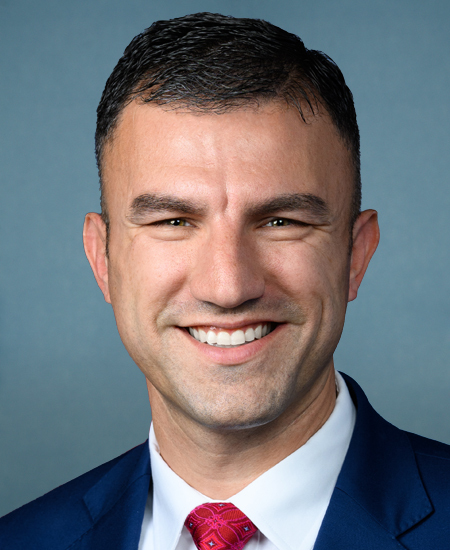
Rep. Rudy Yakym III
Sponsored bills
Maddy summaryThis bill appropriates $14.3 billion in supplemental security funding to Israel following the October 7, 2023 attacks. The funding includes $4 billion for Iron Dome and David's Sling defense systems, $1.35 billion for the Iron Beam defense system development, and $3.5 billion for foreign military financing. The bill requires regular reporting to Congress on security assistance provided to Israel and designates all funds as "emergency requirements" under federal budget law. It also modifies existing laws to facilitate the transfer of defense articles and services to Israel, aiming to strengthen Israel's defense capabilities against rocket threats.
Maddy summaryThis bill would authorize the U.S. government to confiscate Russian sovereign assets held in U.S. jurisdiction and use those funds to support Ukraine's reconstruction and humanitarian needs following Russia's invasion. It prohibits releasing these blocked assets until Russia fully compensates Ukraine or agrees to an international compensation mechanism. The bill establishes a "Ukraine Support Fund" to hold confiscated assets and requires regular congressional reporting on how these funds are allocated for Ukraine's recovery. It also includes provisions for international coordination with allies on sanctions and asset management related to Russia's invasion of Ukraine.
Maddy summaryThe SHIP Act imposes sanctions on foreign entities that knowingly handle Iranian petroleum, targeting those involved in port operations, transportation, refining, or ship-to-ship transfers of Iranian oil. Starting 90 days after enactment, the President must block assets, deny visas, and impose penalties on individuals or companies engaging in these activities, including family members or owners of sanctioned entities. It requires annual reports tracking Iran's oil exports, revenues, and key players like shipping companies and ports. The sanctions terminate if the President certifies Iran has stopped supporting terrorism and dismantled weapons programs.
Maddy summaryHRES 798 is a House resolution condemning support for Hamas, Hezbollah, and other terrorist organizations at colleges and universities. It states such support may create a hostile environment for Jewish students, faculty, and staff, citing incidents like blaming Israel for the October 7 Hamas attack. The resolution urges the Secretary of Education to direct the Office for Civil Rights to investigate and take action where appropriate. This non-binding resolution expresses the House's position but does not create new law or policy changes.
Maddy summaryHR 6201, the Iranian Sanctions Enforcement Act of 2023, creates the Iran Sanctions Enforcement Fund to cover costs related to seizing and forfeiting property from Iran or its designated proxies (like Hezbollah or the Revolutionary Guard Corps) that violate U.S. sanctions. The fund, initially $150 million, pays for investigative costs, property management, informant rewards, and equipment for federal, state, and local agencies involved in enforcement. It also establishes an Export Enforcement Coordination Center within Homeland Security to improve interagency cooperation on enforcing export controls targeting Iran. The bill requires annual reports on fund usage and mandates repayment of the initial $150 million by 2034, unless waived for national security reasons.
Maddy summaryHRES 599 is a non-binding resolution urging the European Union to fully designate Hizballah (Hezbollah) as a terrorist organization, rather than just its military wing as the EU did in 2013. It recommends the EU implement sanctions, freeze assets, issue arrest warrants, and prohibit fundraising for Hizballah, aligning with actions taken by the U.S. and other nations. The resolution cites Hizballah’s history of attacks, its criminal activities in Europe (including drug trafficking and money laundering), and its ties to Iran as justification. It directly addresses EU decision-makers, calling for coordinated action to disrupt Hizballah’s operations across the continent. The resolution follows prior House efforts, including H.Res. 359 (2017) and H.Res. 558 (2022), which made similar requests.
Maddy summaryThe Stand with Israel Act prohibits U.S. federal funds from supporting the United Nations Human Rights Council until the UN Security Council and General Assembly adopt a resolution condemning Hamas for its October 7, 2023, attack on Israel. This bill directly affects U.S. government funding for the UN Human Rights Council, blocking all assessed and voluntary contributions until the UN takes specific action. The key provision freezes U.S. financial support for the council based on Congress's finding that Hamas, with Iranian backing, launched a deadly attack resulting in civilian deaths and abductions. The law does not impact other UN funding or programs, focusing solely on the Human Rights Council's financial support.
Maddy summaryHCONRES 71 is a non-binding congressional resolution expressing support for Taiwan's full participation in the Asia-Pacific Economic Cooperation (APEC) forum. It urges the U.S. President to formally invite Taiwan's leader to attend all future APEC leaders' events held in the U.S. on equal footing with other member states, including the November 2023 APEC summit in San Francisco. The resolution cites Taiwan as a major U.S. trading partner and a democratic ally, emphasizing that respectful engagement aligns with U.S. economic and security interests. As a sense-of-Congress resolution, it does not create new law but reflects congressional preference for U.S. policy toward APEC participation.
Maddy summaryHRES 771 is a non-binding resolution expressing the U.S. House of Representatives' support for Israel following Hamas' October 7, 2023, attack. It condemns Hamas' actions, affirms Israel's right to self-defense, and calls for the immediate release of hostages. The resolution also urges enforcement of existing laws restricting aid to terrorists and sanctions against Iran for supporting Hamas. It does not create new policies or allocate funds, as it is a symbolic statement of congressional support.