

Maddy summaryHR 4620 amends federal law to include rioting as a form of racketeering activity under Title 18, United States Code. This change would allow prosecutors to charge individuals who organize or participate in riots as part of a larger criminal enterprise under federal racketeering laws. The bill specifically targets coordinated riot activities linked to organized crime, not isolated or spontaneous protests.
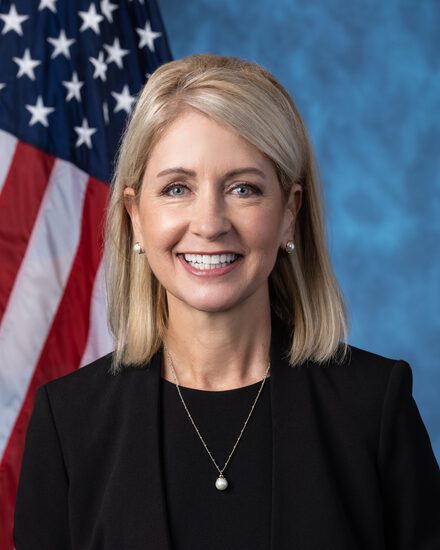
Rep. Mary E. Miller
Sponsored bills
Maddy summaryHR 4554, the Restoring Biological Truth to the Workplace Act, prohibits employers from taking adverse actions (like firing or demoting) against employees who express views about biological sex being binary or use single-sex facilities (such as bathrooms). It directly affects employees who discuss biological sex or request single-sex areas, and employers who might retaliate. Key provisions make it unlawful to punish such expression or requests, explicitly removing the defense that the practice is "job-related" or "necessary for business." The bill aims to protect workplace expression and access related to biological sex under existing civil rights law.
Maddy summaryThis resolution (HRES 595) honors military personnel and civilians who evacuated over 17,000 people, including Afghan allies, from Taliban-controlled Afghanistan during the 2021 U.S. withdrawal. It recognizes their service through a formal House resolution without creating new laws or funding. The resolution specifically acknowledges the efforts of a team led by Chad Robichaux and others who coordinated evacuation operations amid significant danger. It serves as a symbolic gesture of appreciation, not a policy change.
Maddy summaryThis bill, officially titled the Make American Guns Again Act of 2025, requires the Secretary of Defense to study the use of foreign-made or foreign-owned U.S.-manufactured small arms and light weapons by the military. The study must identify weapons and parts made outside the U.S. or by foreign-owned U.S. subsidiaries, and the Secretary must submit a report with procurement recommendations within 180 days of the bill's enactment. The bill directly affects military procurement practices by mandating a review focused on increasing U.S.-made weapons, without altering current regulations or imposing immediate spending changes.
Maddy summaryThis bill authorizes a single Congressional Gold Medal for seven individuals: Chad Robichaux, Sarah Verardo, Tim Kennedy, Kevin Roarke, Sean Gabler, Dave Johnson, and Dennis Price. It recognizes their leadership in a 2021 rescue mission that evacuated over 17,000 people from Afghanistan during the U.S. withdrawal. The medal, struck by the Treasury Department, will be presented by congressional leaders and permanently displayed at the Smithsonian Institution. The bill does not create new laws or policies but formally honors these veterans' actions through a commemorative medal.
Maddy summaryHR 1919, the "Anti-CBDC Surveillance State Act," prohibits the Federal Reserve from developing, testing, or issuing any central bank digital currency (CBDC) or similar digital assets. It specifically bans the Fed from offering direct financial products to individuals, maintaining individual accounts, or issuing CBDCs directly or indirectly through intermediaries like banks. The bill also blocks the Fed from using any digital asset for monetary policy and clarifies that physical currency's privacy protections remain intact. This policy directly affects the Federal Reserve System's ability to create or manage digital monetary tools.
Maddy summaryHR 4448, the Restoring Equal Opportunity Act, prohibits lawsuits alleging discrimination based on "disparate impact" in employment and housing. It amends the Civil Rights Act of 1964 and Fair Housing Act to ban claims where a neutral policy (like a test or screening rule) unintentionally disadvantages protected groups (such as race or gender), even if there was no discriminatory intent. The bill also nullifies specific federal regulations implementing civil rights laws, removing legal grounds for such claims under current enforcement rules. This directly affects employers, housing providers, and federal agencies that enforce civil rights laws, changing how discrimination claims can be brought in court.
Maddy summaryHR 4450, the National Education Association Charter Repeal Act, repeals the federal charter granted to the National Education Association (NEA) under 36 U.S. Code Chapter 1511. This bill directly affects the NEA by removing its status as a federally chartered organization, though the NEA will continue operating as a private entity. The key provision is the complete repeal of the specific statutory provision (36 U.S. Code Chapter 1511) that had provided the NEA with its federal charter since 1961. This is a procedural change with no direct impact on education policy or public funding.
Maddy summaryHR 4382 authorizes the U.S. Mint to produce commemorative coins for the 2028 Los Angeles Olympics/Paralympics and 2034 Salt Lake City Winter Olympics/Paralympics. It specifies gold, silver, and half-dollar coin designs with defined mintage limits (e.g., up to 100,000 $5 gold coins for each event), all bearing inscriptions like "2028" or "2034" and standard coin features. A surcharge ($5-$50 per coin) is added to sales, with all funds directed to the respective Olympic committees to support event hosting and legacy programs like youth sports. The bill ensures no net cost to the government by requiring surcharge revenues to cover all design, production, and marketing expenses before funds are disbursed.
Maddy summaryHR 4363, the Defend Girls Athletics Act, requires public K-12 schools and colleges to certify annually that they comply with Executive Order 14201, which mandates keeping men out of women's sports. Schools must submit written compliance certifications by August 15 each year (for K-12) or July 1 (for colleges), with states reporting non-compliant agencies to the federal government. Schools or colleges failing to certify or violating the rule risk losing federal education funding, including returning unobligated funds and becoming ineligible for future federal support. The bill directly affects all public schools and colleges receiving federal education funds by tying their eligibility to adherence to this sports participation requirement.