

Maddy summaryThis bill amends Title IX to clarify that "female," "male," and "sex" refer to biological characteristics (egg-producing or sperm-producing reproductive systems). It explicitly states that schools receiving federal funding cannot be forced to eliminate sex-segregated spaces (like bathrooms or locker rooms) or sex-segregated athletic/academic programs. The bill directly affects all schools and colleges that accept federal education funding, ensuring they may maintain such programs without losing that funding. Key mechanisms include adding specific definitions to Title IX and prohibiting the Secretary of Education from making funding contingent on ending sex-segregated facilities or programs.
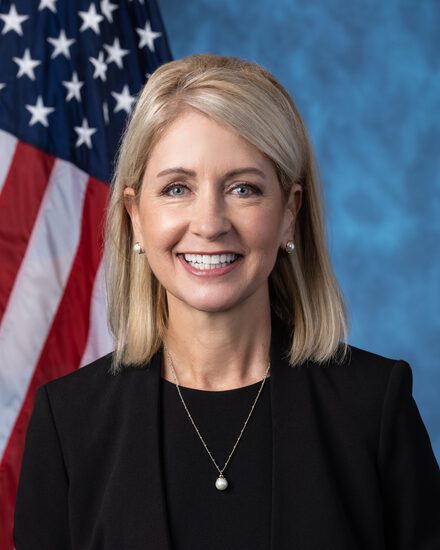
Rep. Mary E. Miller
Sponsored bills
Maddy summaryThis bill creates a federal database identifying state or local governments that conflict with immigration enforcement laws. It prohibits federal funding for any jurisdiction listed in this database, which includes entities that block cooperation with immigration detainers, restrict arrests of certain immigrants, or prevent officials from interviewing incarcerated individuals about immigration status. The database must be updated quarterly and made public within 90 days of the bill's enactment. This directly affects local governments that have policies limiting collaboration with federal immigration authorities.
Maddy summaryHR 4964, the Child Interstate Abortion Notification Act, requires physicians performing abortions on minors traveling across state lines to provide 24 hours of actual or constructive notice to the minor's parent before the procedure. It directly affects minors (under 18) seeking abortions in a state different from their residence, their parents, and healthcare providers. Key provisions mandate parental notification unless exceptions apply - such as medical emergencies, court waivers, verified abuse disclosures, or the minor being accompanied by a documented parent. The law aims to ensure compliance with parental involvement requirements in the minor’s home state, with penalties for noncompliance including fines or imprisonment for physicians.
Maddy summaryHR 4828 expands federal privacy law by adding biometric information, license plate numbers, workplace addresses, school addresses, and GPS coordinates to the list of "restricted personal information" under Title 18, U.S. Code. This directly affects businesses and organizations that collect personal data, requiring them to apply the same strict privacy safeguards to these newly protected data types. The bill modifies an existing legal definition rather than creating new requirements or enforcement mechanisms. It applies to any entity subject to current privacy regulations for restricted data. The key change clarifies which specific information categories receive enhanced protection under federal law.
Maddy summaryHR 4788 would amend a 1932 District of Columbia law to allow Members of Congress (Senators and Representatives) to carry concealed firearms in Washington, D.C., if they hold a valid concealed carry license from a state where they are permitted to carry, or are otherwise legally allowed to carry concealed in their home state. The bill requires these members to not be federally prohibited from possessing firearms, to carry a valid state-issued license or proof of residency rights, and to present photo identification. This exception applies only to Members of Congress and does not alter D.C.'s general concealed carry laws for other individuals. The provision would take effect upon the bill's enactment.
Maddy summaryThe PRIME Act exempts custom slaughter facilities from federal meat inspection requirements when they follow state laws and sell meat exclusively within the same state. It specifically allows facilities to slaughter animals and prepare meat without federal oversight if the products go only to household consumers or local businesses (like restaurants, hotels, or grocery stores) serving consumers directly in that state. The bill clarifies that this exemption does not override stricter state regulations governing custom slaughter or meat sales. This primarily affects small-scale slaughter operations and local food businesses operating within a single state's borders.
Maddy summaryThe End the Vaccine Carveout Act changes the National Vaccine Injury Compensation Program (NVICP) to allow individuals to sue vaccine manufacturers or administrators directly in court for vaccine-related injuries or deaths, without first needing to file a claim under the NVICP. It removes time limits for filing NVICP claims and repeals rules that previously let people choose between the program and a lawsuit for the same injury. The bill also specifically excludes COVID-19 vaccines from the definition of "covered countermeasure," meaning they are no longer protected by the same emergency liability shield that applied to other pandemic vaccines. This affects vaccine manufacturers, providers, and individuals who experience vaccine-related harm, shifting liability from the NVICP to the court system for most cases.
Maddy summaryHR 4706 prohibits Chinese government-linked entities (including Chinese corporations, CCP-affiliated organizations, and entities controlled by China) from acquiring, leasing, or owning U.S. agricultural land or residential real estate. The bill requires such entities to sell all existing U.S. agricultural land holdings within one year (with a 180-day letter of intent deadline) and residential real estate holdings within one year, imposing daily fines of $100 per acre for agricultural land violations and $1,000 per residential unit. It also voids noncompete agreements between these entities and their employees. The law applies to all 50 states and territories, with enforcement by the Agriculture and Commerce Departments, and includes a 2-year temporary residential purchase ban ending in 2026 (extendable by the President).
Maddy summaryThis bill establishes a new federal program to improve rural roads critical for agriculture. It provides funding for projects that replace weight-limited bridges, enhance access to farms and agricultural facilities, and upgrade safety on high-risk rural roads. The program targets local roads and rural minor collectors, with the federal government covering up to 90% of eligible project costs. It directly affects rural communities and agricultural businesses by addressing infrastructure barriers to farm operations and local economic activity. The funding is allocated through existing highway apportionment formulas under Title 23, U.S. Code.
Maddy summaryHR 4618, the "Jamie Reed Protecting Our Kids from Child Abuse Act," creates legal liability for pediatric gender clinics and medical practitioners who perform gender-transition procedures on minors. It prohibits federal funding for such clinics, affiliated institutions (like hospitals or universities), and any gender-transition procedures performed on minors. Individuals harmed by these procedures can file lawsuits up to 30 years after turning 18, seeking compensatory damages, punitive damages, and attorney fees. The law applies retroactively to procedures performed before, on, or after its effective date. It specifically excludes exceptions for medical conditions like ambiguous biological characteristics or life-threatening illnesses.