

Maddy summaryHRES 513 is a non-binding resolution expressing the House of Representatives' support for designating September 20 as National Service Dog Day. It recognizes service dogs' critical role in assisting people with disabilities - including mobility, visual, hearing, and medical needs - and highlights their historical contributions since 1929. The resolution encourages public awareness of service dogs' benefits, requests the President issue a proclamation to honor them, and urges support for organizations training service dogs for veterans and individuals with disabilities. This resolution does not create new laws or alter existing policies, but serves as a symbolic acknowledgment of service dogs' societal value.
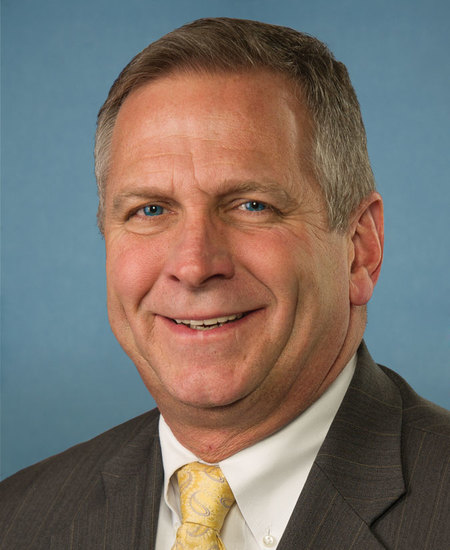
Rep. Mike Bost
Sponsored bills
Maddy summaryThe Federal Prisons Accountability Act of 2023 requires the President to appoint the Director of the Bureau of Prisons with Senate confirmation, replacing the current system where the Director is appointed directly by the Attorney General. It also establishes a 10-year term limit for the Director, though the current Director may continue serving for up to three months after the bill's enactment. This change directly affects the leadership structure of the Bureau of Prisons, which oversees over 176,000 federal inmates across 122 facilities and has a budget exceeding $7 billion annually. The bill aims to increase oversight of this major Department of Justice component by aligning its leadership appointment process with other senior Justice Department officials.
Maddy summaryHR 3099 establishes a new Special Envoy for the Abraham Accords within the State Department, directly affecting U.S. diplomatic efforts and coordination. The envoy, appointed by the President with Senate confirmation, will coordinate U.S. government activities to expand diplomatic, economic, and security ties between Israel and Muslim-majority countries, including encouraging nations without formal relations with Israel to establish them. Key duties include strengthening existing Accords partnerships, fostering regional cooperation on issues like trade and water security, and providing diplomatic support for Israel’s regional engagement. The envoy must submit annual reports to Congress detailing specific diplomatic efforts and progress with partner countries.
This bill includes phosphate and potash on the Department of the Interior's final list of critical minerals. (Under current law, Interior and other departments are required to conduct a variety of efforts to ensure a secure and reliable supply chain of critical minerals.) Interior must evaluate current policies relating to permitting and leasing of projects to develop critical minerals and issue recommendations to Congress to support domestic production of such commodities.
Maddy summaryThe Bridge Corrosion Prevention and Repair Act of 2023 requires federal highway and rail bridge projects receiving federal funding to use certified contractors trained in corrosion control. It mandates a corrosion management system covering surface prep, protective coatings, materials selection, and environmental protection, and requires contractors to employ personnel certified through qualified training programs. The bill also expands federal grant funding eligibility to include corrosion control work on rail bridges and directs the Transportation Secretary to study best practices for inspecting and repairing weathering steel bridges within 18 months. These changes directly affect contractors, state transportation departments, and local governments managing federally funded bridges.
Maddy summaryHR 4021, the Fair and Open Skies Act, amends U.S. aviation law to require that the Department of Transportation consider labor standards when reviewing international air transport agreements. Specifically, it adds "preventing the undermining of labor standards" as a mandatory factor in the public interest test for approving such agreements under 49 U.S.C. § 40101. This change directly affects international airlines seeking to operate flights to or from the U.S. and the DOT, which must now evaluate whether proposed agreements could weaken U.S. labor protections. The bill updates existing provisions by replacing outdated language about "agreements with the United States Government" and explicitly including labor standards in the evaluation criteria.
This resolution expresses support for keeping AM radios in cars. (Several car manufacturers announced plans to remove AM radio options from some or all of their models.)
Short Line Railroad Relief Act This bill authorizes the Department of Transportation to provide emergency grants or enter into contracts and other agreements for capital projects for short line railroads. A project must protect, repair, reconstruct, or replace short line railroad equipment and facilities in danger of suffering catastrophic damage, or that have suffered catastrophic damage, as a result of an emergency. An emergency includes a natural disaster affecting a wide area or a catastrophic failure from any external cause that results in the declaration of an emergency or a major disaster.
Maddy summaryThis resolution recognizes the need for improved access to rural and agricultural media programming, such as agricultural weather reports, market news, and western lifestyle content, which directly affects farmers, ranchers, and rural communities. It highlights that media consolidation has reduced availability of this programming, which informs the public about food supply chains, agricultural research, and rural life. The resolution urges media companies to prioritize delivering such content but does not create new laws, funding, or mandates. As a non-binding recognition, it has no direct policy impact on legislative or regulatory changes.
Maddy summaryHR 3792 extends U.S. security funding for Israel through 2028 (Section 3) and expands energy cooperation to include advanced nuclear technologies and carbon capture (Section 5). It requires annual reports on regional security partnerships involving Israel (Section 6) and ensures countries in the Abraham Accords can access U.S. development programs (Section 8). The bill also mandates reports on diplomatic efforts against ICC investigations targeting the U.S. and Israel (Section 10) and encourages people-to-people programs to strengthen the Abraham Accords (Sections 7, 9). These provisions directly affect Israel’s diplomatic engagement, security partnerships, and economic cooperation in the Middle East.