

Maddy summaryThe Pregnancy.Gov Act requires the creation of a federal website, pregnancy.gov, to help pregnant and postpartum women find local resources. The website must allow users to search by ZIP code, filter services by distance (1-100 miles), and provide feedback on usability. It prohibits listing organizations that provide or support abortions (including abortion counseling, referrals, or financial support) and excludes such entities from receiving federal grants for resource aggregation. Within 180 days of launch, the government must report to Congress on website traffic, user experience, and gaps in available services, with multilingual access required.
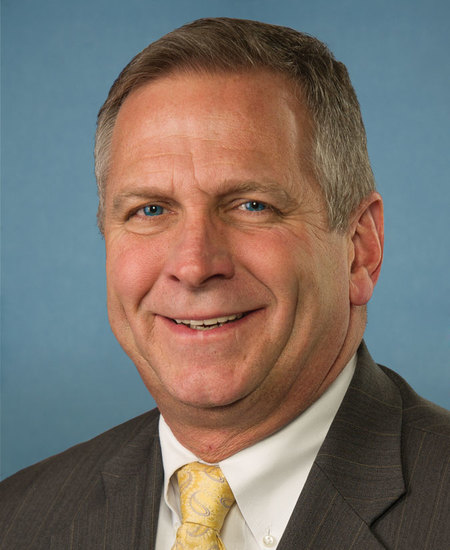
Rep. Mike Bost
Sponsored bills
Maddy summaryThe Law Enforcement Officers Equity Act expands federal retirement benefits to include specific non-traditional law enforcement roles, such as IRS tax collection officers, U.S. Postal Inspection Service employees, Department of Veterans Affairs police, and certain U.S. Customs and Border Protection seized property specialists. It directly affects current and future federal workers in these positions who were previously excluded from law enforcement retirement benefits under the Federal Employees Retirement System and Civil Service Retirement System. The bill allows current employees (incumbents) to elect to count prior service toward retirement by paying a deposit covering the difference in retirement contributions, with government contributions made over 10 years. It also temporarily exempts law enforcement officers from mandatory separation for three years after enactment.
Maddy summaryHR 3184, the PFAS Alternatives Act, funds research to develop turnout gear (firefighter safety clothing) without harmful PFAS chemicals, directly affecting firefighters who wear this gear. It authorizes $25 million annually (2025-2029) for grants to eligible organizations to research and test PFAS-free gear, requiring partnerships with firefighting groups to translate findings into practice. The bill also allocates $2 million yearly (2027-2031) for training programs on safe gear use and decontamination. Its goal is to reduce firefighters' exposure to chemicals linked to occupational illnesses during operations.
Maddy summaryThis bill creates a new system for recognizing and regulating individuals who help veterans file benefit claims. It requires the VA to provide veterans with information about free assistance options and maintain a public list of accredited representatives. The bill sets a maximum fee limit of $12,500 or 5 times the monthly benefit increase for representatives, and establishes penalties for unaccredited representatives who charge improper fees. The law aims to protect veterans from unscrupulous representatives while ensuring they have access to quality assistance with their benefit claims.
Maddy summaryHRES 367 is a non-binding House resolution expressing support for designating May 2025 as "Motorcycle Safety Awareness Month." It recognizes motorcycles as part of the transportation mix, highlights the motorcycling community's safety efforts, and encourages rider education, proper gear use, and shared road safety for all users. The resolution does not create new laws or funding but symbolically promotes existing safety initiatives like those by the National Highway Traffic Safety Administration. It directly affects the motorcycling community and public awareness efforts, not specific individuals or regulations.
Maddy summary# Summary of the SHIPS for America Act This comprehensive legislation focuses on strengthening the U.S. maritime industry, shipbuilding capacity, and maritime workforce to enhance national security and economic competitiveness. ## Key Areas of Focus 1. **Shipbuilding & Maritime Infrastructure** - Establishes a United States Center for Maritime Innovation to accelerate adoption of commercial technologies - Creates a National Shipbuilding Research Program - Requires an annual survey of anticipated commercial vessel construction - Includes provisions for streamlined environmental reviews of maritime infrastructure 2. **Workforce Development** - Establishes the United States Merchant Marine Career Retention Program to maintain mariner qualifications - Creates Centers of Excellence for Domestic Maritime Workforce Training and Education - Implements military-to-maritime transition programs - Establishes a Maritime Career and Technical Education Advisory Committee 3. **Education & Training** - Expands educational assistance for merchant mariners - Creates eligibility for Naval Postgraduate School for merchant mariners - Establishes maritime education programs from K-12 through higher education - Provides for international exchanges for mariners and naval architects 4. **National Security & Strategic Readiness** - Requires reports on National Defense Reserve Fleet utilization - Includes measures to de-risk the maritime sector from Chinese influence - Enhances shipbuilding capacity for national security needs - Establishes programs to ensure sufficient mariner workforce for national defense 5. **Funding Mechanisms** - Authorizes appropriations from the Maritime Security Trust Fund - Includes funding for workforce programs, education, and shipbuilding initiatives - Establishes specific funding levels for various programs over multiple fiscal years The legislation aims to create a sustainable domestic maritime industrial base that supports both commercial shipping and national defense requirements, with a particular emphasis on developing and retaining a skilled U.S. maritime workforce.
Maddy summaryHR 3137 extends federal tax credits for biodiesel production and use through 2026, directly affecting biodiesel producers, refiners, and businesses that purchase or use biodiesel. The bill updates tax code provisions to keep the biodiesel credit active until 2026 (instead of expiring in 2024) and prevents double benefits by disallowing credits for fuel already covered under a separate clean fuel production credit. It also extends related credits for second-generation biofuels until 2027 and applies to fuels sold or used after December 31, 2024. The changes maintain existing tax incentives without altering eligibility or creating new requirements.
Maddy summaryThis bill creates a new federal program to expand high-speed broadband access in rural areas by providing grants, loans, and combinations of both. It sets minimum standards requiring 100 Mbps downstream and upstream speeds, prioritizes projects in communities where at least 90% of households lack such service, and directs funding toward areas with high poverty, small populations, or strategic community plans. Eligible applicants include tribal organizations, cooperatives, local governments, and rural utilities, with requirements to meet buildout deadlines, participate in federal affordability programs, and provide cost-sharing (up to 25%). The program authorizes $650 million annually from 2026 to 2030 to fund infrastructure construction, improvement, or acquisition in underserved rural communities.
Maddy summaryHR 3059, the Streamlining Critical Mineral Permitting Act, modifies the Solid Waste Disposal Act to create a new pathway for temporary hazardous waste permits. It directly affects mining and processing facilities handling "critical energy resources" (defined as energy resources essential to U.S. energy systems with vulnerable supply chains, as determined by the Energy Secretary). The bill adds a new category allowing these "critical energy resource facilities" to qualify for interim hazardous waste permits under Section 3005(e). This aims to expedite permitting for facilities processing minerals critical to clean energy and national security, without changing existing environmental standards.
Maddy summaryThis bill amends federal laws governing short-barreled shotguns (SBS), which are shotguns with barrels under 18 inches or overall length under 26 inches. It removes state-level taxes, registration, or recordkeeping requirements for SBS owned legally under federal rules, preempts conflicting state laws, and requires the federal government to destroy existing SBS registration records within one year. The bill directly affects lawful owners of SBS who previously registered under the National Firearms Act, simplifying their compliance with federal standards. Key changes include updating definitions to better align with sporting use and eliminating state-level barriers for legally owned SBS.