

Maddy summaryHR 3688, the Protecting Children from Experimentation Act of 2025, prohibits healthcare professionals from performing or aiding gender transition procedures on minors (under age 18) when the procedure involves interstate commerce (e.g., travel, payments, or communications across state lines). The bill defines "gender transition procedures" broadly to include hormonal treatments and surgeries like puberty blockers, hormone therapy, and genital reconstruction, but excludes medically necessary care for disorders of sex development, precocious puberty, or life-threatening conditions. Healthcare providers violating this prohibition face criminal penalties of up to five years in prison or fines, while minors cannot be prosecuted for receiving such procedures. The law explicitly targets providers, not parents or minors, and includes specific medical exceptions to avoid restricting standard care for qualifying health conditions.
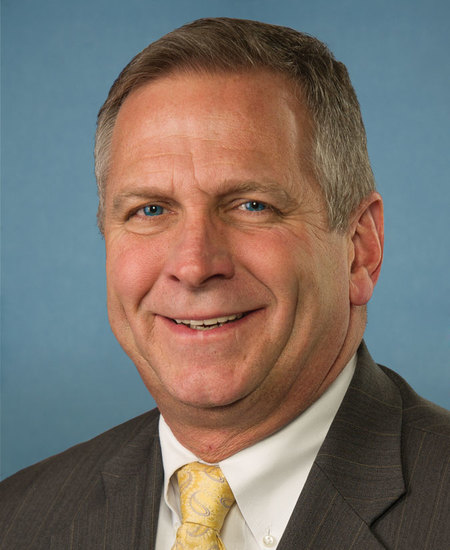
Rep. Mike Bost
Sponsored bills
Maddy summaryHJRES 61 is a congressional resolution that formally disapproves an Environmental Protection Agency (EPA) rule setting new air pollution standards for rubber tire manufacturing. It directly affects tire manufacturers by blocking the EPA’s proposed rule (published November 29, 2024), which would have required them to meet specific limits on hazardous air pollutants. The resolution’s key mechanism is a formal congressional vote to nullify the rule, making it legally ineffective under Title 5, U.S. Code. This action stops the EPA rule from taking effect without creating new regulations.
Maddy summaryHR 1701, the Strategic Ports Reporting Act, requires the State and Defense Departments to map global ports critical to U.S. national security and economic interests, including identifying Chinese government or company efforts to control such ports. It mandates a comprehensive study on Chinese activities at strategic ports - such as promoting products like LOGINK and setting industry standards - and assesses how Chinese control could harm U.S. interests. The departments must submit a detailed, unclassified report to Congress within one year, including lists of ports controlled by China or the U.S., vulnerability assessments, and a strategy for securing trusted investments in port infrastructure. The report will also evaluate costs for replacing Chinese products and identify funding sources for U.S. alternatives.
Maddy summaryThe DEFIANCE Act of 2025 creates a new civil legal remedy for victims of non-consensual intimate digital forgeries (synthetic images or videos manipulating real people into sexual contexts without consent). It allows affected individuals to sue perpetrators in federal court for damages up to $250,000, injunctions to remove content, and privacy protections like pseudonyms. The bill specifically covers cases where forgeries are created or shared with intent to disclose, including scenarios involving sexual assault or harassment. It expands existing federal protections under 15 U.S.C. 6851 to address digital forgeries while ensuring state laws remain in effect.
Maddy summaryHR 1286, the Simplifying Forms for Veterans Claims Act, requires the Department of Veterans Affairs (VA) to simplify forms sent to veterans filing claims. Within 30 days of enactment, the VA must hire an independent research center (FFRDC) to assess these forms, working with veterans' groups, legal experts, and the VA itself. The VA must then report the assessment to Congress within 90 days and implement approved changes - like clearer language or better organization - within two years. This directly affects veterans navigating VA claims by aiming to reduce confusion in the application process.
Maddy summaryThe Shawnee TRAILS Act requires the Secretary of Agriculture to designate and maintain at least 20% of trails in Shawnee National Forest for recreational use by e-bikes and off-road vehicles (including ATVs and ORVs). It mandates that these designated trails be monitored to balance recreation access with natural resource protection, while ensuring at least one trail remains open year-round for such use. The bill also explicitly permits covered vehicles on paved roads within the forest. This policy directly affects recreational users of e-bikes and off-road vehicles in Shawnee National Forest, altering how trails are managed for their access.
Maddy summaryHR 3463 (COUNTER Act) expands the U.S. military's authority to counter drone threats by allowing the Department of Defense and Coast Guard to neutralize unmanned aircraft systems without being restricted by certain federal laws. It exempts related technology, procedures, and protocols from public disclosure requirements under federal and state laws, and permits military commanders to delegate these actions. The bill applies to both domestic and overseas operations, clarifying that other federal laws do not apply to U.S. military or Coast Guard activities mitigating drone threats abroad. Key changes include broadening legal authority beyond previous restrictions and extending reporting deadlines for related activities.
Maddy summaryHR 3392, the STOP Screwworms Act, requires the U.S. Department of Agriculture to build modular facilities for rearing sterile New World screwworm flies within 180 days of enactment. These facilities will disperse sterile flies into at-risk agricultural areas - identified based on migratory patterns and suitability for dispersal - to prevent infestations that threaten livestock. The bill authorizes $300 million in funding for construction, operation, and annual reporting to Congress on threat assessments and effectiveness. It directly affects livestock producers and agricultural regions vulnerable to screwworm fly migration, using sterile insect technique as a preventive measure.
Maddy summaryThe Rural Broadband Modernization Act would create a federal program to fund broadband infrastructure in rural areas through grants, loans, and loan guarantees. It establishes a minimum service standard of 100 Mbps symmetrical broadband for all rural households, prioritizing projects for communities without any existing broadband service (or with inadequate service) and requiring at least 90% of households in a service area to be unserved. The program would allocate $500 million annually from 2026-2030, with funds distributed based on the number of small communities (under 2,500 residents) in each state. Eligible applicants include local governments, tribal entities, and private companies that can demonstrate they'll meet the service requirements within 5 years.
Maddy summaryHR 3277, the Ensuring Lasting Smiles Act, requires group health plans and health insurance issuers to cover medically necessary outpatient and inpatient treatments for congenital anomalies or birth defects primarily affecting the eyes, ears, teeth, mouth, or jaw. This includes reconstructive procedures, dental/orthodontic support during treatment, and follow-up care, but excludes purely cosmetic surgery not tied to a medical diagnosis. Cost-sharing (like copays) for these services must not be stricter than for other medical benefits. The law takes effect for plan years beginning January 1, 2026, and mandates insurers to provide notice about this coverage to beneficiaries.