

Maddy summaryThe Veterans Appeals Efficiency Act of 2025 requires the Department of Veterans Affairs to track and report on key aspects of the appeals process, including average claim processing times after remand and reasons for case dismissals. It mandates the creation of guidelines for advancing cases on the Board's docket and authorizes the Board to aggregate appeals with common legal or factual issues to improve efficiency. The bill also expands the Court of Appeals' jurisdiction to handle class action claims and requires a study on common legal questions to help the Board make more consistent decisions. These changes aim to reduce delays and improve the accuracy of benefits decisions for veterans seeking appeals.
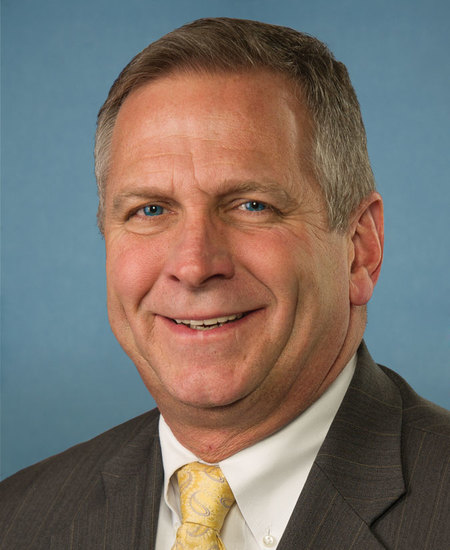
Rep. Mike Bost
Sponsored bills
Maddy summaryHRES 527 is a symbolic resolution designating June 2025 as "National Dairy Month" to honor dairy's role in nutrition and the agricultural economy. It recognizes dairy as a key source of calcium and vitamin D (per Dietary Guidelines), supports over 3.2 million jobs, and highlights the industry's $793 billion economic impact. The resolution encourages public support for dairy farmers while condemning unfair regulatory burdens on the sector. As a non-binding expression of support, it does not create new laws or funding.
Maddy summaryThis bill requires major internet companies (including social media, streaming services, and app stores) and broadband providers to contribute to the Universal Service Fund, which subsidizes affordable broadband in rural and high-cost areas. It exempts smaller companies that transmit less than 3% of U.S. broadband data or earn under $5 billion annually. The Federal Communications Commission must create a new support mechanism to help rural broadband providers cover costs, while ensuring contributions remain fair and predictable. The bill explicitly states it does not grant the FCC new authority over these companies.
Maddy summaryHRES 508 is a symbolic House resolution supporting the designation of September 14-20, 2025, as "National Truck Driver Appreciation Week." It does not create new laws or funding but expresses congressional recognition of truck drivers' contributions to the U.S. economy and daily life. The resolution cites statistics about truck drivers' role in transporting freight (70% of U.S. freight), delivering essential goods to 80% of communities, and their annual safety record. It directly affects no individuals or entities, as it serves only as a ceremonial acknowledgment with no binding requirements.
Maddy summaryThe RISE Act (HR 3939) streamlines documentation for college students with disabilities by requiring institutions to accept multiple forms of proof, including past Individualized Education Programs (IEPs), Section 504 plans, or licensed professional evaluations, instead of demanding current documentation. It mandates that colleges establish transparent, accessible processes for determining accommodation eligibility and share these policies with students, parents, and faculty. The bill also requires institutions to report specific data on students with disabilities (like enrollment numbers and accommodations used) to federal databases, while authorizing $10 million for a national support center. These changes directly affect colleges receiving federal aid and students seeking disability accommodations in higher education.
Maddy summaryHR 3999, the American Flags to Honor Our Veterans Act of 2025, amends federal law to allow permanent, upright American flags to be displayed adjacent to the graves of deceased veterans. It directly affects families of veterans and cemetery operators by permitting this flag placement at burial sites. The key provision modifies Title 4, U.S. Code, to specifically authorize secured flag displays next to graves of veterans (as defined in Title 38) or Armed Forces members (as defined in Title 10), replacing temporary flag displays with a permanent, standardized practice.
Maddy summaryHR 3643, the VA Data Transparency and Trust Act, requires the Veterans Health Administration (VHA) and Veterans Benefits Administration (VBA) to submit detailed annual reports on healthcare services and benefits provided to veterans. The VHA report must include data on veterans receiving care, their health conditions (such as traumatic brain injury and diabetes), demographics, and facility management. The VBA report must detail benefit recipients, service-connected disability ratings, compensation amounts, and claims processing times. The bill also establishes a data sharing system allowing researchers to access anonymized, aggregated veteran healthcare and benefits data for research purposes. These requirements will run for five years from the act's enactment date.
Maddy summaryHR 3862, the Clean Water SRF Parity Act of 2025, expands eligibility for Clean Water State Revolving Fund (SRF) assistance to include qualified nonprofit entities and privately owned treatment works operators. The bill adds provisions allowing nonprofits to receive SRF funds for constructing, acquiring, or improving treatment works, and creates a new section (l) for privately owned treatment works to access funds for upgrades, water conservation, energy efficiency, security measures, and other specified activities. Crucially, it requires that financial assistance for private operators must primarily benefit the end-users served by the treatment works, not the shareholders or owners. This directly affects nonprofits managing water infrastructure and private utility companies operating treatment facilities, ensuring SRF funds support community water needs under defined conditions.
Maddy summaryHR 649, the Whole Milk for Healthy Kids Act of 2025, amends the National School Lunch Act to allow schools participating in the program to offer students both organic and non-organic whole milk, in addition to reduced-fat, low-fat, and fat-free options. Key provisions include clarifying that milk fat in whole milk should not count toward saturated fat limits for meal compliance, prohibiting schools from purchasing milk from Chinese state-owned enterprises, and ensuring schools cannot be barred from offering the full range of milk types listed. The bill directly affects public and private schools serving the National School Lunch Program by expanding their milk options for students. It focuses on concrete policy changes to dietary offerings and sourcing restrictions within the school nutrition program.
Maddy summaryHJRES 98 is a non-binding joint resolution designating June as "Life Month" to promote awareness of the value of human life. It expresses support for protecting unborn life, references the Dobbs v. Jackson decision, and urges policymakers to defend "the sanctity of human life" through legislation. The resolution does not create new laws, alter funding, or impose requirements - its purpose is solely symbolic recognition. It was introduced by multiple representatives and referred to relevant committees for consideration.