

Maddy summaryHR 3006 would limit Medicare coinsurance for certain surgical procedures performed in ambulatory surgical centers (ASCs). Specifically, it prevents patients from paying coinsurance exceeding the annual inpatient hospital deductible for those procedures. If the coinsurance amount would surpass the deductible, the Medicare program must reduce the patient's share to match the deductible and reimburse the ASC for the difference. This change applies to services provided on or after January 1, 2026, directly affecting Medicare beneficiaries using ASCs for qualifying surgeries.
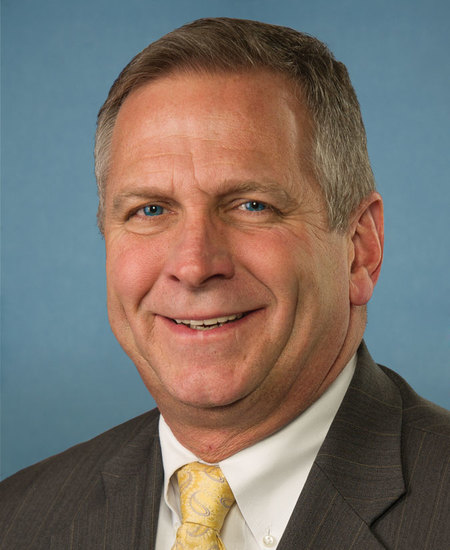
Rep. Mike Bost
Sponsored bills
Maddy summaryThis bill amends the Elementary and Secondary Education Act to explicitly include accounting education as part of a well-rounded K-12 curriculum. It requires schools to develop and strengthen programs teaching accounting, including increasing access to high-quality accounting courses for students from groups historically underrepresented in accounting careers. The key provision inserts specific language into existing law, directing schools to promote accounting career awareness and expand course availability through grade 12. This directly affects K-12 students, particularly those from underrepresented backgrounds, by making accounting education a recognized component of career-focused learning.
Maddy summaryHR 2872 (the RESILIENCE Act of 2025) amends the tax code to change how public utilities can deduct repair and maintenance costs for certain infrastructure. It requires utilities to reduce their taxable income by the same amount they deduct for these repairs on their financial statements, specifically for property owned by the utility and accounted for as depreciation. This applies to utilities owning infrastructure covered under Section 168(i)(10) of the tax code, aligning their tax deductions with financial reporting. The change takes effect for taxable years starting after December 31, 2024.
Maddy summaryHR 2819, the DRIVE Act, prohibits the Federal Motor Carrier Safety Administration from requiring speed limiting devices on trucks weighing over 26,000 pounds operating in interstate commerce. This directly affects commercial truck drivers and carriers that operate large vehicles across state lines. The bill blocks the agency from implementing any rule mandating speed limiters that would cap these trucks' maximum speed. It prevents a potential new federal requirement for trucking companies without altering existing safety standards.
Maddy summaryHR 1228, the "Prioritizing Veterans’ Survivors Act," is a procedural bill that modifies the organizational structure within the Department of Veterans Affairs (VA). It amends Section 321(a) of Title 38, U.S. Code, to move the Office of Survivors Assistance from being part of "the Department" to being directly under "the Office of the Secretary." This change affects only the internal VA bureaucracy, not veterans' benefits or eligibility. The bill does not alter survivor benefits, services, or the scope of the Office of Survivors Assistance.
Safeguard American Voter Eligibility Act or the SAVE Act This bill requires individuals to provide documentary proof of U.S. citizenship when registering to vote in federal elections. Specifically, the bill prohibits states from accepting and processing an application to register to vote in a federal election unless the applicant presents documentary proof of U.S. citizenship. The bill specifies what documents are considered acceptable proof of U.S. citizenship, such as identification that complies with the REAL ID Act of 2005 that indicates U.S. citizenship. Further, the bill (1) prohibits states from registering an individual to vote in a federal election unless, at the time the individual applies to register to vote, the individual provides documentary proof of U.S. citizenship; and (2) requires states to establish an alternative process under which an applicant may submit other evidence to demonstrate U.S. citizenship. Each state must take affirmative steps on an ongoing basis to ensure that only U.S. citizens are registered to vote, which shall include establishing a program to identify individuals who are not U.S. citizens using information supplied by certain sources. Additionally, states must remove noncitizens from their official lists of eligible voters. The bill allows for a private right of action against an election official who registers an applicant to vote in a federal election who fails to present documentary proof of U.S. citizenship. The bill establishes criminal penalties for certain offenses, including registering an applicant to vote in a federal election who fails to present documentary proof of U.S. citizenship.
Maddy summaryHR 1793, the Veterans Readiness and Employment Transparency Act of 2025, requires the Department of Veterans Affairs (VA) to improve access to vocational rehabilitation services for veterans with service-connected disabilities. The bill mandates a dedicated VA hotline, updated regional office websites with contact details, and requires VA counselors to hold monthly staff Q&A sessions and provide in-person briefings at local educational institutions (or virtual briefings for institutions over 150 miles away). It also requires the VA to submit an annual report detailing the number of veterans requesting, receiving, and being denied extensions to their rehabilitation program periods. These provisions directly affect veterans using VA vocational rehabilitation programs and VA regional office staff responsible for delivering those services.
Maddy summaryThe Affordable Housing Credit Improvement Act of 2025 would reform the Low-Income Housing Credit program, which provides tax credits to developers of affordable housing. It would increase state allocations based on population with annual cost-of-living adjustments, modify tenant eligibility rules to allow higher income limits for some residents, and add protections for domestic violence victims in housing. The bill would simplify rules for rural and Native American housing projects, clarify credit eligibility requirements, and require greater transparency in program administration. These changes would directly affect developers, property owners, and low-income tenants in housing projects that receive LIHC tax credits.
Maddy summaryHR 1039, the Clear Communication for Veterans Claims Act, requires the Department of Veterans Affairs (VA) to commission an independent assessment of notices sent to veterans filing claims. Within 30 days of enactment, the VA must partner with a federally funded research center to evaluate these notices, focusing on making them clearer, more concise, and better organized while reducing paper use and government costs. The assessment, developed with input from veterans' groups and experts, must be submitted to Congress within 90 days, and the VA must implement feasible recommendations within one year. This bill directly affects veterans navigating claims processes and aims to improve their experience through clearer communication. The bill also includes a minor technical change to housing loan fee deadlines.
Maddy summaryThis bill makes it a federal crime to intentionally cause or arrange collisions involving commercial motor vehicles (like trucks) for insurance fraud. It imposes fines and prison sentences of up to 20 years for basic staging, and at least 20 years if the collision causes serious injury or death. The law directly affects individuals who commit this type of fraud, which is often used to file false insurance claims. It also prevents federal prosecution if someone was already convicted or acquitted under state law for the same act.