

Trillion Trees Act This bills establishes a variety of requirements and incentives to plant trees and conduct other land management practices for the purposes of capturing and storing carbon in domestic and international trees and forests. Additionally, the bill provides incentives to research or develop other carbon sequestration tools. Specifically, the bill directs the Department of Agriculture (USDA) to set targets to increase forest carbon stock through January 1, 2100, for the purposes of sequestering and storing carbon in U.S. forests. It also establishes and provides funding for the Trillion Trees Challenge Fund to provide grants to nonfederal entities for activities related to reforestation efforts on public or private lands. In addition, it raises the cap on the Reforestation Trust Fund to enhance forest health in the National Forest System and requires the USDA to establish a Tree City USA Grant Program. The bill also allows the U.S. Agency for International Development to enter into an agreement with a nonprofit organization to establish an International Forest Foundation to promote reforestation and prevent deforestation. Additionally, it establishes requirements and incentives to address seedling shortages and support nurseries. Finally, the bill provides market incentives to research or develop other carbon sequestration tools relating to biochar, sustainable building practices, biochemical and bioplastic products, and biomass energy.
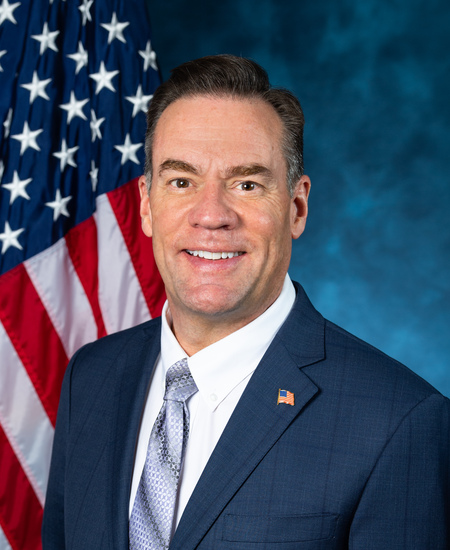
Rep. Russ Fulcher
Sponsored bills
Forestry Education and Workforce Development Act of 2021 This bill directs the Department of Agriculture (USDA) to make grants to eligible institutions to carry out forestry education and workforce development programs to prepare students for careers in forestry. The amount of grant funds awarded each fiscal year to land grant colleges or universities shall be equal to the amount of grant funds awarded to other institutions of higher education and area career and technical education schools. Enrollees in Civilian Conservation Centers may provide assistance in carrying out reforestation activities in priority areas, as determined by USDA.
This joint resolution recognizes and affirms the sovereign and unilateral authority of states to defend themselves against invasion.
This resolution calls on the people of the United States to observe Memorial Day to honor the men and women who died in the pursuit of freedom and peace.
This resolution condemns the rocket attacks by Hamas against Israel beginning the week of May 9, 2021. It also states that the United States must continue to invest in and support Israel's security and sovereignty.
Secure Rural Schools Reauthorization Act of 2021 This bill extends through FY2023 payments made to states and eligible counties containing certain federal land under the Secure Rural Schools and Community Self-Determination Act of 2000. The Department of the Interior and the Department of Agriculture shall carry out a pilot program to allow the Chief of the Forest Service or the Director of the Bureau of Land Management to nominate members of resource advisory committees. County funds may be used to provide or expand access to (1) broadband telecommunications services at local schools, or (2) the technology and connectivity necessary for students to use a digital learning tool at or outside of a local school campus. Any county funds that were obligated by a county before October 1, 2017, but are unspent on October 1, 2020, may be used by the county for any authorized use and shall be available for projects initiated after October 1, 2020. No county funds may be used for lobbying activity, regardless of the purpose for which the funds are obligated on or before the enactment of this bill.
Regulations from the Executive in Need of Scrutiny Act of 20 21 This bill revises provisions relating to congressional review of agency rulemaking. Specifically, the bill establishes a congressional approval process for a major rule. A major rule may only take effect if Congress approves of the rule. A major rule is a rule that results in (1) an annual effect on the economy of $100 million or more; (2) a major increase in costs or prices for consumers, individual industries, government agencies, or geographic regions; or (3) significant adverse effects on competition, employment, investment, productivity, innovation, or the ability of U.S.-based enterprises to compete with foreign-based enterprises. In addition, the bill establishes a congressional disapproval process for a nonmajor rule. A nonmajor rule may only take effect if Congress does not disapprove of the rule.
Lawful Interstate Transportation of Firearms Act This bill revises criminal provisions related to the interstate transportation of firearms and ammunition. An individual may transport a firearm between two places (e.g., states) where it is legal to possess, carry, or transport the firearm. During transport, the firearm must be unloaded and secured or securely stored. Additionally, an individual may transport ammunition, or a detachable magazine or feeding device, between two places where it is legal to possess, carry, or transport the ammunition, magazine, or feeding device. During transport, the ammunition, magazine, or feeding device must not be loaded into a firearm and must be securely stored. The term transport includes staying in temporary lodging; stopping for food, fuel, vehicle maintenance, an emergency, or medical treatment; or any other activity incidental to the transport. The bill prohibits the arrest or detention of an individual for a state or local firearm or ammunition violation unless there is probable cause to believe the individual failed to comply with the provisions of this bill, and there is probable cause to believe the individual committed another crime.
Stop Forced Organ Harvesting Act of 2021 This bill establishes specified measures to combat forced organ harvesting and the international trafficking in persons for the purpose of removing their organs. These measures include (1) establishing property-blocking and visa-blocking sanctions, (2) prohibiting exports of certain surgery devices to entities that are identified as being responsible for forced organ harvesting or related human trafficking, and (3) requiring the Department of State to report on these practices.
This concurrent resolution expresses the sense of Congress that a carbon tax would be detrimental to American families and businesses and is not in the best interest of the United States.