

This joint resolution nullifies a Department of Labor final rule entitled Adverse Effect Wage Rate Methodology for the Temporary Employment of H-2A Nonimmigrants in Non-Range Occupations in the United States and published on February 28, 2023. This rule makes changes to the methodology used to set adverse effect wage rates for H-2A workers (temporary agricultural workers), including by using Bureau of Labor Statistics wage surveys in certain instances. (Generally, the minimum wage for an H-2A worker is the highest of the adverse effect wage rate, the applicable minimum wage, the prevailing wage for that occupation in that area, or any agreed-upon collective bargaining wage.)
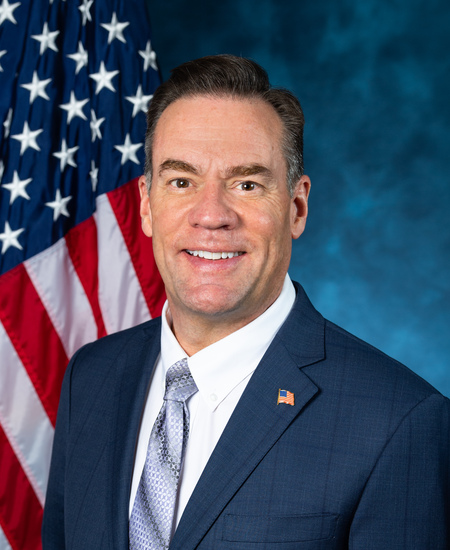
Rep. Russ Fulcher
Sponsored bills
Maddy summaryHR 2826, the Save Local Business Act, clarifies when multiple businesses can be held jointly responsible for labor laws. It amends the National Labor Relations Act and Fair Labor Standards Act to state that a business is only a joint employer if it directly controls key employment terms like hiring, pay, schedules, or discipline for another business's workers. This directly affects franchisors, contractors, and similar business models that might previously have been deemed joint employers under broader interpretations. The bill aims to limit joint employer liability to cases where one business has clear, day-to-day control over essential worker conditions.
Maddy summaryHR 2743 prohibits large financial institutions (over $100 billion in assets) from denying banking services to lawful businesses based on subjective political reasons, industry type, or reputational concerns. It requires these institutions to use objective, risk-based assessments for service decisions and provide written justifications for denials. The law applies to banks, credit unions, and payment networks, with civil penalties for violations including fines up to $10,000 per incident. It specifically ensures businesses operating legally under federal law receive fair access to financial services without discrimination. The bill mandates that denials be based on documented risk factors, not political bias or category-based exclusion.
American Innovation and R&D Competitiveness Act of 2023 This bill eliminates the five-year amortization requirement for research and experimental expenditures, thus allowing continued expensing of such expenditures in the taxable years in which they are incurred.
Maddy summaryHJRES 27 is a congressional resolution seeking to block a federal rule that redefined which waterways fall under the Clean Water Act's protections. It targets a rule submitted by the Army Corps of Engineers, Department of Defense, and Environmental Protection Agency (EPA) on January 18, 2023, which aimed to revise the "Waters of the United States" definition. The resolution would formally disapprove this rule under a specific federal procedure (Chapter 8 of Title 5), preventing it from taking effect. This would directly affect how federal agencies regulate pollution and development near water bodies, including wetlands and smaller streams.
Maddy summaryHR 1762, the Northwest Energy Security Act, requires the Secretaries of Interior, Energy, and Army (who manage the Federal Columbia River Power System) to operate dams and power facilities consistent with the 2020 Columbia River System Operations plan. It prevents any new restrictions on hydroelectric generation at FCRPS dams or Snake River navigation in Washington, Oregon, or Idaho without explicit new federal law. The bill allows the Secretaries to amend the 2020 plan only for public safety, grid reliability, or if requirements are no longer needed, using a specific process. This directly affects how federal agencies manage power operations and river traffic in the Pacific Northwest.
Maddy summaryThis bill terminates the national emergency declared by the President on March 13, 2020, under the National Emergencies Act. It ends the executive branch's authority to use emergency powers related to that specific declaration. The resolution passed both chambers in early 2023 and took effect April 10, 2023, without creating new policies or affecting specific groups.
Maddy summaryThe FILM Act streamlines rules for filming and photography in National Parks and other federal lands. It eliminates permit requirements for small groups (fewer than 6 people) and activities incidental to permitted events like weddings, while creating a quick "de minimis use authorization" for groups of 6-8 people that meet specific resource protection standards. For larger productions, the bill establishes a fee structure based on crew size, equipment, and duration, with proceeds returning to the parks. The law includes specific requirements to protect natural resources, prevent visitor disruption, and prohibit staging equipment (while allowing handheld gear like tripods). This directly affects filmmakers, photographers, and park visitors by creating clearer, more accessible rules for media production in federal lands.
Maddy summaryHR 1581, the America Works Act of 2023, modifies work requirement exemptions for the Supplemental Nutrition Assistance Program (SNAP). It expands direct exemptions to include individuals medically certified as unfit for work, parents or caregivers of children under 7, and pregnant women, while removing a specific enforcement clause (Section 6(o)(4)(A)(ii)). The bill adjusts existing exemption rules to clarify that certain exemptions apply retroactively to cases beginning before the bill's enactment date. These changes directly affect SNAP recipients who would otherwise face work requirements under federal law.
Maddy summaryThe ALIGN Act (HR 2406) permanently allows businesses to deduct the full cost of qualified equipment and machinery in the year of purchase, rather than spreading the deduction over multiple years. This applies to property placed in service after September 27, 2017, directly affecting businesses that make capital investments in eligible assets like manufacturing equipment or commercial facilities. The bill eliminates the previous requirement to depreciate these costs over time, reducing taxable income in the purchase year. It makes a temporary 2017 tax provision permanent, impacting businesses across various industries that purchase qualifying property.