

Maddy summaryHJRES 49 is a congressional disapproval resolution targeting a specific rule by the U.S. Fish and Wildlife Service that would have listed the northern long-eared bat as an endangered species under the Endangered Species Act. The rule, published in the Federal Register in November 2022 (87 Fed. Reg. 73488), would have imposed federal protections and restrictions on activities affecting the bat's habitat. This resolution, if passed, would nullify that rule, preventing the bat from receiving federal endangered species status and associated legal safeguards. It directly affects the regulatory status of the northern long-eared bat and activities regulated under the Endangered Species Act.
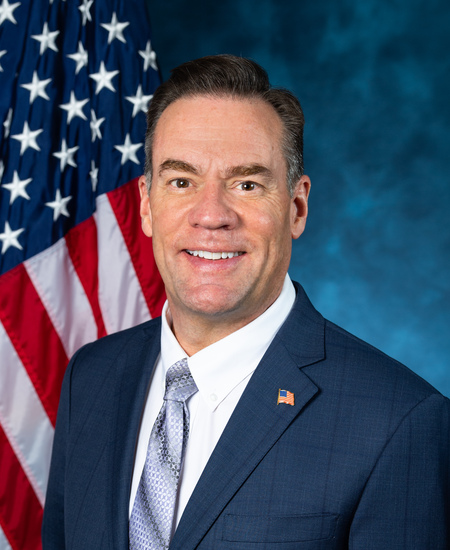
Rep. Russ Fulcher
Sponsored bills
This resolution declares that the life of each human person begins at fertilization and calls upon Congress to enact legislation to enforce the Fourteenth Amendment's guarantee of equal protection for unborn children nationwide.
Maddy summaryThis bill prohibits higher education accreditation bodies from considering an institution's diversity, equity, and inclusion (DEI) policies or the racial composition of its students, faculty, or staff when evaluating accreditation. It directly affects all colleges and universities seeking or maintaining accreditation, with specific exemptions for religiously controlled institutions (e.g., those with religious missions, doctrinal requirements, or financial ties to religious organizations). The law adds a new requirement that accreditors must disregard DEI factors and racial composition, while also creating a legal pathway for institutions to sue if accreditation is denied based on these prohibited considerations. Religious institutions meeting defined criteria (like divinity schools or those with religious charters) are exempt from the "free inquiry" requirements related to DEI.
Maddy summaryThe SHOPP Act (HR 3127) expands the types of healthy foods SNAP participants can buy with their benefits. It allows fresh frozen fruits and vegetables to count toward nutrition incentives year-round and adds legumes (like beans and lentils) to the list of eligible items. This directly affects SNAP recipients by increasing access to affordable, nutritious options beyond just fresh produce. The changes take effect March 6, 2024, modifying the 2008 Food, Conservation, and Energy Act.
Maddy summaryThis bill exempts certain broadband infrastructure projects on federal lands from two major federal review processes. It removes the requirement for environmental reviews under the National Environmental Policy Act (NEPA) and historic preservation reviews under the National Historic Preservation Act for broadband installations in designated rights-of-way. The law directly affects broadband providers seeking to install fiber lines, towers, or other infrastructure on federal lands, streamlining their approval process by eliminating these specific regulatory hurdles. It applies only to projects in established rights-of-way (like roadsides) and excludes Interstate highways.
Maddy summaryThe PAST Act of 2023 amends the Horse Protection Act to ban specific devices used to cause pain (soring) in horses at shows, particularly affecting Tennessee Walking Horses, Racking Horses, and Spotted Saddle Horses. It defines prohibited "action devices" (like boots or chains causing friction) and requires licensed, conflict-free inspectors at events to enforce rules. The bill increases penalties for violations to up to $5,000 fines or 3 years in jail, and mandates longer disqualifications for repeat offenses (180 days → 1 year → 3 years). Horse show organizers, exhibitors, and participants must comply with these new inspection and penalty requirements.
Direct Capital Access Act of 2023 or the DCA Act of 2023 This bill increases the number of daily round-trip flights allowed at Ronald Reagan Washington National Airport (DCA). Specifically, this bill adds 56 new slots at DCA to allow for 28 additional daily round-trip flights. (Airlines flying to and from DCA are subject to slot and perimeter rules set by federal law and regulation. The slot rules determine the total number of flight slots that can be handled in a given time period. In addition, a statutory perimeter rule limits nonstop flights to a 1,250-mile radius unless they are granted an exemption in law.) Current law limits DCA to a maximum of 67 hourly slots for flights both within- and beyond-perimeter; a round-trip flight serving DCA requires two slots (or a slot pair). Of those slots, 40 daily slots are exempt from the perimeter rule. Under the bill's slot increase, operations at DCA may not increase by more than eight flights per hour.
Maddy summaryThe Bring Our Heroes Home Act requires all federal agencies to identify, collect, and transfer records related to missing military personnel to the National Archives for public access. It establishes a special Review Board to oversee the process, determine which records may remain classified for national security reasons, and ensure timely disclosure. Federal agencies must complete the transfer within one year, with any classified records requiring justification and regular review, and all records must be fully disclosed within 10 years unless specific national security concerns prevent it. The bill directly affects families seeking information about missing service members, federal agencies responsible for maintaining records, and the National Archives which will maintain the collection.
This resolution expresses U.S. support for Israel and its efforts to defend its right to existence. The resolution also declares that the United States and international community must prevent Iran from acquiring or building nuclear weapons.
Maddy summaryThe Employee Rights Act (HR 2700) amends key labor laws to strengthen employee rights in collective bargaining and privacy. It requires employers to use secret ballot elections for selecting bargaining representatives and to provide labor organizations with voter lists containing employee names and one form of contact information (chosen by the employee) within two business days of an election. The bill prohibits employers from using employee personal information for non-organizing purposes and mandates written authorization for using union dues on non-bargaining activities, with authorizations expiring after one year. Additionally, it clarifies joint employment standards to prevent misclassification and adds tribal sovereignty protections to labor law definitions.