

Maddy summaryThis bill establishes a federal right for livestock producers to sell meat and dairy products across state lines without facing conflicting state regulations. It prevents states from imposing production standards (like animal welfare rules) on products not raised within that state, ensuring a uniform national market for covered livestock products. The law specifically covers animals raised for meat or dairy (including milk products), but excludes egg production. This aims to eliminate barriers to interstate commerce for these products while aligning with U.S. trade obligations.
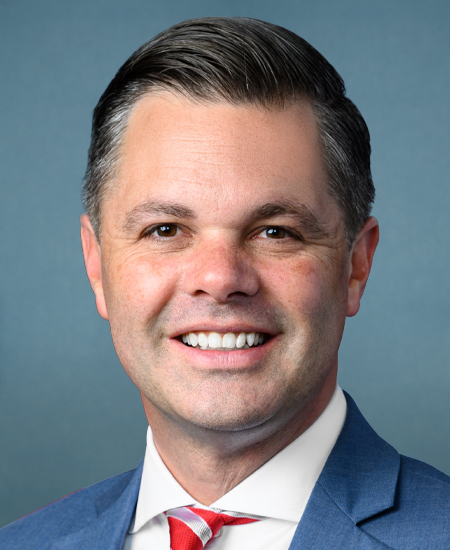
Rep. Zachary Nunn
Sponsored bills
Veterans' Assuring Critical Care Expansions to Support Servicemembers Act of 2025 or the Veterans' ACCESS Act of 2025 This bill addresses the administration of the Veterans Community Care Program (VCCP) and other Department of Veterans Affairs (VA) health care matters. Among other provisions regarding the VCCP, the bill establishes in statute access standards that determine when a veteran is eligible to receive non-VA care through the VCCP, requires the VA to notify veterans regarding their eligibility for care within two business days after the VA is aware the veteran is seeking care, and extends the deadline for the submittal of claims under the VCCP by health care entities and providers. The VA must address its mental health treatment programs by establishing a standardized screening process to determine whether a veteran satisfies criteria for priority or routine admission to a mental health residential rehabilitation treatment program or a program for residential care for mental health and substance abuse disorders, tracking the performance of medical facilities and Veterans Integrated Service Networks in meeting the requirements for mental health treatment screenings and timely admission to treatment programs under such screenings, and establishing an appeal process for when a veteran is denied admission to a covered treatment program or is accepted into a program but not offered bed placement in a timely manner. Additionally, the VA must establish an online self-service module for veterans to request and manage appointments, track referrals, and appeal and track decisions related to requests for care.
Maddy summaryThis bill amends federal transit grant rules to incentivize local housing policies near transit. It defines "pro-housing policies" as actions removing regulatory barriers (like eliminating parking minimums or streamlining approvals for multi-family housing) and adds a 1-point scoring boost in grant evaluations for projects demonstrating such policies within walking distance of transit. Local governments and developers seeking federal transit capital grants can earn this boost by documenting these policies, with HUD consulted to assess expected housing outcomes. The policy directly affects how transit projects are scored for funding, aiming to align housing production with transit access.
Maddy summaryHR 4335, the Abraham Accords Defense Against Terror Act, streamlines U.S. defense exports to countries that have normalized relations with Israel (via the Abraham Accords) and cooperate with the U.S. on countering Iran and Iran-aligned threats in the Middle East and North Africa. The bill authorizes the Secretary of State to identify qualifying countries and fast-tracks approval for military sales, leases, or transfers to them, requiring a 15-day congressional notification with specific safeguards. Key safeguards include ensuring sensitive U.S. technology isn’t shared with China or Russia and mandating regular strategy reports to Congress on implementation, threat assessments, and pending defense deals over $25 million. This directly affects participating Middle Eastern nations and U.S. defense export processes, aiming to accelerate security cooperation without altering Israel’s military edge. The bill focuses on procedural changes to expedite defense cooperation, not on new funding or policy outcomes.
Maddy summaryThe Financial Technology Protection Act of 2025 creates a new government working group to study how terrorists and criminals use digital assets (like cryptocurrencies) and emerging technologies for illicit activities. The group, composed of federal agencies (Treasury, FBI, Justice, Homeland Security, etc.) and private sector representatives from fintech, blockchain, and privacy organizations, will research threats and develop proposals to strengthen anti-money laundering and counter-terrorism efforts. It must submit annual reports to Congress for four years, detailing findings and recommendations, and will terminate after that period. The bill also requires the President to submit a public report within 180 days on how foreign actors might exploit digital assets to evade sanctions, along with a strategy to prevent such misuse.
Maddy summaryThe Senior Security Act of 2025 establishes a Senior Investor Taskforce within the Securities and Exchange Commission (SEC) to address challenges faced by senior investors (defined as those over age 65), including financial exploitation and cognitive decline. The Taskforce will identify regulatory gaps, coordinate with agencies like state regulators and law enforcement, and issue biennial reports to Congress with recommendations for improving protections. Additionally, the bill mandates a Government Accountability Office (GAO) study on the economic costs, frequency, and reporting of financial exploitation of seniors, analyzing factors like race, social isolation, and income to inform future policy.
Maddy summaryHR 1450, the OFAC Licensure for Investigators Act, creates a 5-year pilot program allowing private investigation firms to obtain licenses from the Office of Foreign Assets Control (OFAC) for conducting small-scale financial transactions (nominal amounts) as part of their investigations. The program requires OFAC to establish the pilot within one year, coordinate with FinCEN, and mandate participating firms to submit detailed monthly activity reports. OFAC must also report annually to Congress on license requests, approvals, and program utility, plus provide classified briefings to relevant congressional committees on applicants, operations, and recommendations. This bill directly affects private sector investigation firms seeking to legally conduct minimal financial transactions during investigations, while imposing specific reporting and oversight requirements on OFAC.
Maddy summaryHR 672 directs the United States Postal Service to assign a single unique ZIP Code to 14 specific communities within 270 days of enactment. These communities include Eastvale (CA), Scotland (CT), Castle Pines and Silver Cliff (CO), Hollywood, Miami Lakes, and Ocoee (FL), Urbandale (IA), Franklin, Greenfield, Caledonia, Mount Pleasant, and Somers (WI), and Mills (WY). This change will update mail delivery systems and address identifiers for residents and businesses in these areas, streamlining postal operations.
Maddy summaryThe SUPPLY Act establishes a federal program to insure second loans (additional financing) for building accessory dwelling units (ADUs) on single-family properties. This insurance, administered by the Department of Housing and Urban Development, covers up to 30% of a standard one-unit home loan amount or 100% of the property value after construction (with potential increases based on 50% of projected rental income). Homeowners seeking to add ADUs - such as backyard cottages, converted basements, or detached units - can use this insurance to secure financing, with a government premium of up to 1% annually. The bill also requires Fannie Mae and Freddie Mac to purchase and securitize these insured loans, potentially expanding access to ADU financing.
Maddy summaryThis bill, the Neutralizing Unfair Chinese Export Subsidies Act of 2025, requires the U.S. Treasury Secretary to develop a strategy within 180 days to work with international allies in ensuring China complies with global export credit standards set by the OECD. It extends the deadline for eliminating Chinese export subsidies from 2025 to 2035 and mandates more frequent U.S. negotiations (at least twice yearly) on trade practices. The bill also establishes new criteria for determining if China manipulates its currency, including assessing compliance with IMF rules and transparency in exchange rate management, and directs U.S. opposition to China’s IMF quota increases if manipulation is found. These provisions directly affect U.S. trade policy implementation and U.S. interactions with China through international financial institutions.