

Maddy summaryHR 4860, the U.S.-Taiwan Defense Innovation Partnership Act, aims to create a formal partnership between the U.S. Department of Defense and Taiwan's defense authorities. It directs the Secretary of Defense to coordinate on defense industrial priorities, streamline research and development, and create market pathways for defense technology startups in both countries. The bill specifically targets collaboration on emerging technologies like drones, microchips, artificial intelligence, missile systems, and surveillance capabilities. This partnership directly affects U.S. and Taiwan-based defense technology companies, particularly startups, by enhancing market access and joint development opportunities.
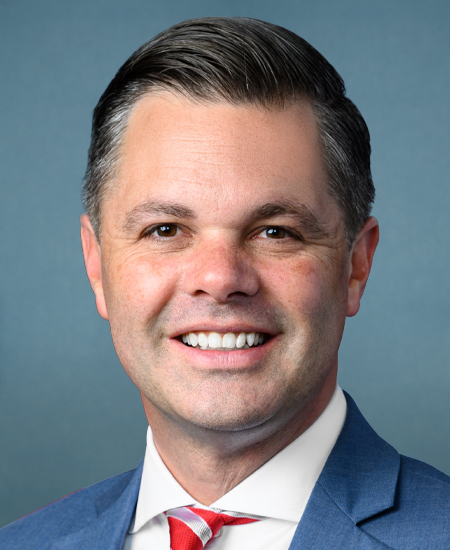
Rep. Zachary Nunn
Sponsored bills
Maddy summaryThe College Transparency Act requires the federal government to create a new student data system that collects and shares information about college enrollment, costs, completion rates, and post-graduation outcomes. This system will directly affect colleges and universities (which must submit data), students (whose information is collected with privacy protections), and families (who will access the data to make informed education decisions). The bill mandates the development of a public website providing customizable, aggregate data on student demographics, costs, and outcomes, while prohibiting the collection of sensitive information like health records or political affiliation. The system aims to reduce reporting burdens on institutions by consolidating data collection and making information more transparent for prospective students. It includes strong privacy and security requirements to protect student information, with the data system to be developed within four years of the bill's enactment.
Maddy summaryHR 4816 directs existing federal infrastructure funds to provide forgivable loans or grants specifically for lead pipe replacement projects in disadvantaged communities. It requires that all funds allocated under the Infrastructure Investment and Jobs Act for drinking water system upgrades must be distributed as these forgivable loans or grants to communities meeting the definition in the Safe Drinking Water Act. The bill targets lead service line replacement, including associated activities like identifying and planning for pipe replacement. This policy change ensures disadvantaged communities receive direct financial support for critical water infrastructure improvements without requiring repayment.
Maddy summaryThis bill updates the TRICARE Young Adult Program to make healthcare coverage more accessible for military dependents. It directly affects young adults (ages 21-26) who are children of active-duty service members, by eliminating a separate premium they previously paid for coverage. Key changes include removing an extra cost for young adults and adjusting eligibility rules to simplify enrollment. These amendments aim to reduce out-of-pocket expenses and streamline access to health insurance under the program.
Maddy summaryThe Foster Youth Mentoring Act of 2025 authorizes federal grants to fund structured mentoring programs for children in foster care (under 18) and youth with foster care experience (up to age 26). It requires grantees to provide trained mentors (adult or peer), ensure cultural competence, conduct background checks, and match mentors with mentees for at least one year to support academic, social, and emotional needs. Programs must prioritize input from youth, recruit diverse mentors reflecting foster youth demographics, and coordinate with child welfare and education systems. The bill allocates $50 million annually for fiscal years 2026-2027, mandating annual reports on program reach, mentor demographics, and outcomes like school attendance and college enrollment. This directly affects over 390,000 foster youth annually by expanding access to evidence-based mentoring.
Maddy summaryThe Biochar Research Network Act of 2025 establishes a national network of up to 20 research sites to study how biochar (a charcoal-like substance) improves soil health, carbon sequestration, and farming practices. It directs the Agriculture Department to fund research testing biochar across diverse soils, climates, and agricultural systems to assess its impact on crop yields, climate mitigation, and profitability for farmers, ranchers, foresters, and land managers. The bill authorizes $50 million annually from 2026 to 2030 for this research, focusing on practical, science-based guidance for sustainable biochar use. The network will generate data to help land managers adopt biochar for soil health, carbon reduction, and resilience to extreme weather.
Maddy summaryHR 4752, the Reducing Hereditary Cancer Act, requires Medicare to cover genetic testing for germline mutations in individuals with a family history of hereditary cancer or suspicious personal/family history. It mandates coverage for risk-reducing surgeries (like mastectomies or hysterectomies) when guided by evidence-based clinical guidelines, and increases the frequency of cancer screenings (such as mammograms, colonoscopies, and breast MRI) for Medicare beneficiaries confirmed to have hereditary cancer gene mutations - ensuring screenings occur at least annually. The bill applies to Medicare beneficiaries with specific high-risk profiles, aligning coverage with guidelines from recognized oncology organizations like the National Comprehensive Cancer Network. It does not change eligibility but modifies Medicare’s existing coverage rules to expand access to these preventive services.
Maddy summaryThis bill creates a tax incentive for U.S. corporations to distribute company stock to employees. To qualify, corporations must have 500+ full-time U.S. employees, be U.S.-domiciled, and meet specific share distribution requirements (e.g., distributing at least 1% of shares to employees or maintaining a 5% "SHARE ratio" of shares granted). Eligible corporations receive a 3% reduction in corporate income tax and can deduct the fair market value of distributed stock. Employee stock received under these plans is excluded from taxable income, directly benefiting workers at qualifying companies while lowering tax liability for the corporations.
Maddy summaryHR 4713, the Safe Schools and Communities Act of 2025, provides federal grants to school districts to fund training for staff who regularly interact with students. The bill requires grant recipients to cover training on human trafficking risk factors, fentanyl and drug abuse prevention, gang activity intervention strategies, and local community resources. Funds must also cover training costs (like instructor fees and materials) and implement specialized curricula in these areas. This directly affects elementary and secondary school personnel in districts receiving grants, with funding administered through the existing Elementary and Secondary Education Act framework.
Maddy summaryHR 4735, the Business of Insurance Regulatory Reform Act of 2025, clarifies that the Consumer Financial Protection Bureau (CFPB) cannot enforce federal consumer financial laws over companies already regulated by state insurance departments for their insurance activities. The bill amends Section 1027(f) of the Consumer Financial Protection Act to explicitly state that the CFPB lacks authority to regulate insurance products or services when a company is subject to state insurance regulation. It also requires the CFPB to broadly interpret its authority in favor of state insurance regulators for such entities. This directly affects insurance companies operating under state oversight, preventing overlapping federal enforcement. The change focuses on defining regulatory boundaries, not altering insurance product rules.