

Maddy summaryHR 4782, the Local Farmers Feeding our Communities Act, establishes a USDA program to connect local farmers with food distribution networks. It requires eligible entities (like state agriculture agencies) to use funds to purchase unprocessed or minimally processed local foods from covered producers - including at least 25% from small-size, mid-size, beginning, or veteran farmers - while providing technical assistance for food safety and supply chains. The bill allocates $200 million annually (2026-2030) from the Commodity Credit Corporation, mandating 10% for Tribal governments and 1% per state before distributing remaining funds. This directly supports regional food security by boosting economic opportunities for local farmers and improving access to fresh, nutritious food through established distribution channels.
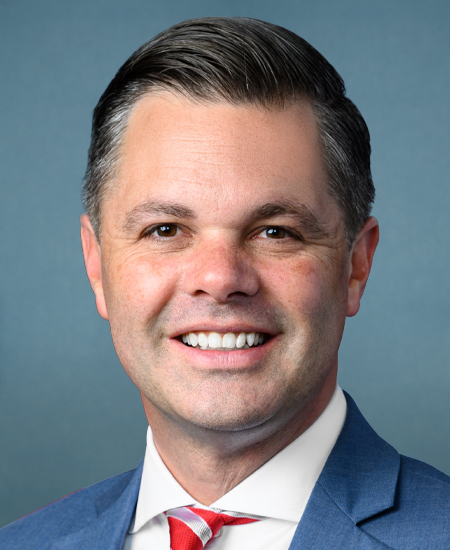
Rep. Zachary Nunn
Sponsored bills
Maddy summaryHR 909, the Crime Victims Fund Stabilization Act of 2025, modifies how funds from the False Claims Act are deposited into the Crime Victims Fund. It specifies that from 2025 through 2029, certain False Claims Act proceeds (specifically those for qui tam plaintiff payments and government damage reimbursements) cannot be deposited into the fund. This change directly affects the composition of the Crime Victims Fund by excluding these specific revenue streams during the specified period. The bill does not create new benefits or alter victim services; it only adjusts fund allocation rules for existing False Claims Act revenues.
Maddy summaryThis bill extends the deadline for certain veterans' dependents to file claims for medical care under the CHAMPVA program. It applies to individuals already eligible for CHAMPVA benefits who also have Medicare Part A hospital coverage. The key change ensures that after receiving official approval for retroactive care, these individuals have a full 365 days (not earlier than one year) to file their claim. The extension applies from the bill's enactment date until September 30, 2027.
Maddy summaryHRES 957 is a non-binding resolution honoring U.S. Army Sergeant William Nathaniel Howard and Sergeant Edgar Brian Torres-Tovar, both Iowa Army National Guard members, who were killed in a December 13, 2025, terrorist attack near Palmyra, Syria. The resolution commemorates their service and sacrifice, expresses condolences to their families, and extends gratitude to responding forces. It does not create new policies or affect any individuals through legislative mechanisms, as it is purely ceremonial. The resolution was introduced by Iowa representatives and directs the Senate to send copies to the soldiers' families.
Maddy summaryThis bill requires TRICARE to cover fertility-related care, including in vitro fertilization (IVF), for active-duty military members and their dependents starting October 2027. It mandates up to three IVF cycles per year with single embryo transfers by default (unless medically necessary), eliminates cost-sharing barriers after an infertility diagnosis, and prohibits coverage for genetic screening, cloning, or artificial wombs. The law defines "infertility" based on medical guidelines and specifies covered treatments like egg/sperm retrieval, embryo preservation, and fertility medications. It does not apply to former service members or their dependents.
Maddy summaryHR 6753, the Campus Housing Affordability Act, removes a prohibition that previously barred federal housing assistance from being provided to students. It directly affects eligible students enrolled in higher education institutions who live in campus housing and qualify for tenant-based housing assistance under the U.S. Housing Act of 1937. The bill adds a new provision (Section 8(o)(23)) allowing the Secretary to waive income requirements for these students, ensuring federal housing aid does not count as income when determining eligibility for other federal financial aid, work-study programs, service allowances, or child support obligations. This change streamlines access to housing support without reducing other student financial benefits.
Maddy summaryThis bill (HCONRES 67) authorizes the use of the U.S. Capitol rotunda for the ceremonial "lying in state" of two Iowa National Guard soldiers: Sergeant Edgar Brian Torres-Tovar and Sergeant William Nathaniel Howard. It specifically permits their remains to be displayed in the rotunda, as determined by Capitol officials, following their service in the 1st Squadron of the 113th Cavalry Regiment. The resolution is purely procedural, recognizing their military service without creating new laws or affecting policy. It directly involves Capitol staff who would arrange the ceremony and the families of the deceased soldiers.
Veteran Fraud Reimbursement Act of 2025 This act modifies the procedures by which the Department of Veterans Affairs (VA) reissues misused benefits to a beneficiary, including by requiring the VA to establish methods and timing with respect to determining whether an instance of misuse by a fiduciary is the result of negligence by the VA. The act also provides that if a beneficiary predeceases a reissuance, the VA must pay the amount to a surviving beneficiary in the same method as certain other VA benefits are paid upon the death of a beneficiary. Under the act, the VA may not withhold the reissuing of a benefit payment by reason of a pending determination regarding the VA's negligence in relation to the instance of misuse by a fiduciary. Additionally, the VA is not required to make a determination regarding its negligence for each instance of misuse by a fiduciary of all or part of an individual's benefit paid to such fiduciary.
Miracle on Ice Congressional Gold Medal Act This act provides for the award of Congressional Gold Medals to the members of the 1980 U.S. Olympic men's ice hockey team in recognition of the team's achievement at the 1980 Winter Olympic Games.
Maddy summaryHR 6670 creates a new nonimmigrant visa category ("family purpose visas") allowing relatives of U.S. citizens or lawful permanent residents to visit temporarily for family events. It requires applicants to provide proof of financial support, short-term medical insurance covering U.S. travel, and a sworn statement to depart within 90 days per calendar year. The bill restricts petitioners from previously sponsoring relatives who overstayed their visas, and explicitly states that these visits do not count toward permanent residency eligibility. This directly affects extended family members (including grandparents, siblings, and nieces/nephews) seeking short-term U.S. visits for social or major life events.