

Maddy summaryThis bill establishes a Senior Advisor for National Security within the USDA to coordinate national security efforts related to food and agriculture. It requires the USDA Secretary to submit biennial reports to Congress and the National Security Council identifying vulnerabilities such as foreign control of agricultural data, supply chain disruptions, cybersecurity risks, and dependence on foreign-sourced inputs. The bill mandates improved interagency coordination, including sharing personnel with defense and intelligence agencies, and requires the USDA to assess gaps in security efforts and propose solutions. The primary direct effect is on the USDA's internal operations and reporting structure, not on agricultural policies or farmers.
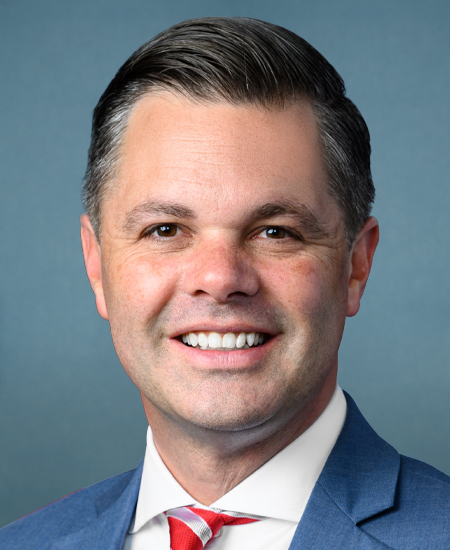
Rep. Zachary Nunn
Sponsored bills
Maddy summaryThis bill creates a new grant program to increase U.S. artificial intelligence research capacity by funding specific institutions. It provides competitive funding to institutions not in the top 100 for federal research spending, historically Black colleges, minority-serving institutions, Tribal Colleges, or consortia of these entities. Funds can be used for AI research programs, faculty development, student bridge programs, research resources, and integrating ethical AI practices. The program aims to broaden participation in AI from underserved communities and avoid duplicating existing federal AI initiatives.
Maddy summaryHR 224, the Disabled Veterans Housing Support Act, modifies how income is calculated for housing assistance programs by requiring that veterans' service-connected disability compensation (from the VA) be excluded when determining eligibility for low/moderate income housing. This directly affects disabled veterans who receive VA disability payments, ensuring these funds do not count against them for housing assistance under HUD programs. The bill amends the Housing and Community Development Act of 1974 to mandate this exclusion in income calculations. Additionally, it requires a report within one year examining how disability compensation is treated across HUD programs and recommending improvements to better serve veterans.
Maddy summaryThe PORCUPINE Act amends the Arms Export Control Act to include Taiwan alongside New Zealand and Israel in specific certification and reporting requirements related to U.S. arms exports. This legislative change ensures Taiwan is treated similarly to these allied nations in certain foreign policy contexts involving defense article transfers. The bill also directs the Secretary of State to assess the feasibility of creating an expedited licensing process for military equipment transfers from designated allies to Taiwan within 90 days. Additionally, the act requires biennial reports on the implementation of these amendments and includes a provision stating that the legislation does not alter existing U.S. policy toward Taiwan under the Taiwan Relations Act. The entire measure is set to expire seven years after its enactment.
Maddy summaryHR 7112, the Veterans’ Bill of Rights Act of 2026, requires the Department of Veterans Affairs (VA) to clearly inform veterans about their rights regarding VA healthcare, benefits, and services. It codifies 10 specific rights, including access to care (from VA or community providers), respect and dignity, informed consent, awareness of benefits, and the right to file complaints without retaliation. The bill mandates that the VA integrate these rights into all policies, train employees annually, prominently display them at facilities and online, include them in transition programs, and make them accessible via VA apps and portals within 180 days of enactment. This law focuses on improving transparency and accountability in VA interactions but does not create new legal rights or change eligibility requirements for benefits.
Maddy summaryThis symbolic House resolution expresses U.S. congressional support for Iranian protesters demanding democracy and human rights. It condemns the Iranian regime's violent suppression of protests, including killings, mass arrests, and internet restrictions, while urging the regime to release political prisoners and restore communication access. The resolution reaffirms the Iranian people's right to self-determination through free elections and echoes a 2023 resolution (HCR 7) that similarly praised protesters. As a non-binding expression of support, it does not impose new policies or alter U.S. government actions.
Maddy summaryHR 6385, the Farm Transitions Act of 2025, amends an existing commission study under the 2018 Agriculture Improvement Act. It requires the Secretary to establish the commission within 60 days of the bill’s enactment and expands its study to include heirs’ property, barriers for women and historically underserved farmers in land transfers, leasing trends (including by foreign entities), and how tax policies affect farm transitions. The bill updates deadlines, requiring the commission to submit reports within two years and extending the study period for certain analyses. This directly affects farmers, ranchers, and agricultural landowners involved in succession, inheritance, or purchase processes, particularly those facing equity or ownership challenges.
Maddy summaryHR 5280, the *Protecting Farmers from Natural Disasters Act of 2025*, amends the Agricultural Credit Act of 1978 to allow the Secretary of Agriculture to permit restoration of farmland above pre-disaster conditions if it benefits the long-term health and protection of the watershed. This directly affects farmers seeking disaster recovery assistance and gives the Secretary discretion to approve such restoration projects. The key provision replaces an existing requirement with a new standard focused on watershed sustainability, rather than strictly returning land to its pre-disaster state. The bill makes a specific policy change to existing disaster recovery rules without creating new programs or funding.
Maddy summaryHR 5017, the Greyhound Protection Act of 2025, prohibits commercial greyhound racing, live lure training, open field coursing, and related betting across state lines. It bans activities like using live animals as bait, conducting interstate simulcast betting, and transporting greyhounds for racing purposes. The law amends the Animal Welfare Act to make these actions unlawful, with penalties including fines and up to 7 years in prison per violation. It applies to conduct occurring on or after October 1, 2027, and does not override existing state laws banning these activities. The bill directly affects greyhound racing industry participants and the animals involved in these practices.
Maddy summaryHR 5004, the Next Generation of Farmers Act of 2025, lowers eligibility requirements for direct farm real estate loans under the Consolidated Farm and Rural Development Act. It reduces the minimum experience requirement from 3 years to 1 year for borrowers to qualify, or allows equivalent education/experience as determined by the Secretary. This change directly affects new and beginning farmers who previously needed more extensive farm management experience to access these loans. The bill modifies specific provisions (Section 302(b)) to make loan programs more accessible to emerging agricultural producers.