Maddy summaryHR 6648, the FAIR Vets Act, increases the dollar thresholds for sole-source federal contracts awarded to service-disabled veteran-owned small businesses. It raises the limit from $7 million to $10 million for certain contracts and from $3 million to $8 million for others under the Small Business Act. This change directly affects service-disabled veteran-owned small businesses by allowing them to secure more contracts without competitive bidding. The bill requires federal agencies to update their regulations within 180 days of enactment, with the changes applying to solicitations issued 180 days after that.
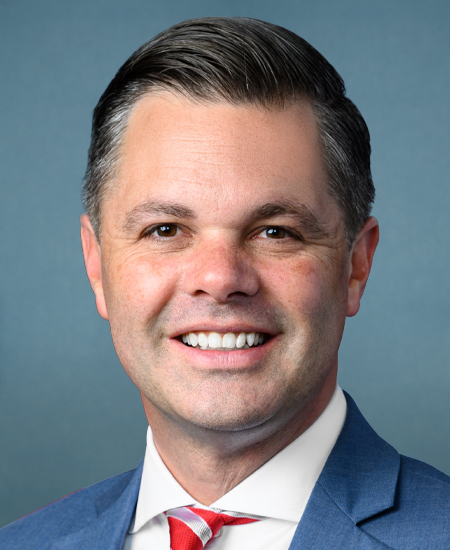
Rep. Zachary Nunn
Sponsored bills
Maddy summaryHR 6358, the Veteran Education Empowerment Act, creates a federal grant program to help colleges establish or improve dedicated Student Veteran Centers. These centers provide veterans, active-duty service members, and their families with lounge space, benefits counseling, academic support, and mental health services. Institutions must serve significant numbers of veterans and have sustainability plans to qualify for grants, with funding capped at $500,000 per institution over four years. The bill directly affects colleges serving veterans and aims to address challenges like isolation and transition difficulties through centralized campus support.
Maddy summaryThis bill suspends payment limits for agricultural subsidies for the 2025 crop year, removing caps on payments to farmers. It also establishes a new option for farmers to receive 50% of their expected 2025 crop payments as an advance by December 1, 2025, if they opt in. The remaining balance is paid later after the marketing year ends, with farmers required to repay any overpayment if the final amount exceeds the advance. The bill directly affects farmers growing covered commodities (like corn, soybeans) who choose to participate in the advance payment program.
Maddy summaryThis bill increases annual funding for the Rural Economic Development Loan and Grant Program from $10 million to $12 million, effective for fiscal years 2026 through 2030. It directly affects rural communities eligible for loans and grants under this program, which supports local economic development projects. The key mechanism is a specific funding amendment to Section 313B of the Rural Electrification Act of 1936. This change extends and boosts financial resources for rural infrastructure and community initiatives without altering program eligibility or administration.
Give Kids a Chance Act of 2025 This bill expands the Food and Drug Administration’s (FDA’s) authority with respect to research on rare pediatric diseases, including by permitting the FDA to take enforcement action against drug sponsors that fail to satisfy pediatric study requirements and by reauthorizing programs that support pediatric research. Specifically, the bill modifies requirements relating to molecularly targeted pediatric cancer investigations to permit research on new drugs in combination with active ingredients that have already been approved, provided certain conditions are met; permits the FDA to take enforcement action against drug sponsors that fail to comply with pediatric study requirements, if such sponsors demonstrated a lack of due diligence in satisfying the requirement; renews the FDA’s authority to award priority review vouchers to sponsors of new products intended to treat rare pediatric diseases through September 30, 2029; and reauthorizes through FY2027 certain funding for the National Institutes of Health to support priority pediatric research. The bill also provides statutory authority for the FDA’s interpretation of the orphan drug exclusivity period. The bill specifies, consistent with FDA regulations, that the seven-year market exclusivity period for drugs for rare diseases or conditions (i.e., orphan drugs) prohibits the approval of the same drug for the same approved use or indication with respect to the disease or condition. (In Catalyst Pharmaceuticals, Inc. v. Becerra , a court rejected the FDA’s interpretation and held that orphan drug exclusivity extends to all uses or indications for the disease or condition.)

Maddy summaryHR 4802, the Securing Infrastructure from Adversaries Act of 2025, bans the use of federal funds for certain foreign-made LiDAR technology in transportation projects. It prohibits the Secretary of Transportation from procuring, obtaining, or contracting for LiDAR technology from specified "covered foreign countries," "covered LiDAR companies," or "covered LiDAR technology" starting June 30, 2026. Contractors must certify they will not use banned technology, and the Secretary may grant limited waivers for national security reasons, requiring congressional notification. This directly affects transportation infrastructure projects funded by the Department of Transportation, including grants and contracts.
Maddy summaryThis bill allows workers aged 50 or older to directly roll over employer retirement contributions (from 401(k) plans) into an individual retirement annuity without triggering immediate taxes or penalties. It requires retirement plan administrators to provide clear, plain-language written explanations about rollover rules, including a 30-day review period, tax implications (like the 10% early withdrawal penalty), and what types of distributions cannot be rolled over (such as required minimum distributions). The rules apply to taxable years starting after December 31, 2025, and aim to simplify the process for older workers changing jobs or managing retirement funds. It directly affects workers aged 50+ and retirement plan administrators who must comply with the new disclosure standards.
Maddy summaryThis bill updates securities laws to expand exemptions for retirement plans used by charities and educational institutions. It specifically modifies definitions in the Investment Company Act, Securities Act, and Securities Exchange Act to include 403(b) plans meeting certain conditions - such as being subject to ERISA, having employer fiduciary oversight, or being governmental plans. These changes reduce regulatory hurdles for organizations offering these plans, making it easier to administer retirement benefits for their employees. The bill directly affects charities, schools, and other non-profits that sponsor 403(b) retirement plans.
Maddy summaryHRES 905 is a non-binding House resolution supporting the designation of November 2025 as "National Homeless Children and Youth Awareness Month." It does not create new programs or funding but formally encourages businesses, governments, schools, and organizations to raise awareness about homelessness affecting children and youth during that month. The resolution cites statistics on homelessness rates among students and youth (e.g., 1.4 million enrolled homeless children in 2022-2023) to underscore the need for greater public attention. It urges these groups to highlight causes, solutions, and prevention efforts during the designated month.
Maddy summaryThis bill directs the Health and Human Services Secretary to study federal, state, and private programs supporting job training and apprenticeships for current and former foster youth, evaluating effectiveness, gaps, and barriers. It then establishes the "Fostering the Future Pipeline Program" to provide competitive grants to states, schools, employers, and nonprofits for expanding industry-aligned training in high-demand fields like healthcare and IT, with a $50 million annual funding limit. The bill also amends existing foster care funding to allow education vouchers to cover short-term career programs, such as registered apprenticeships and certificate courses. These changes directly affect foster youth transitioning to adulthood by improving access to career pathways and workforce opportunities.