

Maddy summaryThis bill, titled the Trump Accounts for All Generations Act, makes a specific program related to "Trump accounts" permanent and adjusts its contribution limits. It directly affects individuals who contribute to these accounts by altering their long-term availability and value. The legislation permanently extends the "Trump accounts" contribution program by removing its scheduled expiration date of January 1, 2029. Furthermore, it introduces an annual inflation adjustment for the program's $1,000 contribution amount, beginning in taxable years after 2028. The bill also removes the word "pilot" from the program's title and related sections of the tax code, formally establishing it as an ongoing program.
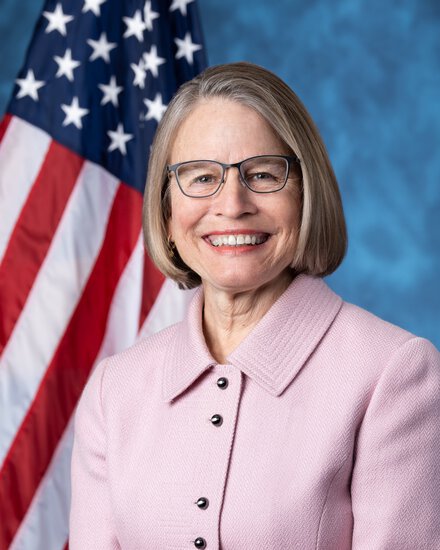
Rep. Mariannette Miller-Meeks
Sponsored bills
Maddy summaryThis bill creates two new tax incentives to encourage the production and investment in renewable materials derived from biomass. The first provision offers a production credit of 10 cents per pound for qualified renewable materials sold or used in business, while the second provides an investment credit equal to 30 percent of qualified property costs used in renewable material facilities. Both credits are limited to facilities located in the United States or its possessions and exclude products intended for fuel, heat, electricity, food, or feed. The bill also allows these tax credits to be transferred to other taxpayers and requires the Treasury Department to issue implementing regulations within 180 days of enactment.
Maddy summaryThis bill requires Medicare Part D prescription drug plans to include certain lower-cost generic drugs and biosimilar biological products in preferred positions on their formularies starting in 2027. It mandates that these lower-cost alternatives be placed on more favorable tiers with reduced out-of-pocket costs compared to their brand-name counterparts. Additionally, the legislation prohibits plans from imposing stricter access restrictions, such as prior authorization or step therapy, on these lower-cost options than those applied to the original brand-name drugs. The measure directly affects Medicare beneficiaries enrolled in Part D plans and the insurance sponsors who manage those formularies.
Maddy summaryThis bill, the Precision Brain Health Research Act of 2026, expands the Department of Veterans Affairs' existing precision medicine initiative to specifically include research on repetitive low-level blast exposure, dementia, and other brain and mental health conditions affecting veterans. It requires the VA and Department of Defense to establish a data-sharing partnership within one year to combine relevant military health data for research purposes. The legislation mandates specific research studies on blast exposure impacts, including assessments of clinical interventions, implementation studies of proven treatments, and quality improvement efforts to enhance diagnosis and care. Additionally, the bill directs the VA to contract with the National Academies of Sciences, Engineering, and Medicine to validate brain health biomarkers and authorizes $5 million annually through fiscal year 2030 to fund these expanded research efforts.
Maddy summaryThis bill requires fertilizer manufacturers and wholesalers to report weekly prices and quantities of nitrogen, phosphorus, potassium, and fertilizer products to the U.S. Department of Agriculture. The reporting must distinguish between domestic and foreign sources while exempting agricultural cooperatives and non-manufacturer retailers from mandatory requirements, though they may voluntarily provide data. The Secretary of Agriculture will make this information publicly available on a weekly basis through a dashboard that aggregates data to protect confidential business details. A separate retail survey program will supplement manufacturer reports with regional price estimates, and the Secretary must review reporting requirements every two years to ensure they remain accurate. The legislation explicitly states that these reporting requirements do not override existing antitrust laws.
Maddy summaryThis bill would allow certain oral contraceptive drugs to be sold over-the-counter to adults aged 18 and older by requiring the FDA to prioritize their review and waive associated application fees. It specifically excludes emergency contraceptives and drugs also approved for induced abortion from these provisions. The legislation also directs the Government Accountability Office to study how federal programs fund contraception over the past 15 years, covering Medicare, Medicaid, and other health services.
Maddy summaryThis bill directs the Secretary of Health and Human Services to conduct a study on access to multiple contraceptive methods at community health centers located in health care deserts. The study will examine barriers such as reimbursement, inventory stocking, provider training, and patient education, and will identify which centers receive funding under the Public Health Service Act. Within 180 days of enactment, the Secretary must submit a report to Congress detailing the study findings. The bill defines key terms including "women in need," "health care desert," and "range of contraceptive methods" to ensure clarity in the study's scope.
Maddy summaryThe PREDICT Act prohibits federal government officials, including Members of Congress, their spouses and dependents, high-ranking executive branch employees, and political appointees from trading on prediction markets tied to political events. This restriction applies to any agreement or transaction where payment depends on whether a specific political event occurs, does not occur, or happens to a certain degree. If a covered individual violates this rule, they must pay a 10% fee and forfeit any profits from the transaction, with penalties paid from personal funds rather than government salaries or allowances. The Office of Government Ethics will issue guidance on undefined terms and publish details of any fines on a public website.
Maddy summaryThis bill would change how the Department of Veterans Affairs pays healthcare providers under its Community Care Program by requiring payment rates to be based on the specific location where care is delivered rather than the provider's main headquarters. It mandates that the VA establish separate payment rates for different types of care sites, including hospital outpatient departments, ambulatory surgical centers, and physician offices, starting in 2027. The legislation also requires each care site to have a unique National Provider Identifier and ensures that claims for payment include this identifier to track where services were provided. Additionally, it clarifies how off-campus outpatient departments affiliated with larger providers should be treated and billed separately.
Maddy summaryHR 556, the Protecting Access for Hunters and Anglers Act, prevents federal agencies from banning lead ammunition or tackle on public lands and waters managed for hunting or fishing. It directly affects hunters and anglers using federal lands (like national wildlife refuges, public forests, and BLM lands) by blocking nationwide restrictions on lead products. The bill allows limited exceptions only for specific locations where wildlife decline is directly linked to lead use, and the restriction must align with state law or get approval from the state wildlife agency. This changes how federal land managers can regulate lead, requiring state coordination for any local restrictions.