

Maddy summaryHR 5688, the Non-Domiciled CDL Integrity Act, changes rules for issuing commercial driver's licenses (CDLs) to people who don't live in the state where the license is issued. It allows states to issue CDLs to foreign nationals with lawful U.S. immigration status and work-related visas (valid for up to one year or until their stay ends), requiring states to verify status before issuing and keep records for two years. For residents of U.S. territories like Puerto Rico, it requires proof of U.S. citizenship or permanent residency before issuing CDLs, with similar verification and record-keeping rules. The bill directly affects commercial drivers from foreign countries and U.S. territories seeking CDLs in states where they are not residents.
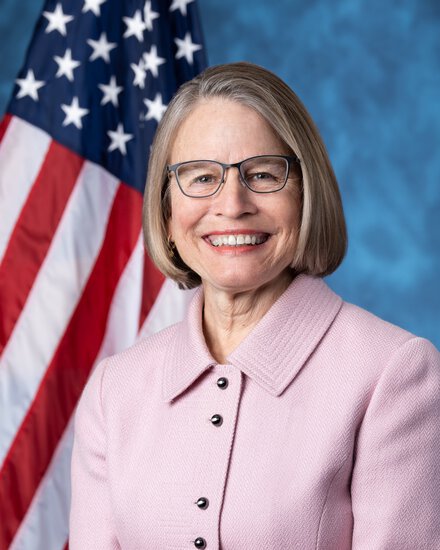
Rep. Mariannette Miller-Meeks
Sponsored bills
Maddy summaryHR 7871 (MVP Act) updates Medicaid drug rebate rules to allow manufacturers to report multiple "best price points" for drugs sold under outcome-based payment arrangements, requiring these arrangements to be offered to all states. It clarifies how average manufacturer price is calculated for such drugs and exempts certain outcome-linked payments from anti-kickback laws. The bill also mandates a GAO study to assess whether these arrangements improve patient access, lower costs, and reduce disparities in drug coverage. This affects Medicaid programs nationwide, drug manufacturers, and patients receiving covered outpatient drugs under Medicaid.
Maddy summaryThis bill establishes a federal grant program to help States, Indian Tribes, and Tribal organizations provide services to people struggling with gambling addiction. The program would fund prevention efforts, screening, treatment, and support services including training for healthcare providers, public awareness campaigns, and access to help lines and peer support groups. Grants would be awarded competitively, with priority given to programs serving vulnerable populations such as Native Americans, veterans, youth, and those in rural or underserved areas. Funding would come from a portion of the federal excise tax on gambling, with amounts adjusted annually for inflation.
Maddy summaryThis bill, known as the Quantum in Practice Act, amends the National Quantum Initiative Act to formally include quantum modeling and simulation as a core area of research. It directly affects federal agencies and researchers involved in quantum information science by updating the legal definition and adding specific funding priorities for quantum molecular modeling. The legislation aims to support scientific work that could lead to breakthroughs in areas like fertilizer production, drug development, battery technology, and new materials. By making these changes, the bill ensures that federal quantum research programs explicitly cover the development and study of quantum simulations for practical applications.
Maddy summaryThis bill renames two existing Department of Veterans Affairs clinics in Iowa to honor fallen Iowa National Guard members. The Des Moines VA clinic (1211 East Army Post Road) will be named the "Staff Sergeant Edgar Torres-Tovar VA Clinic," and the Marshalltown VA clinic (201 East Merle Hibbs Boulevard) will be named the "Staff Sergeant William Nathaniel Howard VA Clinic." The bill changes official references in all federal documents to these new names after enactment. It does not create new policies or services, only formally commemorates these service members' legacies through facility naming.
Respect State Housing Laws Act This bill eliminates a provision that requires a 30-day notice period before a landlord may begin eviction proceedings against a tenant in federally assisted or federally backed housing.
Maddy summaryThis bill amends the VA home loan guaranty program to adjust the percentage of loan coverage. It increases the guaranty rate to 50% for veterans with service-connected disabilities whose VA entitlement is unused or fully restored, while maintaining a 25% guaranty for other veterans. The change directly affects eligible veterans applying for VA-backed home loans by altering the government's financial guarantee on those loans. This is a technical adjustment to existing VA loan rules, not a new housing program. The bill modifies specific provisions in Title 38 of the U.S. Code without creating new benefits or funding.
Law-Enforcement Innovate to De-Escalate Act This bill removes less-than-lethal projectile devices (e.g., certain TASERs) from regulation under the Gun Control Act. The term less-than-lethal projectile device means a device that (1) is not designed or intended to expel (and may not be readily converted to discharge) commonly used ammunition or projectiles exceeding a velocity of 500 feet per second; (2) is designed and intended to be used in a manner not likely to cause death or serious bodily injury; and (3) does not accept (and cannot be readily modified to accept) an ammunition feeding device. The bill also requires the Bureau of Alcohol, Tobacco, Firearms and Explosives to determine whether a device satisfies the definition of a less-than-lethal projectile device within 90 days of a request.
Maddy summaryHRES 1073 is a non-binding resolution designating February 21-28, 2026, as "National FFA Week" to recognize the National Future Farmers of America (FFA) Organization’s role in developing agricultural education leaders and to celebrate the 50th anniversary of Alaska’s State FFA Association. It does not create new laws or affect any specific groups or policies; instead, it formally expresses the House’s support for this commemorative week. The resolution highlights FFA’s mission to prepare students for leadership and careers in agriculture, food, and natural resources. As a symbolic gesture, it has no direct legislative or financial impact on constituents.
Protection of Women in Olympic and Amateur Sports Act This bill requires certified national governing bodies (NGBs) of amateur sports (e.g., USA Gymnastics) to prohibit a person whose sex is male from participating in an amateur athletic competition that is designated for females, women, or girls. Under the bill, male means an individual who has, had, will have—or would have, but for a developmental or genetic anomaly or historical accident—the reproductive system that at some point produces, transports, and utilizes sperm for fertilization.