

Maddy summaryThe Tribal Access to Clean Water Act of 2025 provides federal funding to address the lack of clean water and sanitation on Tribal lands and for the Native Hawaiian Community. The bill authorizes $100 million annually for USDA water infrastructure loans and grants, $500 million annually for Indian Health Service sanitation facilities, $100 million annually for operation and maintenance of water systems, and $30 million annually for technical assistance to help Tribal communities access and manage water infrastructure funding. It specifically expands eligibility to include Native Hawaiian organizations, addresses gaps in previous infrastructure funding, and requires no matching contributions from Tribal communities. The bill targets the situation where nearly half of households on Tribal lands lack reliable water sources and basic sanitation.
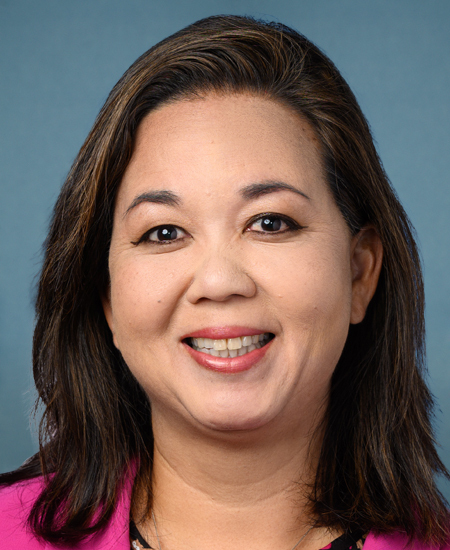
Rep. Jill N. Tokuda
Sponsored bills
Maddy summaryHR 4382 authorizes the U.S. Mint to produce commemorative coins for the 2028 Los Angeles Olympics/Paralympics and 2034 Salt Lake City Winter Olympics/Paralympics. It specifies gold, silver, and half-dollar coin designs with defined mintage limits (e.g., up to 100,000 $5 gold coins for each event), all bearing inscriptions like "2028" or "2034" and standard coin features. A surcharge ($5-$50 per coin) is added to sales, with all funds directed to the respective Olympic committees to support event hosting and legacy programs like youth sports. The bill ensures no net cost to the government by requiring surcharge revenues to cover all design, production, and marketing expenses before funds are disbursed.
Maddy summaryThe Head Start for Our Future Act amends Section 441(c)(1) of the Higher Education Act of 1965 to replace "literacy training" with "child development and early learning (including Head Start programs and Early Head Start programs carried out under the Head Start Act), literacy training." This technical change formally integrates Head Start and Early Head Start programs into the federal definition of early learning initiatives under the Higher Education Act, while maintaining a separate reference to literacy training. The bill directly affects how federal grants for early childhood education are categorized and administered under the Higher Education Act. It does not alter funding levels, program requirements, or operations but updates administrative terminology to explicitly include Head Start services.
Maddy summaryThis bill prohibits federal agency personnel from using physical force, detaining, or interfering with Members of Congress while they conduct official oversight activities on federal property. It requires Members to identify themselves with valid congressional ID and confirms the law does not override standard security procedures or prevent action against immediate physical threats. The bill specifically protects oversight activities like investigations, reviews of federal programs, or site visits at government-owned or leased facilities (including detention centers), ensuring Congress can carry out its constitutional oversight role without physical obstruction.
Maddy summaryThe PBM Reform Act of 2025 aims to increase transparency and fairness in pharmacy benefit manager (PBM) operations within Medicare Part D and Medicaid programs. The bill requires Medicare Part D plans to allow any pharmacy meeting standard terms to join their networks, establishes "essential retail pharmacies" in underserved areas (with limited pharmacy access), and mandates detailed reporting on drug pricing, rebates, and reimbursement rates. It creates a process for pharmacies to report PBM violations of reasonable contract terms and prohibits "spread pricing" in Medicaid, where PBMs retain the difference between what they pay pharmacies and what they charge plans. These provisions aim to improve pharmacy access for Medicare beneficiaries and ensure fairer reimbursement practices for pharmacies.
Maddy summaryThe Wild Horse and Burro Protection Act of 2025 requires the Bureau of Land Management (BLM) to eliminate helicopter and fixed-wing aircraft use in rounding up wild horses and burros over a two-year phase-out period. It mandates that any remaining aircraft used for these operations must have cameras recording the process, with footage made public in BLM reports. The bill addresses findings that helicopter roundups cost taxpayers over $69.5 million since 2012 and that the BLM spends less than 1% of its budget on fertility controls - a more humane, cost-effective alternative. The legislation also directs the Government Accountability Office to report on humane alternatives, job opportunities, and aircraft impacts on horse populations within one year of enactment.
Maddy summaryThe Expanding Access to Mental Health Services in Schools Act of 2025 creates a federal grant program to help high-need schools hire and retain mental health professionals like counselors, psychologists, and social workers. It targets schools in the top 15% of need (based on student poverty or counts) that lack required staff ratios, such as one counselor per 250 students. Grants fund recruitment incentives (e.g., student loan repayment), retention programs, and evidence-based mental health services, with recipients required to contribute 25% of costs from non-federal funds. Schools must report annually on staff numbers, student-to-staff ratios, and retention rates to track progress toward improved mental health access.
Maddy summaryThis bill adjusts Medicare payments for hospital outpatient services in Alaska and Hawaii starting in 2026. It allows the Medicare Secretary to apply a special cost-of-living adjustment to non-labor costs (like supplies and equipment) for these hospitals, similar to adjustments used for other providers. The change specifically addresses the higher operating costs unique to Alaska and Hawaii, without requiring budget neutrality. It directly affects Medicare reimbursement for outpatient departments in those two states.
Maddy summaryHR 4250, the SOLES Act, adjusts Medicare payments for outpatient services at sole community hospitals located only in Alaska or Hawaii. If a hospital’s Medicare payment for outpatient services is less than 94% of its reasonable costs, the bill requires the government to increase the payment to cover the shortfall. The bill explicitly states this adjustment won’t affect patient copayments or count toward budget neutrality requirements. Regulations implementing the changes must be finalized within six months of the bill’s enactment.
Maddy summaryThe Essential Air Service Reliability Act of 2025 requires airlines applying for Essential Air Service (EAS) contracts to include a contingency plan ensuring continued air service during disruptions not caused by weather. This plan must detail how service will be maintained for eligible communities if an interruption occurs due to factors like equipment failure or staffing issues. The requirement applies to all new EAS applications submitted after the bill becomes law. The bill directly affects airlines seeking EAS contracts and the small communities that rely on these services for essential air connectivity.