

Maddy summaryHRES 550 is a non-binding House resolution recognizing June 2025 as LGBTQIA+ Pride Month. It formally encourages all U.S. citizens to celebrate Pride Month to learn about LGBTQIA+ history, including the Stonewall Inn and Compton's Cafeteria uprisings. The resolution affirms that LGBTQIA+ rights are human rights and emphasizes the ongoing struggle for equality. It has no legal effect but serves as a symbolic statement of support for the LGBTQIA+ community and its history.
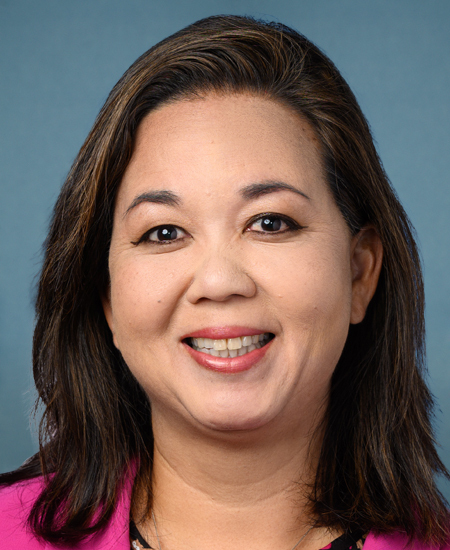
Rep. Jill N. Tokuda
Sponsored bills
Maddy summaryThis bill amends two sections of the National Security Act to improve transparency around security clearance decisions. It broadens due process protections to cover all individuals (not just executive branch employees) seeking or holding security clearances. The key provision requires agencies to publish annual reports detailing every clearance denial or revocation, including the specific reasons, the employing agency or company, and outcomes of appeals. These reports directly affect anyone with or seeking a security clearance, whether working for the government or in the private sector. The bill focuses on requiring more detailed public reporting, not changing clearance standards or eligibility.
Maddy summaryThe No Secret Police Act of 2025 requires U.S. Immigration and Customs Enforcement (ICE) and other Department of Homeland Security officers working on border security or immigration enforcement to visibly display their official badges or uniforms and provide identification during detentions or arrests. It prohibits officers from wearing face coverings that conceal their face during these interactions. The bill also mandates that the Department report to Congress about tactical gear policies and research technology to improve badge visibility in different conditions like weather or lighting. These changes aim to increase transparency in immigration enforcement encounters.
Maddy summaryThis resolution (HRES 549) is a non-binding House measure expressing support for designating June 26 as "LGBTQI+ Equality Day." It commemorates three landmark Supreme Court rulings on June 26 (2003, 2013, and 2015) that ended criminalization of same-sex intimacy, struck down marriage discrimination, and established marriage equality. The resolution encourages public celebration of this day to honor these milestones and educate about ongoing discrimination faced by LGBTQI+ communities. It also acknowledges the need for future legislation to address discrimination in areas like employment, housing, and public accommodations. As a symbolic resolution, it does not create new legal requirements but formally recognizes these historical court decisions.
Maddy summaryHR 4158, the Ensuring Fee-Free Benefit Transactions Act of 2025, prohibits states and their contractors from charging SNAP authorized retailers fees for EBT transactions, including switching or routing benefits. This directly affects grocery stores and retailers that accept SNAP benefits by eliminating costs they currently pay for processing these transactions. The bill specifically bans fees related to implementing certain program requirements (except for equipment rentals) and overrides conflicting provisions from the 2023 Appropriations Act. The law takes effect on October 1, 2025.
Maddy summaryThe CONNECT for Health Act of 2025 expands Medicare telehealth coverage by removing geographic restrictions that limited where patients could receive care, expanding the types of health care providers who can offer telehealth services, and eliminating the requirement for an in-person visit before receiving telemental health services. The bill includes specific provisions to support telehealth use for Native American health facilities, rural health clinics, and Federally Qualified Health Centers. It requires the Centers for Medicare & Medicaid Services to collect and publish data on telehealth usage and impacts, and to develop resources to improve accessibility for people with disabilities and limited English proficiency. Program integrity measures are added to monitor telehealth billing practices and prevent fraud while maintaining coverage for telehealth services during public health emergencies.
Maddy summaryHR 4152, the Safe Storage Saves Lives Act, requires gun sellers to offer a compatible gun lock with every firearm sale. It directly affects licensed gun retailers, who must make such locks available at the point of purchase. The bill amends federal law to mandate that sellers provide a secure storage device compatible with the firearm, with violations subject to $1,000 civil penalties. Funds from these penalties must be used for distributing free/reduced-cost locks or public awareness campaigns about safe storage.
Maddy summaryThe Equal Dignity for Married Taxpayers Act amends the Internal Revenue Code to replace gendered terms like "husband and wife" with gender-neutral language such as "married couple" or "spouses" throughout tax law. This bill affects all married couples filing federal taxes by making the tax code consistent for all married couples regardless of gender. It makes over 30 specific changes to tax code sections, including replacing "his spouse" with "the individual's spouse" and updating references to marital status. The bill does not alter tax rates, deductions, or credits - it only updates language to be more inclusive. This is a technical language update to ensure the tax code treats all married couples equally without gendered references.
Maddy summaryThe PRIDE Act of 2025 updates the Internal Revenue Code by replacing gender-specific terms like "husband and wife" with gender-neutral terms such as "married couple" or "spouse" across over 30 tax code provisions. This change affects all married couples filing federal taxes and the IRS, as it modernizes tax law language to be inclusive of all married individuals regardless of gender. The bill makes specific textual amendments to sections dealing with filing status, deductions, credits, and estate tax provisions without creating new tax benefits. It ensures tax law language does not assume the gender of spouses, making the tax code more equitable for all married couples. This is a language update to existing tax law, not a change in tax policy or benefits.
Maddy summaryThe Women's Health Protection Act of 2025 would protect access to abortion services across the United States by prohibiting states from imposing restrictions that are more burdensome than those on comparable medical procedures. The bill directly affects people seeking abortion care and health care providers by banning restrictions such as mandatory in-person visits, requirements for specific tests, limitations on telemedicine, and rules based on a patient's reason for seeking abortion. It prohibits state laws that single out abortion for unnecessary restrictions while allowing post-viability abortions when necessary to protect a patient's life or health. The bill preempts conflicting state laws and provides enforcement mechanisms through private lawsuits and actions by the Attorney General.