

Maddy summaryThe Child Care for Working Families Act creates a federal program to provide affordable, high-quality child care for working families with children under age 6. It would provide direct child care assistance through certificates or grants to parents, with no copayment required for families at or below 85% of state median income. The program requires states to implement quality standards for child care providers, including a tiered quality system and minimum wage requirements for staff (at least a living wage equivalent to elementary educators). The bill appropriates $20 billion for the program over five years, with additional funding for quality improvement initiatives and universal preschool services.
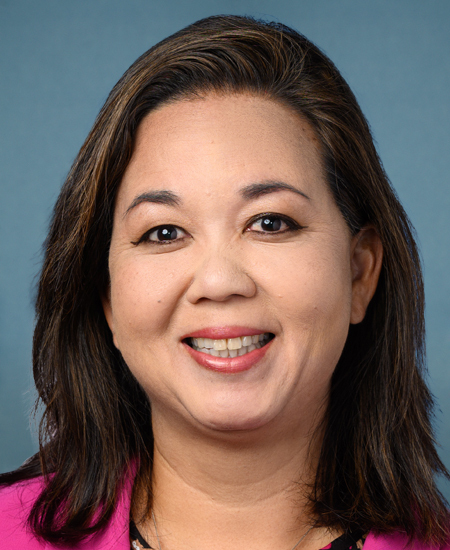
Rep. Jill N. Tokuda
Sponsored bills
Maddy summaryHR 4396, the Uterine Cancer Study Act of 2025, mandates a study by the Department of Health and Human Services (HHS) into the potential link between chemical hair straighteners and uterine cancer, with a specific focus on higher incidence rates among women of color. The study will review existing research, examine impacts across all racial and ethnic groups, analyze different hair straightener types (including those with dyes or bleach), and assess whether the FDA should require additional safety testing for these products. HHS must submit its study methodology within 45 days of the bill's enactment, begin the study within 180 days, and deliver a final report to Congress within two years. This bill does not create new regulations but directs a specific research effort to gather evidence on a potential health concern. The study directly affects women, particularly women of color, who use hair straightening products and may face elevated uterine cancer risks.
Farmers First Act of 2025 This bill extends through FY2030 and revises the Farm and Ranch Stress Assistance Network (FRSAN). This Department of Agriculture program provides competitive grants to states, Indian tribes, and qualified nonprofit organizations to provide stress assistance programs (i.e., professional agricultural behavioral health counseling, helplines, and resources) to individuals engaged in farming, ranching, and agriculture-related occupations. The bill specifies that the grant funding for farm telephone helplines and websites may also be used for crisis lines. Further, FRSAN grant recipients may establish referral relationships with providers, including Certified Community Behavioral Health Clinics, health centers, rural health clinics, and critical access hospitals.
Maddy summaryThis bill directs the Department of Health and Human Services to significantly increase federal research funding for uterine fibroids ($30 million annually from 2026-2030), expand coordination of NIH research, and establish a Medicaid data system to track treatment access and costs. It mandates public education on fibroid symptoms, prevalence (especially among Black women, who face higher risk and severity), and non-hysterectomy treatment options. The bill also requires disseminating evidence-based provider resources on managing fibroids while preserving fertility. These provisions directly affect the estimated 26 million U.S. women with fibroids - particularly women of color - and aim to address the current lack of research and treatment data.
Maddy summaryThis bill directs the Health and Human Services Secretary to fund research on early detection and intervention for uterine fibroids, aiming to develop evidence-based approaches for healthcare settings. It authorizes grants to states to support screening (including advanced imaging), patient navigation services, and public education campaigns focused on early detection, with priority given to areas with socially vulnerable populations at higher risk. The bill also funds research into disparities in pain management during fibroid surgery and conditions like Asherman’s Syndrome. These provisions directly affect women with uterine fibroids, particularly in underserved communities, by expanding access to early detection services and targeted research.
Maddy summaryThe Tribal Access to Clean Water Act of 2025 provides federal funding to address the lack of clean water and sanitation on Tribal lands and for the Native Hawaiian Community. The bill authorizes $100 million annually for USDA water infrastructure loans and grants, $500 million annually for Indian Health Service sanitation facilities, $100 million annually for operation and maintenance of water systems, and $30 million annually for technical assistance to help Tribal communities access and manage water infrastructure funding. It specifically expands eligibility to include Native Hawaiian organizations, addresses gaps in previous infrastructure funding, and requires no matching contributions from Tribal communities. The bill targets the situation where nearly half of households on Tribal lands lack reliable water sources and basic sanitation.
Maddy summaryHR 4382 authorizes the U.S. Mint to produce commemorative coins for the 2028 Los Angeles Olympics/Paralympics and 2034 Salt Lake City Winter Olympics/Paralympics. It specifies gold, silver, and half-dollar coin designs with defined mintage limits (e.g., up to 100,000 $5 gold coins for each event), all bearing inscriptions like "2028" or "2034" and standard coin features. A surcharge ($5-$50 per coin) is added to sales, with all funds directed to the respective Olympic committees to support event hosting and legacy programs like youth sports. The bill ensures no net cost to the government by requiring surcharge revenues to cover all design, production, and marketing expenses before funds are disbursed.
Maddy summaryThe Head Start for Our Future Act amends Section 441(c)(1) of the Higher Education Act of 1965 to replace "literacy training" with "child development and early learning (including Head Start programs and Early Head Start programs carried out under the Head Start Act), literacy training." This technical change formally integrates Head Start and Early Head Start programs into the federal definition of early learning initiatives under the Higher Education Act, while maintaining a separate reference to literacy training. The bill directly affects how federal grants for early childhood education are categorized and administered under the Higher Education Act. It does not alter funding levels, program requirements, or operations but updates administrative terminology to explicitly include Head Start services.
Maddy summaryThis bill prohibits federal agency personnel from using physical force, detaining, or interfering with Members of Congress while they conduct official oversight activities on federal property. It requires Members to identify themselves with valid congressional ID and confirms the law does not override standard security procedures or prevent action against immediate physical threats. The bill specifically protects oversight activities like investigations, reviews of federal programs, or site visits at government-owned or leased facilities (including detention centers), ensuring Congress can carry out its constitutional oversight role without physical obstruction.
Maddy summaryThe PBM Reform Act of 2025 aims to increase transparency and fairness in pharmacy benefit manager (PBM) operations within Medicare Part D and Medicaid programs. The bill requires Medicare Part D plans to allow any pharmacy meeting standard terms to join their networks, establishes "essential retail pharmacies" in underserved areas (with limited pharmacy access), and mandates detailed reporting on drug pricing, rebates, and reimbursement rates. It creates a process for pharmacies to report PBM violations of reasonable contract terms and prohibits "spread pricing" in Medicaid, where PBMs retain the difference between what they pay pharmacies and what they charge plans. These provisions aim to improve pharmacy access for Medicare beneficiaries and ensure fairer reimbursement practices for pharmacies.