

Maddy summaryHRES 967 would amend House rules to allow Members who have recently given birth to vote by proxy for up to six weeks after childbirth. Specifically, a new rule permits a Member to designate another Member as their proxy during this period to cast votes on their behalf. The proxy cannot be used to count the Member's presence for quorum purposes in the House or its committees. This change directly affects female Members during their postpartum leave, with no other proxy voting allowed under the amendment.
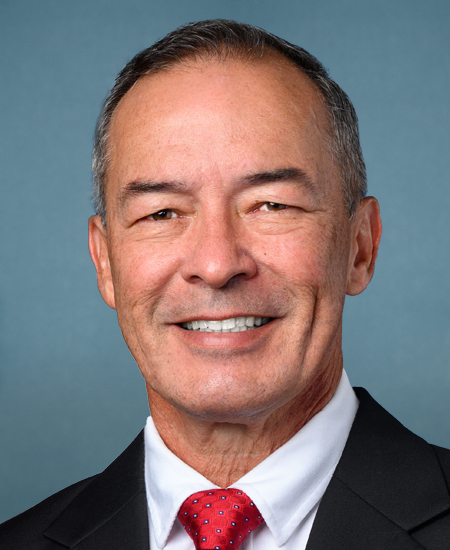
Rep. James C. Moylan
Sponsored bills
Maddy summaryThis bill amends the Animal Welfare Act to clarify rules about animal fighting, specifically for bird fighting ventures. It removes an extension of federal prohibitions to U.S. territories and adds a provision stating that activities involving live birds in fighting ventures are only unlawful if the event occurs in a state where such activities are already illegal under state law. This change affects individuals who sponsor, exhibit, or transport birds for fighting ventures, clarifying that federal enforcement depends on whether the activity violates existing state laws. The bill's title references "Honoring Indigenous Traditions," but the actual text focuses solely on modifying animal fighting regulations - no provisions relate to indigenous traditions.
Maddy summaryThe NO TIME TO Waste Act establishes an Office of Food Loss and Waste within the Department of Agriculture to coordinate national efforts to reduce food loss and waste. It creates a grant program for states, local governments, and tribal entities to collect data on food waste reduction policies and develop model policies, while requiring federal contractors to report on their food waste reduction efforts. The bill sets a goal to reduce food loss and waste by 50% by 2030 compared to 2016 levels, with annual reports tracking progress to Congress. It also establishes regional coordinators to facilitate food recovery and partnerships between government, food businesses, and nonprofits, and mandates a national education campaign to teach consumers about food preservation, safety, and composting. Funding is authorized for fiscal years 2024-2028 to support these initiatives.
Maddy summaryThe Affordable Connectivity Program Extension Act of 2024 allocates $7 billion in funding for the Affordable Connectivity Program (ACP) during fiscal year 2024. The ACP provides subsidies to low-income households to help cover the cost of internet service and connected devices like laptops or tablets. This funding ensures the program can continue supporting eligible households throughout the year, with the money remaining available until fully spent. The bill extends existing program funding without changing eligibility criteria or service requirements.
Maddy summaryThe DEEP Act would create a new nationwide permit for dredging projects at U.S. ports and navigation channels, allowing for maintenance, expansion, or deepening of ports up to 60 feet. It sets strict deadlines for state water quality certifications (14 days for initial determination, 1 year for final decision) and limits the Environmental Protection Agency's authority over dredged material disposal sites. The permit would be valid for up to 10 years, and the bill repeals existing provisions about dredged material transportation. This legislation primarily affects port dredging projects, the Army Corps of Engineers, and state environmental agencies by streamlining the permitting process while maintaining environmental safeguards.
Maddy summaryHR 6888, the Clean Energy Workforce Act, provides $100 million in federal grants to develop clean energy job training programs. It directly affects local schools, career technical education centers, colleges, and industry partners by funding: (1) new or expanded training programs in clean energy fields (like renewable energy and climate adaptation), designed to be shared with other schools and accessible to diverse students; and (2) upgrades to school facilities to use renewable energy and improve energy efficiency. Grants require partnerships between educational institutions, industry representatives, and community groups to create replicable training that prepares students for jobs in growing clean energy sectors. The bill focuses on concrete workforce development, not environmental outcomes.
Maddy summaryHR 6524, the Federal Cybersecurity Workforce Expansion Act, creates a new federal apprenticeship program to address the cybersecurity workforce shortage by training individuals for cybersecurity roles within federal agencies. The program partners with community colleges, career and technical schools, and other educational institutions to provide training aligned with federal cybersecurity needs. It also establishes a pilot program specifically for veterans and military members transitioning to civilian life, offering cybersecurity training with portable credentials that can be used across the job market. The bill requires coordination with multiple federal agencies and includes reporting requirements to assess program effectiveness and track participant employment outcomes.
Maddy summaryThe Allied Partnership and Port Modernization Act (HR 6729) permits dredging in U.S. navigable waters by vessels documented under NATO member countries, built by NATO members or major non-NATO allies, and majority-owned by entities incorporated in NATO countries. It also amends transportation rules to exclude dredged material from the "valueless material" category, removing special transportation permits required for such material. This bill directly affects port dredging contractors and operations involving allied nations. The policy change streamlines handling of dredged material, commonly generated during port maintenance and expansion.
Maddy summaryThis bill amends two provisions in the U.S. Code related to port dredging. It removes a requirement for certain dredged material to meet specific certification standards under section 12112(a)(2), making it easier for port authorities to handle dredged material without additional oversight. The bill also deletes references to "dredged material" from the section heading and text of 46 U.S.C. §55110, updating it to reference "transportation of valueless material" instead. These changes directly affect port expansion projects and dredging contractors by streamlining regulatory processes for material removal. The bill focuses on simplifying existing rules rather than creating new programs or funding.
Maddy summaryHR 6707, the Port Modernization and Supply Chain Protection Act, modifies two sections of the U.S. Code related to port dredging. It repeals Section 55109 (which previously addressed dredged material) and amends Section 55110 to remove all references to "dredged material," renaming it "Transportation of valueless material." This bill directly affects port authorities and dredging contractors by clarifying that dredged material is no longer subject to specific transportation regulations under Title 46. The change streamlines legal language but does not create new requirements or impact supply chain operations.