

Maddy summaryThis bill requires the Secretary of Homeland Security, working with the Education Secretary and other agencies, to create a federal strategy for securing K-12 schools against terrorism threats within 180 days of enactment. The strategy must detail existing federal programs and funding for school security, identify specific vulnerabilities in school safety, outline actions to address those gaps, and recommend any needed new authorities. It applies directly to federal agencies coordinating school security efforts but does not mandate specific security measures for schools themselves. The strategy must be updated every seven years, with the requirement ending seven years after the bill's enactment.
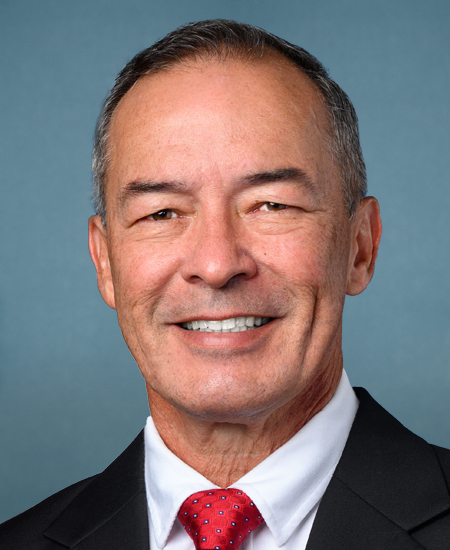
Rep. James C. Moylan
Sponsored bills
Maddy summaryThis bill allows law enforcement officers, firefighters, and emergency medical personnel (covered employees) to sue their public safety employers if they face termination or other punishment for expressing personal opinions about work-related issues. It specifically protects speech on topics like public safety service delivery, pay/benefits, working conditions (including equipment), workplace policies, and even political/religious views. However, the protection does not cover on-duty speech, speech advocating violence or discrimination, disclosure of confidential information, or threats to withhold essential services. The law creates a new legal remedy but explicitly states it does not override existing federal or state civil rights laws.
Maddy summaryHR 7366 requires U.S. Customs and Border Protection (CBP) to publish monthly border encounter data on its public portal by the 7th of each month. This affects CBP directly, as it mandates the timely release of data on encounters at the border during the previous month. The bill also includes a penalty: if CBP misses this deadline, funding for the Office of the Secretary of Homeland Security is reduced by 25% for the following month. The law focuses on ensuring transparency in border data reporting through specific deadlines and financial consequences.
Maddy summaryThis resolution (HRES 1012) is a symbolic statement by the U.S. House of Representatives condemning Azerbaijan's detention of Dr. Gubad Ibadoghlu, an imprisoned academic and economist. It specifically addresses Azerbaijan's alleged wrongful arrest, beatings in custody, denial of medical care and legal access, and poor prison conditions. The resolution calls for Dr. Ibadoghlu's immediate release and urges the U.S. Secretary of State to prioritize his case in diplomatic engagements with Azerbaijan. As a non-binding resolution, it expresses congressional concern but does not enact new laws or impose sanctions.
Maddy summaryThis bill establishes the Caribbean and Latin America Maritime Security Initiative to combat illegal, unreported, and unregulated (IUU) fishing in the region. It requires cooperation between the Departments of Defense, Homeland Security, and State to strengthen maritime security partnerships with Caribbean and Latin American countries. The initiative focuses on enhancing partner countries' capabilities for fisheries management, promoting vessel tracking systems on fishing vessels, and documenting unauthorized fishing activities. The bill also authorizes sanctions against foreign entities involved in IUU fishing, including blocking property, denying U.S. entry, and prohibiting access to U.S. ports. These measures aim to protect marine resources, support sustainable fisheries, and uphold international maritime law.
Maddy summaryHR 7239, the Drug-Free Social Media and Digital Communities Act of 2024, makes it a federal crime to distribute controlled substances using social media or online platforms. It doubles standard penalties for first offenses, including imprisonment terms, fines, and supervised release, with a minimum 1-year sentence (except for small marijuana amounts), and triples penalties for repeat offenses with a minimum 3-year sentence. The law specifically targets "interactive computer services" like social media platforms, internet access providers, and educational institution services. It directly affects individuals selling drugs online and requires platforms enabling such activity to face stricter legal consequences under federal drug laws.
This resolution expresses the sense of the House of Representatives that former President Trump did not engage in insurrection or rebellion against, nor give aid or comfort to the enemies of, the United States.
Maddy summaryThis bill amends a specific provision in military contracting law (Title 10, U.S. Code § 3706(c)) to clarify that contractors cannot use late submission of cost or pricing data as a defense if they provided it after the contract price was agreed upon. It directly affects defense contractors who submit pricing data after finalizing contract terms. The key change removes an outdated exception, requiring timely submission of such data to support fair pricing. This is a procedural adjustment to contracting rules, not a new benefit or program.
Maddy summaryHR 7255, the GRANT Act, requires federal agencies that award discretionary or competitive grants to post specific information on their websites within one year of enactment. Agencies must provide clear details about each grant, including application deadlines, required documents, contact information, and technical assistance resources like webinars. The bill also mandates annual reports to Congress on grant recipients, values, and numbers, with agencies able to request a six-month extension for compliance if unforeseen issues arise. This law directly affects federal agencies managing grant programs and aims to improve transparency and accessibility for applicants seeking federal funding.
Maddy summaryThe AFIDA Improvements Act of 2024 updates the Agricultural Foreign Investment Disclosure Act to require foreign individuals or entities owning at least 1% of U.S. agricultural land (directly or through multiple ownership tiers) to report their holdings. It creates new enforcement duties for the Farm Production and Conservation Business Center (FPAC-BC) to validate data, ensure compliance, and identify violators. The bill mandates the Secretary of Agriculture to share foreign ownership reports with the Committee on Foreign Investment in the United States (CFIUS) and update agency handbooks using recommendations from a 2024 Government Accountability Office report. These changes apply directly to foreign landowners and agricultural agencies like the Farm Service Agency, aiming to improve transparency around foreign ownership of U.S. farmland.