

Maddy summaryHRES 987 is a symbolic resolution introduced in the U.S. House of Representatives on January 31, 2024, by multiple Republican members. It formally denounces the Biden administration’s energy policies as "harmful" and "anti-American," citing specific actions like canceling the Keystone XL pipeline, restricting federal land leasing for oil and gas, blocking LNG exports, and implementing mineral extraction rules. The resolution does not create new laws or affect any group directly; it serves only as a formal expression of disapproval by the House. It has no legal effect and is intended to convey political opposition to the administration’s approach to energy development.
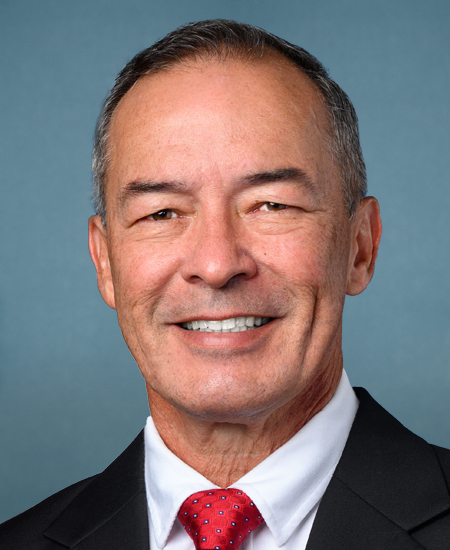
Rep. James C. Moylan
Sponsored bills
Maddy summaryHR 7770, the Rosie the Riveter Commemorative Coin Act, authorizes the U.S. Mint to produce and sell three commemorative coins honoring women who worked on the U.S. home front during World War II. It specifies $5 gold coins (max 50,000), $1 silver coins (max 400,000), and half-dollar coins (max 750,000), all to be issued between January 1, 2025, and December 31, 2025. Each coin sale includes a surcharge ($35 for gold, $10 for silver, $5 for half-dollar), with all surcharge funds directed to the Rosie the Riveter Trust for maintaining the Rosie the Riveter WWII Home Front National Historical Park and educational programs. The coins will feature designs reflecting the legacy of diverse women workers and must meet specific weight, diameter, and composition standards.
Maddy summaryHR 5247, the Expedited Hiring for VA Trained Psychiatrists Act of 2023, allows the Veterans Health Administration (VA) to hire psychiatrists who complete VA-residency programs without following standard civil service hiring rules. The bill permits immediate appointment after residency completion (or before, if the process begins early) for positions that have remained unfilled for at least 35 days. This directly affects VA psychiatrists completing specific residency programs and streamlines their hiring into VA clinical roles.
Maddy summaryHRES 1097 is a symbolic resolution supporting the designation of March as National CHamoru Heritage and Culture Month to honor the cultural contributions of CHamoru people from Guam and the Northern Mariana Islands. It acknowledges their indigenous heritage, historical resilience, and military service, while encouraging nationwide observance of their traditions. The resolution has no binding effect but formally recognizes CHamoru cultural identity and achievements. It directly affects CHamoru communities across Guam, the Northern Mariana Islands, and the U.S. mainland by promoting visibility of their heritage.
Maddy summaryHR 5499, titled "Congressional Oversight of the Antiquities Act," would amend the Antiquities Act to impose time limits on national monument designations. It requires that any national monument established by presidential proclamation under the law expires after six months unless Congress extends it, and if not extended, the land cannot be re-designated as a monument for 25 years. This directly affects federal land managers and future presidents, who would need congressional action to maintain or expand monument boundaries. The bill changes the current process by adding automatic expiration and a long-term moratorium on re-designation, shifting authority to Congress.
Military Family Leave Act of 2024 This bill entitles an employed family member of a member of the Armed Forces who receives notification of a call or order to active duty in support of a contingency operation, or who is deployed in connection with a contingency operation, to two workweeks of leave per year for each family member who is so called or deployed. Such leave may (1) be taken intermittently or on a reduced leave schedule; and (2) consist of paid or unpaid leave, as the employer considers appropriate. Additionally, the bill (1) allows an employer to require certification of entitlement to such leave within a leave request, (2) provides employment and benefits protection for employees upon their return from such leave, and (3) prohibits an employer from interfering with or otherwise denying the exercise of such leave rights.
Maddy summaryThe SMART Save Act of 2024 requires the Department of Defense to improve financial literacy training for active-duty service members and their spouses. It mandates a standardized curriculum focused on practical financial skills (not just completing modules), delivered in small in-person groups or one-on-one sessions, with online options only when necessary. The bill also requires that training include retirement planning information like Thrift Savings Plan forms and counselor contacts. Additionally, the Department must submit a report within three years assessing training effectiveness using localized data, followed by a six-year follow-up report.
Maddy summaryThe Assad Regime Anti-Normalization Act of 2023 amends the Caesar Syria Civilian Protection Act to expand sanctions against individuals and entities supporting the Assad regime in Syria. It targets those who provide financial or material support to the regime, divert humanitarian aid, seize property, or engage with Syria Arab Airlines or Cham Wings. The bill prohibits U.S. officials from recognizing or normalizing relations with the Assad regime and requires the administration to develop a strategy to counter other countries' engagement with Syria. It also mandates annual reports on diplomatic meetings with Syria, transactions involving Syria, and how the Assad regime manipulates UN operations in Syria.
Maddy summaryThe Uyghur Policy Act of 2023 establishes a U.S. Special Coordinator for Uyghur Issues within the State Department to coordinate policy and advocate for the protection of Uyghur cultural, religious, and linguistic identity in Xinjiang. It authorizes $250,000 annually for Uyghur human rights advocates to speak at public diplomacy events in Muslim-majority countries and mandates Uyghur language training for U.S. diplomats. The bill also directs the U.S. government to support United Nations monitoring of Xinjiang human rights issues and oppose efforts to block discussions of Xinjiang at the UN. These provisions focus on diplomatic advocacy and information-sharing, not direct sanctions or enforcement actions against China.
Maddy summaryThe SCHEDULES Act of 2024 requires the Department of Veterans Affairs (VA) to establish specific timeframes for scheduling appointments after a veteran is referred for care: 3 business days for VA facility appointments and 7 calendar days for community care. It directly affects veterans seeking VA care by setting measurable standards for timely access to services. The bill mandates quarterly reports to Congress detailing how many referrals meet these standards, broken down by facility, care specialty (like mental health or cardiology), and state, with all data made publicly available online. These reports must also include annual progress updates on VA efforts to meet the scheduling goals. The law focuses on creating transparency and accountability in VA scheduling processes without altering benefits or funding.