

Maddy summaryHRES 1151 is a symbolic resolution recognizing the Interstate Compact on Educational Opportunity for Military Children and designating April 2024 as "Month of the Military Child." It directly affects military-connected children (over 1.5 million in the U.S.) who face frequent school transitions due to parental service. The resolution expresses congressional support for the Compact - which helps streamline educational transitions for military students - and encourages nationwide recognition through events like "Purple Up!" to honor these children. As a non-binding resolution, it does not create new policies or funding but aims to raise awareness of military-connected students' educational challenges.
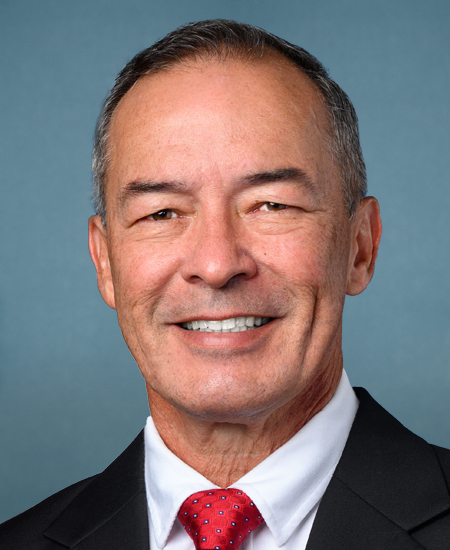
Rep. James C. Moylan
Sponsored bills
Maddy summaryHR 3649 establishes a 5-year pilot program to provide hyperbaric oxygen therapy (HBOT) to veterans diagnosed with traumatic brain injury (TBI) or post-traumatic stress disorder (PTSD). The program, limited to three Veterans Health Administration networks, offers HBOT through VA-approved providers using FDA-approved or investigational medical devices. Funding comes solely from donations to a dedicated VA HBOT Fund, with no annual budget constraints. This bill directly affects eligible veterans seeking this specific treatment option, but does not guarantee long-term coverage beyond the pilot's five-year term.
Maddy summaryHRES 1148 is a resolution passed by the U.S. House of Representatives that condemns the Iranian government for supporting terrorism, regional proxy conflicts, and internal suppression of dissent - including its crackdown on protests following Mahsa Amini's death in 2022. It specifically calls for maintaining sanctions against Iran, supporting the Iranian Resistance's Ten-Point Plan (which advocates for a democratic, secular, nonnuclear Iran), and protecting Iranian political refugees in Albania. The resolution also affirms the Iranian people's right to self-determination under international law and urges the U.S. to recognize their struggle for freedom. As a non-binding resolution, it does not create new laws but formally expresses congressional stance.
Maddy summaryThis bill authorizes federal grants to the Theodore Roosevelt Presidential Library Foundation for establishing a library in Medora, North Dakota, requiring the Foundation to match federal funds two-to-one from non-Federal sources (e.g., state funds or private donations). It directs federal agencies to transfer relevant artifacts and collections to the library without cost for public display. The library will operate independently under the Foundation, with no ongoing federal management or operational involvement.
Maddy summaryThis bill amends U.S. Code to lower the minimum student enrollment required for high schools to establish or maintain a Junior Reserve Officers' Training Corps (JROTC) program, reducing the threshold from 100 to 50 students. It directly affects high schools seeking to start or sustain JROTC units, particularly those with smaller student populations. The key provision changes the existing requirement under Title 10, U.S. Code, making it easier for schools to qualify for JROTC participation. This is a straightforward policy adjustment to existing law, with no additional funding or program changes specified.
Maddy summaryHR 1829 would require the U.S. Department of Agriculture to transfer approximately 232.9 acres of National Forest land (located in Arizona's Tonto National Forest and depicted on a specified map) to Gila County, Arizona, if the county submits a written request within 180 days of the bill's enactment. The county must pay all associated costs (including surveys and environmental reviews) and use the land for veterans' purposes; failure to do so would trigger automatic reversion of the land back to the U.S. government. This is a procedural land conveyance bill with no policy changes beyond the transfer of specific property.
Maddy summaryHRES 1118 is a symbolic resolution welcoming Prime Minister Fumio Kishida’s upcoming U.S. visit and reaffirming the U.S.-Japan alliance. It does not create new laws or policies but formally recognizes the alliance’s role in regional security, notes Japan’s defense spending goals, and supports trilateral cooperation with South Korea. The resolution specifically endorses Japan’s defense modernization efforts and U.S. security commitments under the 1960 treaty. It affects no specific groups or programs - it is purely a diplomatic statement expressing support for the alliance. (1 sentence, as it is a procedural resolution.)
Maddy summaryHR 7860 requires the Secretary of Defense to publish regular reports on potential health impacts from toxic exposures in Guam between August 15, 1958, and July 31, 1980. The reports, published annually after enactment and every three years thereafter, must review scientific literature linking illnesses to this exposure period, categorize evidence strength (sufficient, modest, or limited), and include documentation about Agent Orange storage. This directly affects individuals who were present in Guam for over 30 days during that timeframe. The bill mandates coordinated efforts between the Defense, Health and Human Services, and toxicology agencies to compile and update this information publicly. It does not create new benefits but establishes a formal process for documenting historical exposure data.
Maddy summaryThis bill allows the U.S. Department of Defense to create an agreement with the Environmental Protection Agency (EPA) to provide technical help and conduct environmental inspections for military construction projects in Guam. It specifically enables the DoD to work with both the federal EPA and Guam's own environmental agency on these inspections. The agreement would require the DoD to pay the EPA for these services. This directly affects military construction projects in Guam and Guam's environmental agency by establishing a new process for environmental oversight.
Maddy summaryHR 7766, the Protecting Consumers from Deceptive AI Act, requires AI developers and major online platforms to clearly label AI-generated content. It mandates that audio or visual content created by generative AI include machine-readable disclosures about its origin (e.g., "AI-generated"), with measures to prevent tampering, and platforms must display these labels without removal. The law applies to companies with significant revenue ($50M+ annually) or user scale (25M+ monthly active users), such as social media platforms and content services. The Federal Trade Commission will enforce these labeling requirements as deceptive practices, treating violations under existing FTC authority.