

Give Kids a Chance Act of 2025 This bill expands the Food and Drug Administration’s (FDA’s) authority with respect to research on rare pediatric diseases, including by permitting the FDA to take enforcement action against drug sponsors that fail to satisfy pediatric study requirements and by reauthorizing programs that support pediatric research. Specifically, the bill modifies requirements relating to molecularly targeted pediatric cancer investigations to permit research on new drugs in combination with active ingredients that have already been approved, provided certain conditions are met; permits the FDA to take enforcement action against drug sponsors that fail to comply with pediatric study requirements, if such sponsors demonstrated a lack of due diligence in satisfying the requirement; renews the FDA’s authority to award priority review vouchers to sponsors of new products intended to treat rare pediatric diseases through September 30, 2029; and reauthorizes through FY2027 certain funding for the National Institutes of Health to support priority pediatric research. The bill also provides statutory authority for the FDA’s interpretation of the orphan drug exclusivity period. The bill specifies, consistent with FDA regulations, that the seven-year market exclusivity period for drugs for rare diseases or conditions (i.e., orphan drugs) prohibits the approval of the same drug for the same approved use or indication with respect to the disease or condition. (In Catalyst Pharmaceuticals, Inc. v. Becerra , a court rejected the FDA’s interpretation and held that orphan drug exclusivity extends to all uses or indications for the disease or condition.)
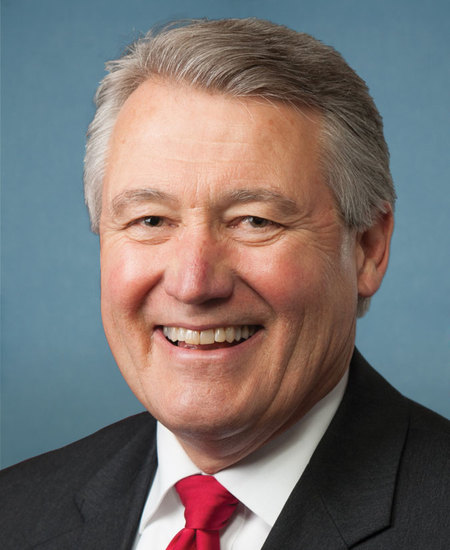
Rep. Rick W. Allen
Sponsored bills
Maddy summaryHCONRES 58 is a symbolic congressional resolution denouncing socialism in all its forms. It does not create new laws or affect any policies, as it is a non-binding statement of opinion. The resolution cites historical events and quotes from Founding Fathers to argue that socialism leads to authoritarianism and economic harm, referencing examples like the Soviet Union and Venezuela. It formally "denounces" socialism and opposes implementing socialist policies in the U.S., but has no legal effect on citizens or government actions. This is a procedural resolution, not a policy measure.
Maddy summaryThe Healthy Competition for Better Care Act (HR 6248) prohibits health plans and insurers from including restrictive terms in contracts with healthcare providers that limit patient choice or price competition. Specifically, it bans agreements that prevent plans from steering patients to other providers, offering cost-saving incentives, or restricting other plans from paying lower rates for the same services. The law includes exceptions for health maintenance organizations (HMOs) and value-based networks like accountable care organizations. Regulations to implement these changes must be issued within one year by health, labor, and treasury departments, with the rules taking effect 18 months after enactment.
Maddy summaryHR 6167, the HEALTH Act of 2025, creates a new tax deduction for physicians providing unreimbursed charity care to patients enrolled in Medicaid (Title XIX) or CHIP (Title XXI) programs. The deduction equals the Medicare fee schedule amount for such care, but excludes services like sex reassignment surgeries and hormone treatments for gender transition. Additionally, the bill adds liability protection for physicians providing this charity care, shielding them from civil lawsuits for non-intentional harm during such services, and preempts conflicting state laws. This directly affects physicians who serve low-income patients through public health programs.
Maddy summaryHR 6122, the BARN Act, reforms the H-2A agricultural visa program. It shifts oversight from the Labor Department to the Agriculture Department, requires employers to provide housing or pay HUD-based housing allowances (based on 2-bedroom fair market rents), and shortens application processing to 30 days. The bill also limits visa stays to 2 years (with one 1-year extension), mandates workers leave after 2 years, and penalizes employers for hiring workers with expired visas. These changes directly affect agricultural employers and temporary farm workers seeking H-2A status.
Maddy summaryHR 5815, the District of Columbia Medicaid Fairness Act, adjusts federal Medicaid funding for Washington D.C. by setting a specific Federal Medical Assistance Percentage (FMAP) for the district. It directly affects D.C. residents enrolled in Medicaid by guaranteeing a minimum federal funding share: 70% for fiscal years before 2027, gradually decreasing to 55% by 2029. For fiscal years 2030 and beyond, D.C. will receive the standard FMAP rate calculated under the Social Security Act, without the special adjustment. This change ensures D.C. receives a higher federal share than it would under the standard formula until 2029, after which it aligns with other states. The bill modifies Section 1905 of the Social Security Act to implement these funding adjustments.
Maddy summaryThe Shutdown Fairness Act ensures that certain federal employees performing essential work during government funding gaps receive their regular pay. It applies directly to "excepted employees" (such as border security personnel, air traffic controllers, and military members on active duty) who must work when appropriations lapse. The bill appropriates funds from the Treasury to cover their standard pay, benefits, and allowances during these periods, without requiring new annual appropriations. These payments are later charged to the agency’s regular budget when funding is restored, ensuring no additional costs to Congress. The law takes effect retroactively from September 30, 2025.
Maddy summaryHR 5738, the "No Budget, No Pay Act," requires Congress to approve a budget resolution and pass all annual appropriations bills by October 1 each fiscal year. If Congress misses this deadline, members of Congress (excluding the Vice President) lose pay for the period of non-compliance, as determined by the House and Senate Budget and Appropriations Chairs. The bill specifies that no retroactive pay is allowed for any period during which Congress was out of compliance. This directly affects all elected members of Congress by linking their pay to timely budget passage, creating a financial incentive for meeting the October 1 deadline.
Maddy summaryThis bill adds Medicare coverage for multi-cancer early detection screening tests (blood or biological tests analyzing cell-free DNA) starting January 1, 2028. It directly affects Medicare beneficiaries aged 68 and older (starting in 2028, with the age limit increasing by 1 year annually), requiring tests to be FDA-cleared and deemed reasonable/necessary by the Secretary for early cancer detection across multiple organ sites. Payment will initially match current stool DNA test rates before 2031, then shift to a lower rate or new payment system after 2031, with limits preventing more than one test per year. The bill explicitly states it does not alter coverage for existing cancer screenings like breast, colorectal, or prostate cancer tests.
Maddy summaryThis bill would require all states to recognize valid concealed carry permits issued by other states, allowing permit holders to carry concealed handguns (excluding machine guns) in any state that either issues such permits or doesn't prohibit concealed carry. It directly affects law-abiding gun owners with valid permits from their home state, ensuring they can carry in states with similar permit systems or no prohibitions. Key provisions include treating valid permit documents as proof of legal carry (reducing officer stops), shifting the burden of proof to prosecutors if challenged, and allowing civil lawsuits for violations with attorney's fee awards. The bill does not override state laws restricting firearms on private property or government land, nor does it affect federal gun restrictions like those in section 922(q).