

Maddy summaryThis bill creates a tax credit for businesses selling products made with U.S.-grown cotton. The credit equals 24% of the cotton's market value if processed only in the U.S. or in countries with U.S. trade deals, or 18% for other processing locations. To qualify, cotton must be digitally traced from U.S. farms to finished products and certified by the USDA as meeting origin requirements. It directly affects clothing and textile manufacturers selling qualifying products in the U.S. market.
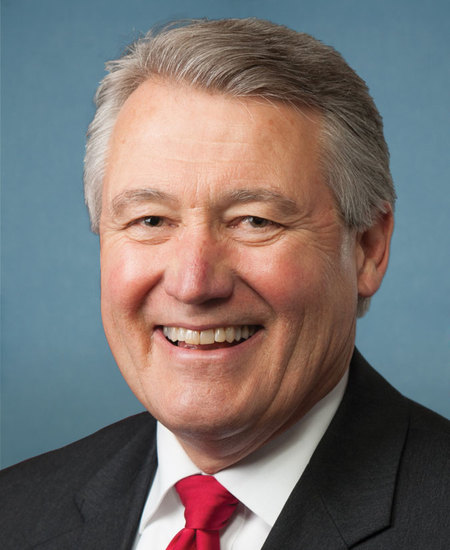
Rep. Rick W. Allen
Sponsored bills
Maddy summaryThe CLEAR Act (HR 4218) amends the Clean Air Act to streamline state compliance with air quality standards. It extends the review cycle for national air quality standards from five to ten years, requires states to consider economic feasibility alongside technical achievability when developing plans, and gives states up to three years (instead of two) to fix deficiencies before federal intervention. The bill also creates a new exception for wildfire mitigation actions like prescribed fires, allowing states to exclude wildfire-related air quality data from violation determinations. These changes primarily affect states responsible for implementing air quality plans under federal oversight.
Maddy summaryThis bill amends the definition of "adequate consideration" in retirement law to clarify how Employee Stock Ownership Plans (ESOPs) value company stock. It allows ESOP fiduciaries (plan managers) to rely on independent appraisals that follow IRS guidelines (Revenue Ruling 59-60) when determining the fair value of company stock for retirement decisions. The change directly affects ESOPs and the companies that use them to provide employee retirement benefits. It simplifies the valuation process for these plans by establishing a clear standard for acceptable appraisals.
Maddy summaryHR 909, the Crime Victims Fund Stabilization Act of 2025, modifies how funds from the False Claims Act are deposited into the Crime Victims Fund. It specifies that from 2025 through 2029, certain False Claims Act proceeds (specifically those for qui tam plaintiff payments and government damage reimbursements) cannot be deposited into the fund. This change directly affects the composition of the Crime Victims Fund by excluding these specific revenue streams during the specified period. The bill does not create new benefits or alter victim services; it only adjusts fund allocation rules for existing False Claims Act revenues.
Maddy summaryThe Reliable Power Act requires the Electric Reliability Organization (ERO) to conduct annual assessments of the U.S. power grid's ability to maintain reliable electricity supply, including analyzing generation resources, transmission needs, and risks of shortages during extreme weather. If the ERO identifies a risk of insufficient generation, it notifies the Federal Energy Regulatory Commission (FERC), which then alerts federal agencies like the Environmental Protection Agency (EPA) and Department of Energy (DOE) developing regulations affecting power generation. These agencies must submit proposed regulations for FERC review before finalizing them, and FERC can recommend changes to prevent reliability risks, with agencies required to respond to FERC’s comments. The bill directly affects federal agencies creating energy-related rules and aims to prevent power shortages by integrating grid reliability into the rulemaking process.
Maddy summaryThis bill allows groups of small businesses or self-employed individuals to form a single health plan that treats all members as one employer for coverage purposes. It directly affects small business associations and self-employed people who can join such groups to access pooled health coverage, provided they meet specific requirements (e.g., 51+ total employees, 2+ years in existence, no health-based discrimination). Key mechanisms include permitting modified community rating for premiums (based on pooled claims) while prohibiting health status-related discrimination in enrollment, premiums, or pre-existing condition coverage. The plan remains subject to federal ERISA rules, and self-employed members must meet defined criteria to participate as both employers and employees.
Maddy summaryThis bill establishes new requirements for pharmacy benefit managers (PBMs) working with Medicare Part D prescription drug plans and Medicaid programs. It mandates that PBMs pay pharmacies a specific reimbursement amount based on drug acquisition costs plus a fixed fee, pass through manufacturer rebates directly to beneficiaries at the point of sale, and prohibits steering practices that direct patients to specific pharmacies. The bill applies to Medicare Part D plans and Medicaid managed care organizations beginning January 1, 2027, affecting how PBMs interact with pharmacies and handle drug rebates. Violations could result in criminal penalties of up to $1 million or 10 years in prison for willful noncompliance. The bill aims to increase transparency and fairness in pharmacy drug pricing for Medicare and Medicaid beneficiaries.
Maddy summaryHRES 932 is a symbolic resolution passed by the House of Representatives that condemns six specific members of Congress (including Senators Kelly and Slotkin and Representatives Crow, Deluzio, Goodlander, and Houlahan) for allegedly making statements that encouraged military and intelligence personnel to disobey orders from the President. The resolution claims these lawmakers falsely suggested the administration issued "illegal orders" and undermined the military chain of command, violating the Uniform Code of Military Justice (UCMJ). It does not create new laws or policies but formally denounces the lawmakers' statements as "dangerous and seditious rhetoric." As a procedural resolution, it has no binding effect on military conduct or policy.
Maddy summaryHR 6420 (the ACCESS Act) defines and regulates "short-term limited duration insurance" (STLDI) as health coverage with a contract term under 12 months and total duration under 3 years, including renewals. The bill changes existing health care rules to allow STLDI to be marketed as a temporary coverage option during transitions like job changes, specifically for small businesses and workers needing flexible, affordable plans while avoiding full-year coverage requirements. This directly affects small business owners and employees seeking portable, low-cost health insurance during coverage gaps, without requiring the full benefits of standard plans.
Maddy summaryThis bill suspends payment limits for agricultural subsidies for the 2025 crop year, removing caps on payments to farmers. It also establishes a new option for farmers to receive 50% of their expected 2025 crop payments as an advance by December 1, 2025, if they opt in. The remaining balance is paid later after the marketing year ends, with farmers required to repay any overpayment if the final amount exceeds the advance. The bill directly affects farmers growing covered commodities (like corn, soybeans) who choose to participate in the advance payment program.