

Don’t Mess With My Home Appliances Act This bill modifies the process by which the Department of Energy (DOE) issues or revises energy conservation standards for consumer products such as household appliances, including by requiring DOE to consider additional factors related to the cost and availability of such products. First, the bill allows DOE to amend an energy conservation standard for a consumer product when needed rather than by a deadline. The bill also allows DOE to grant a petition to revoke or amend energy conservation standards if the standards (1) result in additional costs to consumers, (2) do not result in significant conservation of energy or water, (3) are not technologically feasible, and (4) result in a product (e.g., gas stoves) not being commercially available in the United States to all consumers. Additionally, the bill modifies the criteria used to prescribe new or amended energy conservation standards, including by establishing new criteria for determining whether a standard is economically justified. The bill establishes disclosure requirements for DOE meetings with entities that have (1) ties to China or the Chinese Communist Party; (2) produced studies regarding, or advocated for, regulations or policy to limit, restrict, or ban the use of any type of energy; and (3) applied for or received federal funds. The bill also prohibits DOE from prescribing new or revised energy conservation standards for distribution transformers. Finally, the bill allows DOE to prescribe certain new or amended energy and water conservation standards for clothes washers and dishwashers.
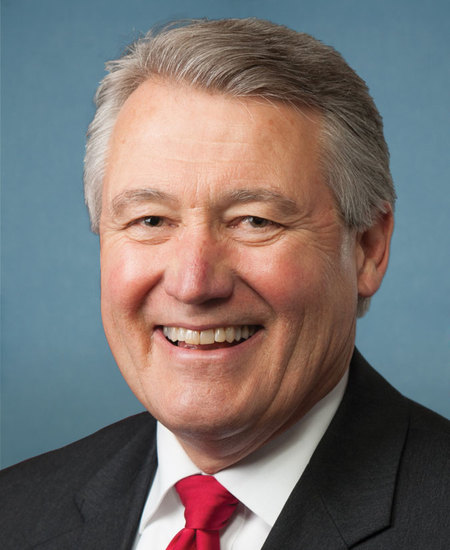
Rep. Rick W. Allen
Sponsored bills
Maddy summaryHRES 1076 is a House resolution recognizing the 10th anniversary of the first U.S. liquefied natural gas (LNG) export shipment from the lower 48 states, which occurred on February 24, 2016. The resolution celebrates this milestone as a historic achievement in American energy production, highlighting its role in supporting over 273,000 annual jobs and $400 billion in economic growth over the past decade. It honors the workers and communities involved and acknowledges LNG exports' contribution to U.S. economic growth, energy security, and global partnerships. The resolution has no binding effect or policy changes - it solely expresses recognition of a past event.
This bill specifies a legal standard for determining whether an individual is considered an independent contractor rather than an employee for the purposes of federal labor laws that address issues such as the federal minimum wage, overtime compensation, and collective bargaining. The rights and protections provided by these laws exclusively apply to employees. Under the bill, an individual is considered an independent contractor if (1) another individual or entity does not exercise significant control over the details of how the individual's work is performed, without regard to any control the other individual or entity may exercise over the final result of the work performed; and (2) while performing such work, the individual has opportunities and risks inherent with entrepreneurship (for example, the discretion to exercise professional judgment). The bill also sets forth factors that may not be used to determine whether an individual is an employee. Specifically, factors such as whether another individual or entity requires the individual to meet certain legal, health and safety, insurance, or performance requirements may not be used to make such a determination.
Maddy summaryHR 7421, the SAFE Olympic Sports Act, requires national governing bodies for Olympic sports to maintain eligibility rules based on an athlete's biological sex as defined in the bill. It mandates that competitions must restrict participation to athletes whose sex at conception aligns with the event's category (e.g., female-only events for those biologically female). The bill defines "sex" as an immutable biological classification determined at conception, with specific biological criteria for male and female. This applies to Olympic, Paralympic, Pan-American, and other sanctioned amateur competitions, requiring governing bodies to continue sanctioning single-sex events they previously approved.
Maddy summaryThe Riley Gaines Act allows female student athletes injured in women's sports competitions to sue schools or athletic associations that permitted biologically male athletes to compete in those events. It creates a legal pathway for victims to seek compensation for physical injuries, lost scholarships, or missed professional opportunities due to the inherent physiological advantages of male athletes. If a female athlete wins a lawsuit under this law, the court must also award them reasonable attorney fees. The bill directly affects institutions of higher education and athletic associations that oversee women's sports competitions.
Maddy summaryThis bill prevents state or local governments from banning or restricting energy connections (like installation, modification, or access) based on the type or source of energy, such as electricity, natural gas, or renewable fuels. It directly affects consumers choosing energy providers and energy companies seeking to offer services. The key provision prohibits local laws, regulations, or policies that limit energy services sold in interstate commerce, covering all energy types listed in the bill’s definitions. It does not create new programs but limits regulatory authority at the state or local level. The law aims to ensure open access to diverse energy sources without source-based restrictions.
Maddy summaryThe Make Elections Great Again Act (HR 7300) would require voters to present photo identification to cast ballots in person or by mail for federal elections, with limited exceptions for religious objections or military voters. It would establish new requirements for proving U.S. citizenship during voter registration, including documentary proof of citizenship and proof of state residency. The bill would change mail-in ballot procedures by requiring voters to request mail-in ballots (rather than universal mail-in voting), implementing barcode tracking for mail-in ballots, and setting strict deadlines for ballot receipt. These provisions would apply to all states for federal elections held in 2027 or later, affecting how voters register, vote in person, and submit mail-in ballots for federal office elections.
Safeguard American Voter Eligibility Act or the SAVE America Act This bill requires individuals to provide documentary proof of U.S. citizenship when registering to vote, and requires photo identification to vote, in federal elections. Specifically, the bill prohibits states from accepting and processing an application to register to vote in a federal election unless the applicant presents documentary proof of U.S. citizenship. The bill specifies what documents are considered acceptable proof of U.S. citizenship, such as identification that complies with the REAL ID Act of 2005 that indicates U.S. citizenship. Further, the bill (1) prohibits states from registering an individual to vote in a federal election unless, at the time the individual applies to register to vote, the individual provides documentary proof of U.S. citizenship; and (2) requires states to establish an alternative process to demonstrate U.S. citizenship. Each state must take affirmative steps on an ongoing basis to ensure that only U.S. citizens are registered to vote, which shall include establishing a program to identify individuals who are not U.S. citizens using information supplied by certain sources. Additionally, states must remove noncitizens from their official lists of eligible voters. The bill (1) provides for a private right of action for certain violations, and (2) establishes criminal penalties for certain offenses. Individuals voting in federal elections must present an eligible photo identification document. An individual who votes by absentee ballot must submit a copy of their identification document with both the request for, and the submission of, the absentee ballot.
Maddy summaryThis bill, HR 2988, "Protecting Prudent Investment of Retirement Savings Act," primarily affects retirement plan fiduciaries who manage investments for 401(k) and similar retirement accounts. It requires these fiduciaries to consider only financial factors when making investment decisions, with limited exceptions where non-financial factors may be used if properly documented. The bill also establishes requirements for how retirement plan fiduciaries should handle proxy voting on company shares and mandates clearer disclosures to retirement plan participants about brokerage windows versus designated investment alternatives. These provisions aim to ensure retirement investments are managed primarily for financial returns rather than social or environmental goals.
Maddy summaryHR 7235, the "Protecting Motherhood Act," requires all federal agencies to stop using the term "birthing person" in official documents and instead use specific terms like "female," "mother," "pregnant woman," or "woman." It directly affects federal agencies that produce regulations, forms, or communications, mandating the use of these defined terms when referring to individuals based on biological sex. The bill provides detailed definitions for terms like "female" (based on biological sex at conception) and "pregnant woman" (an adult human female carrying a child). The law takes effect 30 days after enactment. This is a procedural change focused solely on terminology in government documents, with no direct impact on healthcare access or services.