

Maddy summaryHR 1786 amends the Robert T. Stafford Disaster Relief Act to explicitly include "algal blooms" as a qualifying event for federal disaster declarations. This change expands eligibility for federal disaster assistance to communities affected by harmful algal blooms, which can contaminate water and harm ecosystems. The bill modifies Section 102(2) of the Stafford Act (42 U.S.C. 5122) by adding "algal blooms" to the list of recognized disasters alongside drought. It is a procedural adjustment to the law's definition, not a new funding or program.
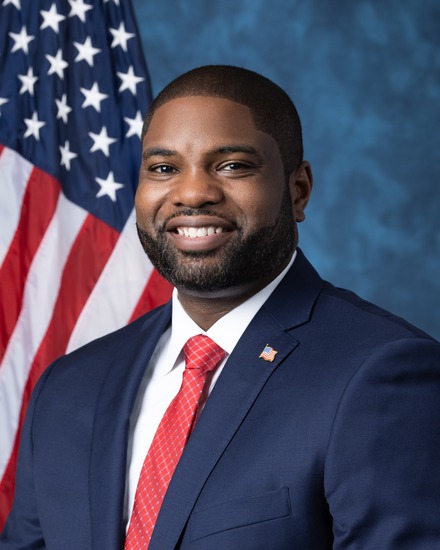
Rep. Byron Donalds
Sponsored bills
Federal Firearms Licensee Protection Act of 2025 This bill modifies criminal penalties for an offense involving the theft of a firearm from a licensed importer, manufacturer, or dealer, or from their business premises. Specifically, the bill does the following: increases from 10 to 20 years the maximum prison term, and creates a 3- or 5-year mandatory minimum prison term for an offense that occurs during the commission of a burglary or robbery. An attempt to commit an offense is subject to the same penalties as a substantive offense.
Maddy summaryThis bill awards a Congressional Gold Medal to the 761st Tank Battalion (known as the "Black Panthers"), the first predominantly Black armored unit in World War II's European Theater. It recognizes their combat service from 1944-1946, including key roles in the Battle of the Bulge and breaking the Siegfried Line, despite facing racial prejudice during and after the war. The medal will be displayed at the National Museum of African American History and Culture, with bronze duplicates available for sale to cover costs. The bill commemorates the battalion's 130,000 enemy casualties inflicted, 50% casualty rate, and their 1978 Presidential Unit Citation. It does not create new laws or affect current policies.
Maddy summaryThe Repeal CFPB Act would end the Consumer Financial Protection Bureau (CFPB) by repealing the 2010 law that created it. It would restore all financial regulations that existed before the CFPB was established, reverting to the system in place prior to 2010. This change would directly affect how consumer financial products - like credit cards, mortgages, and loans - are regulated, shifting oversight back to pre-2010 rules.
Maddy summaryHR 1502 authorizes the creation of a Congressional Gold Medal to honor the volunteers and communities (primarily from Nebraska, Colorado, and Kansas) who supported the North Platte Canteen during World War II. The bill directs the Treasury Secretary to design and strike the medal, which will be presented to the individuals who contributed to the canteen’s operations and then permanently displayed at the Lincoln County Historical Museum in North Platte, Nebraska. It also permits the sale of bronze duplicates to cover production costs, with proceeds going to the U.S. Mint. This is a commemorative measure recognizing historical service, not a policy change affecting current laws or programs.
Maddy summaryHR 1475, the SBA Disaster Transparency Act, requires the Small Business Administration (SBA) to publish all disaster assistance reports on its website. This bill amends existing law by adding specific language mandating that the SBA "publish on the website of the Administration" reports related to disaster assistance, including those submitted by state and local officials. The key mechanism is a procedural update to existing reporting requirements, ensuring all required reports are publicly accessible online rather than only being submitted internally. This directly affects the SBA (by changing its reporting process) and the public (by providing greater transparency into how disaster aid is distributed). The bill does not alter disaster assistance eligibility or funding levels.
Maddy summaryHR 1438, the *Protecting America’s Agricultural Land from Foreign Harm Act of 2025*, prohibits foreign governments of Iran, North Korea, China, and Russia (and entities they control) from purchasing or leasing U.S. agricultural land, including both public land managed by federal agencies and private land. It also bans such entities from participating in most U.S. Department of Agriculture (USDA) programs if they own or lease agricultural land, with limited exceptions for food safety and health programs. The bill expands disclosure requirements under the Agricultural Foreign Investment Disclosure Act to include leases and security interests, and mandates public data sets showing foreign ownership details and land values. These changes aim to increase transparency around foreign ownership of U.S. farmland while targeting specific foreign governments deemed national security concerns.
Maddy summaryHR 1405 directs the Comptroller General (GAO) to study regulatory barriers hindering the expansion or siting of new pharmaceutical manufacturing facilities in the U.S. This study specifically examines how environmental and other regulations delay or increase costs for manufacturers compared to other countries, and assesses impacts on supply chain resiliency. The GAO must engage stakeholders to identify barriers, potential technological solutions, and needed policies, then submit a report to Congress within one year. The bill does not change regulations itself but aims to provide data and recommendations to improve U.S. competitiveness in drug manufacturing.
Maddy summaryThis bill allows survivors of human trafficking to seek court orders to vacate convictions or expunge arrests related to non-violent crimes they committed while being trafficked. Survivors can file motions supported by affidavits from anti-trafficking service providers, and courts must determine if the crime was directly caused by trafficking. It applies to all past and future cases, including retroactive relief for convictions, and adds a new "human trafficking defense" in criminal trials. The law requires annual reports tracking how many survivors use this relief and the outcomes of their cases.
Maddy summaryThis bill redirects unspent funds from the U.S. Agency for International Development (USAID) to the federal disaster relief fund. It requires transferring any unobligated USAID funds - those not yet committed to specific projects as of the bill's enactment - to support disaster response under the Robert T. Stafford Act. The change affects USAID's budget by shifting unused resources to immediate disaster relief efforts, rather than new spending. This is a procedural reallocation of existing funds, not new funding.